
Last updated November 16, 2026
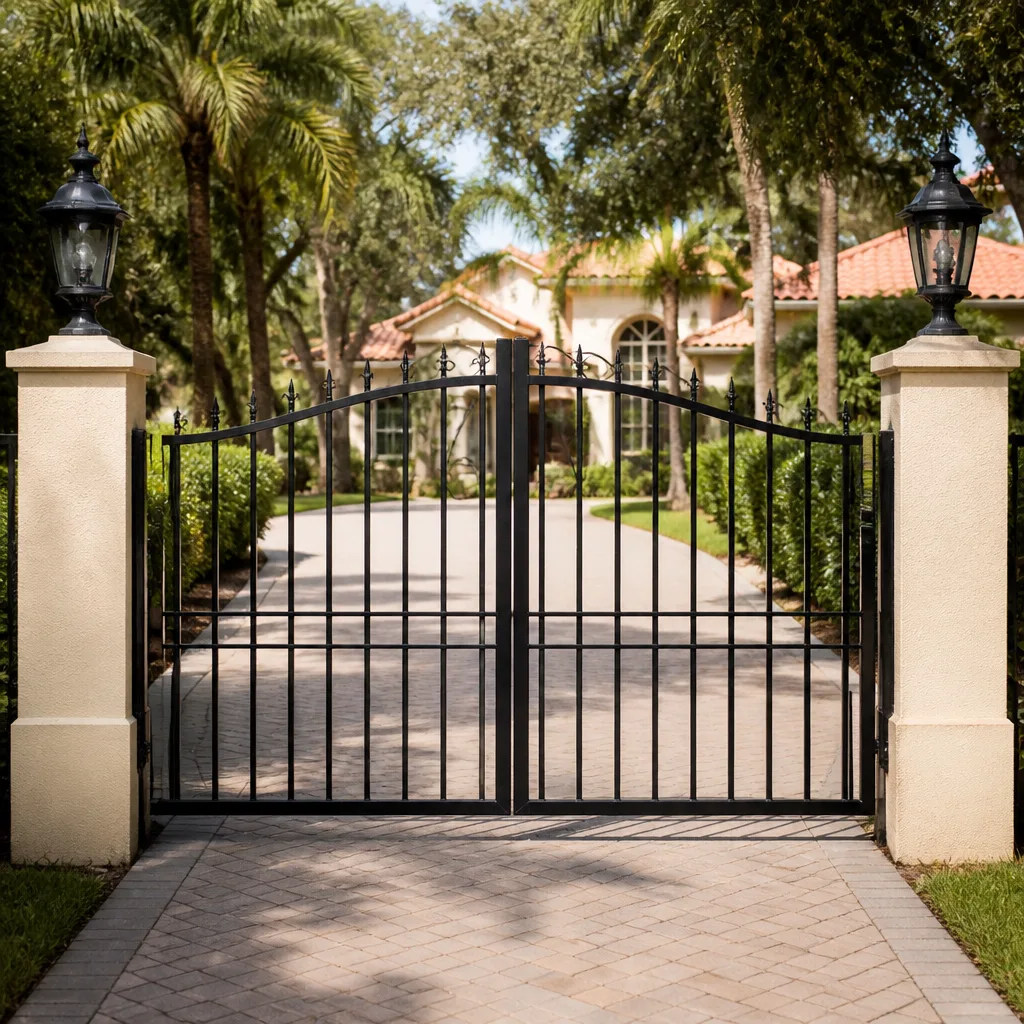 Wrought iron
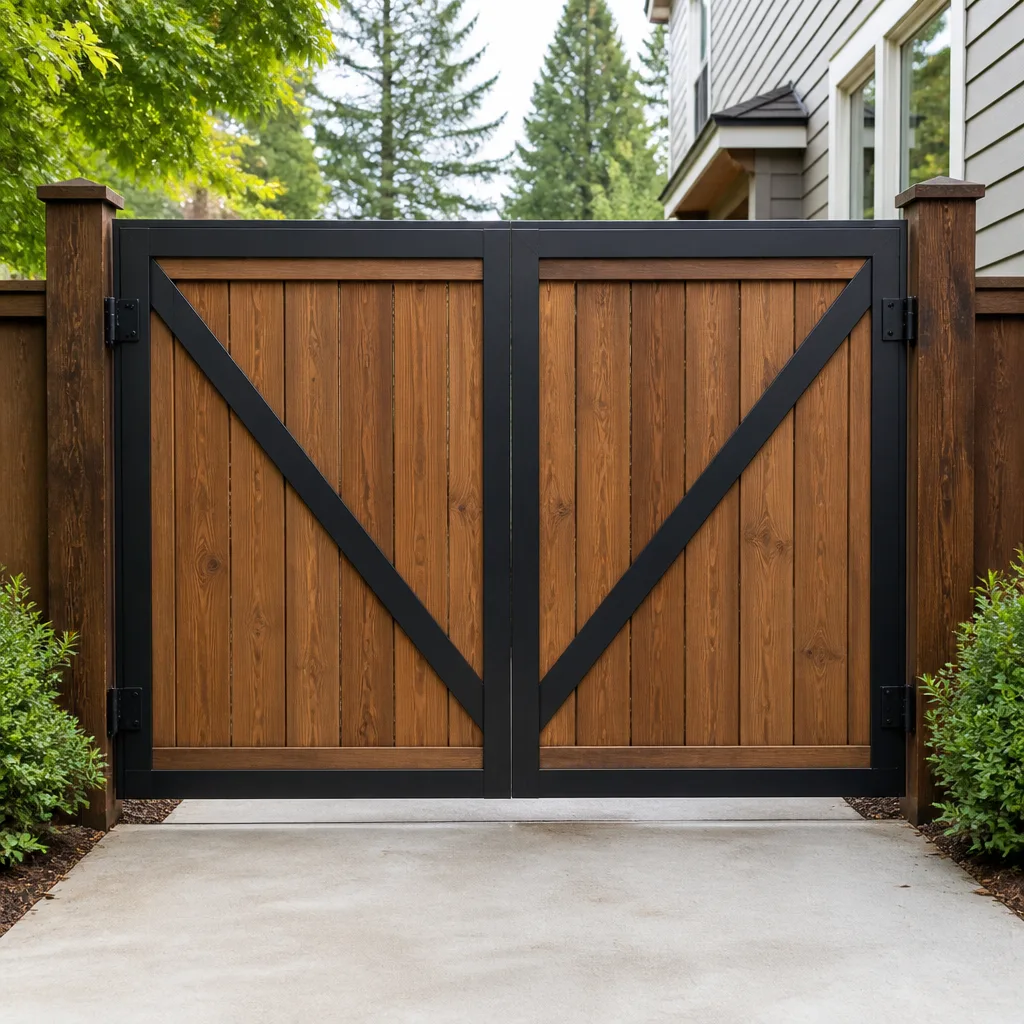 Wood & steel frame
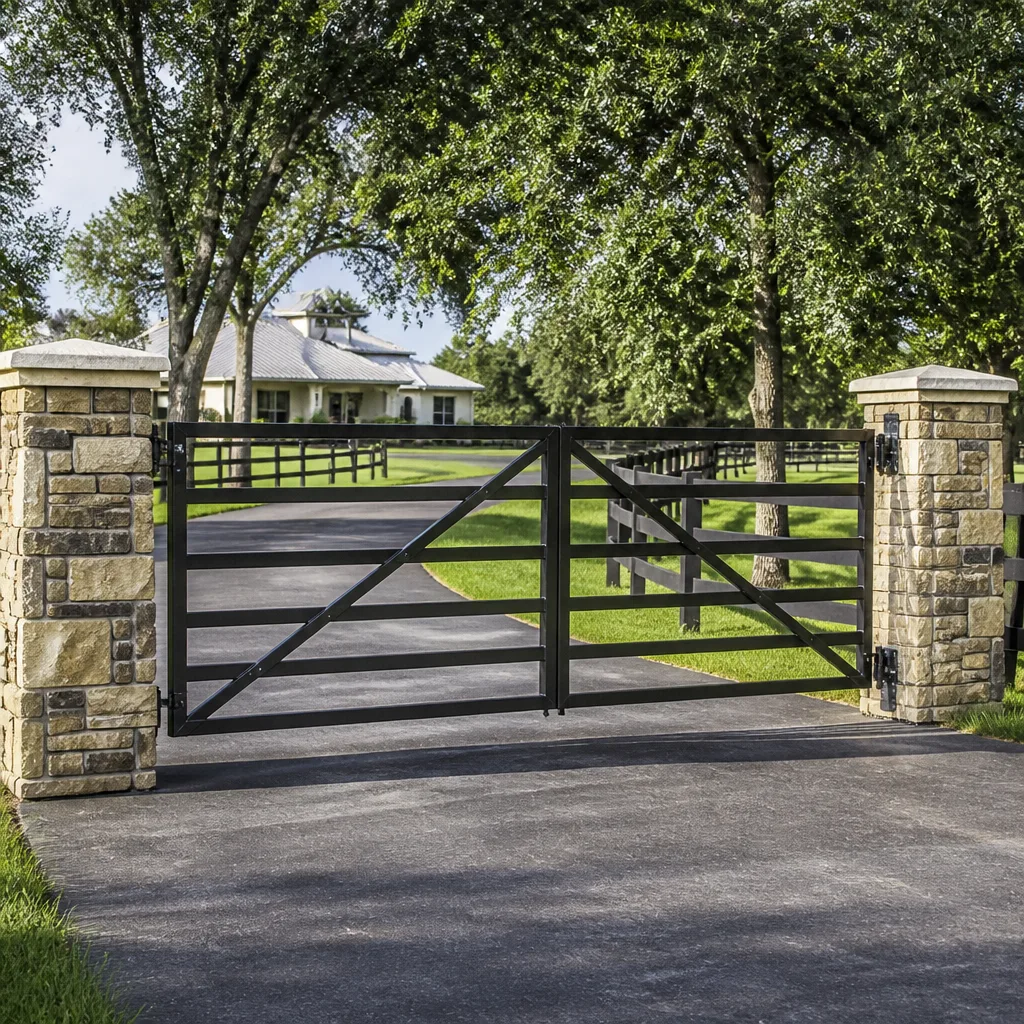 Farm & ranch
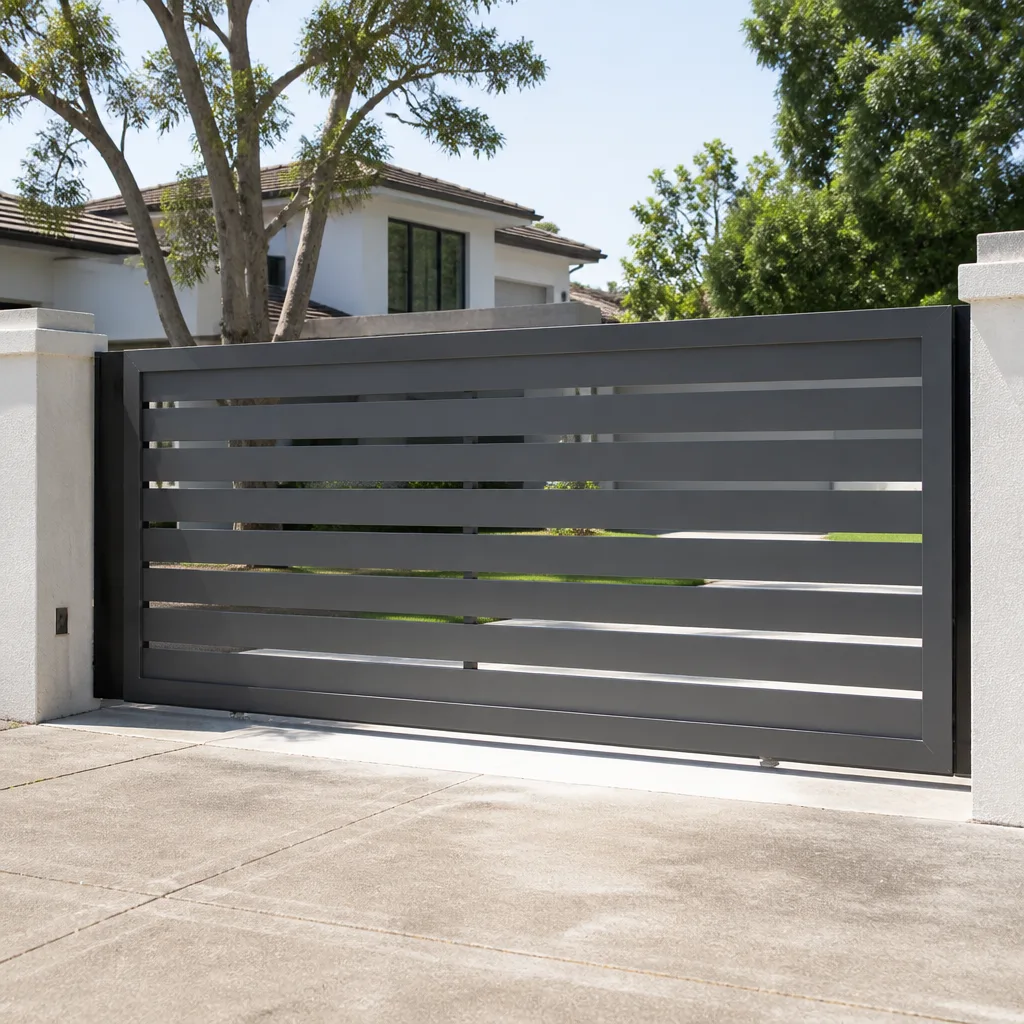 Sliding driveway gates
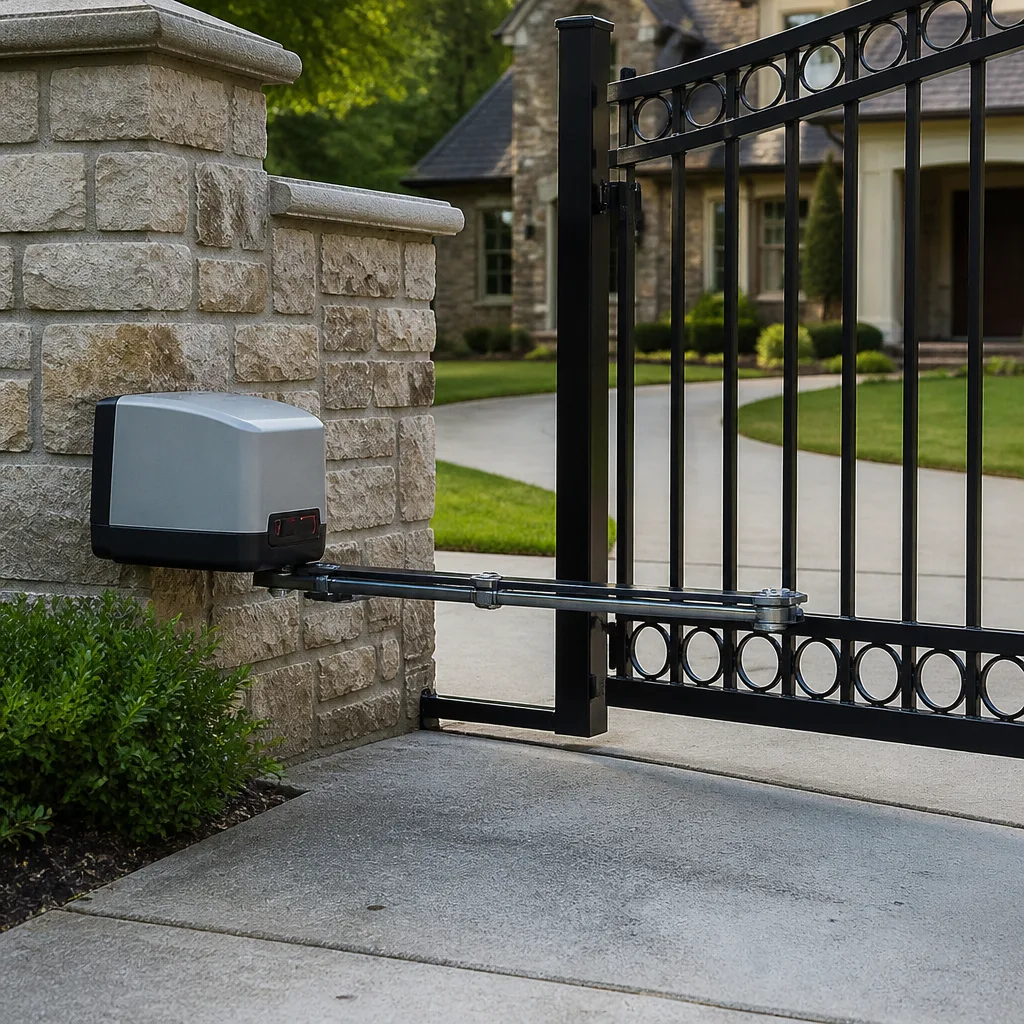 LiftMaster operators
Free on-site gate assessment - hinges, posts, and your LiftMaster or Nice gate operator checked before anything is quoted
The assessment is free and the quote is the invoice.
Get your free estimateGate Repair Cost Breakdown: The Richmond Homeowner’s Reference for 2026
A $180 gate repair and a $620 gate repair for “the same problem” are usually not the same repair at all. The gap rarely comes from one company overcharging and another cutting a deal. It comes from what’s actually broken: a hinge that let go versus a hinge that let go because the post has been quietly sinking into Richmond’s clay for years. A homeowner who can’t tell those apart reads both quotes as “fix the gate” and picks the cheaper one, then pays a second time when the real problem resurfaces. This guide walks through every line item in a Richmond gate repair, what each component typically costs in 2026, and how to audit a written estimate so you know exactly what you’re buying.
Quick Answer
Most gate repairs in Richmond run somewhere between $150 and $900, with the typical job landing in the $250 to $450 range. Hardware fixes like hinges, latches, and rollers sit at the low end; control board replacements, loop detector work, and operator swaps push toward the top. Post resets are the wildcard and often the largest single line item, because Richmond’s shrink-swell clay soil moves gate posts more than most homeowners expect. A written estimate, agreed before any work begins, is what sets your final price.
Styles & brands we work with
- Wrought iron
- Wood & steel frame
- Farm & ranch
- Sliding driveway gates
- LiftMaster operators
Table of Contents
- Why Gate Repair Quotes in Richmond Vary So Much
- Component-by-Component Price Ranges for Richmond in 2026
- The Post-Reset Line Item Most Price Guides Leave Out
- What Gate Specialist Labor Actually Buys You
- Electric Gate Repair: Control Boards, Photo Eyes, and Loop Detectors
- OEM vs. Aftermarket Parts: Where the Premium Is Worth It
- How to Audit a Written Estimate Line by Line
- Common Mistakes to Avoid
- When to Call a Professional
- Frequently Asked Questions
Why Gate Repair Quotes in Richmond Vary So Much
Gate repair pricing in Richmond is component-driven, not arbitrary. When one company quotes $180 and another quotes $620 for what sounds like the same call, the difference almost always traces to scope: which parts are being replaced, whether the post is being addressed, and whether the technician diagnosed the root cause or just the symptom. A gate that drags because a hinge is worn needs a hinge. A gate that drags because the hinge is worn and the post has tilted needs both, and the second quote reflects reality while the first reflects a guess.
There’s a second reason quotes diverge, and it’s less comfortable to talk about. General handyman and fence companies often price gate work by eyeballing it, because gates aren’t their daily work. Gate specialists price it by diagnosis. That diagnostic step takes time, it requires knowing the specific hardware on your property, and it’s the reason a specialist quote sometimes comes in higher on the front end and lower over the life of the gate.
We work on gate systems across Richmond, from the Fan District’s narrow carriage-style gates to wide automated driveway entrances out in the West End, and the pattern holds: the properties that get the cheapest initial fix are the ones we see again within a year or two. Component-driven pricing rewards the homeowner who understands what’s on the invoice.
What you should take from this section:
- Price differences usually reflect scope differences, not dishonesty.
- A quote that doesn’t name specific parts isn’t a quote, it’s a number.
- Root-cause diagnosis is cheaper than repeat visits, even when it costs more up front.
- Gate-only specialists diagnose faster because they recognize the hardware on sight.
Component-by-Component Price Ranges for Richmond in 2026
Here’s where the money actually goes. These are typical estimated ranges for the Richmond market in 2026, covering parts and labor for a standard residential gate. Your written estimate sets the final price, and every job gets quoted and agreed before anyone starts work.
| Component / Repair | Typical Estimated Range | Notes |
|---|---|---|
| Hinge replacement (per hinge) | $35 – $90 | Higher end for heavy-duty or weld-on hinges |
| Latch replacement or adjustment | $45 – $120 | Adjustment-only jobs sit at the bottom |
| Roller replacement (sliding gates) | $60 – $150 | Includes realignment of the gate run |
| Sag cable kit installation | $90 – $220 | Common on wide double-swing gates |
| Photo eye (safety sensor) replacement | $110 – $260 | Pair replacement often quoted together |
| Loop detector replacement | $220 – $450 | Includes saw-cut and re-seal of the driveway loop |
| Control board replacement | $280 – $620 | Varies widely by brand and board generation |
| Operator / motor replacement | $650 – $1,800+ | Depends on gate weight, arm vs. slide, and brand |
A few things to notice in that table. Control boards and operators account for most of the spread, because a board for a DoorKing access system and a board for a Mighty Mule residential swing operator are not the same animal. Hinges and latches are cheap in isolation but often replaced in sets, so a four-hinge swing gate can run $140 to $360 in hardware alone.
Photo eyes and loop detectors deserve a separate mention. These are safety components, and their failure modes look like gate problems when they’re actually wiring or sensor problems. A gate that reverses for no reason, or a slide gate that won’t close when a car pulls up, is usually a photo eye or loop issue, not a motor issue. Diagnosing which one saves you from paying for a motor you didn’t need.
Sliding versus swing makes a difference too. Slide gates carry rollers, track, and a rack-and-pinion drive; swing gates carry hinges and often an arm operator. The component list is different, so the quote structure should be different. If a quote treats both the same way, that’s a sign the estimator didn’t look closely.
The Post-Reset Line Item Most Price Guides Leave Out
Online gate repair price guides almost never mention post resets. In Richmond, they’re often the largest single line item on the invoice. The reason is geology: the region’s clay soil expands when wet and contracts when dry, and that seasonal movement works on gate posts the same way it works on foundations and driveways. A post that was set perfectly fifteen years ago can be a half inch out of plumb today, and a half inch at the post translates to a gate that drags, binds, or won’t latch at all.
Typical estimated post reset ranges in Richmond run $250 to $700 for a single post, depending on access, whether the old concrete has to be broken out, and how deep the new footing has to go. Double swing gates with a shared center post sometimes need both posts addressed, which pushes the job higher.
How a post reset usually goes, in general terms:
- The gate is removed or braced so the post can be freed without damaging the panel.
- The old concrete is broken out and the post is pulled.
- A new footing is dug to proper depth for the gate’s weight and height.
- Fresh concrete is poured and the post is set plumb and braced.
- The gate is rehung after the concrete cures, and the hardware is readjusted to the new position.
Why does this matter for your quote? Because a hinge-only repair on a gate with a failing post is money spent twice. The hinge wears out again in a season or two, because it’s still fighting the same misalignment. When we diagnose a sagging or dragging gate in Richmond, checking post plumb is part of the process, not an upsell.
Ask directly: does the estimate include a post check? If it doesn’t, you don’t yet know whether you’re looking at a $180 job or a $600 job.
What Gate Specialist Labor Actually Buys You
Gate specialist labor typically costs more per hour than general fence repair labor. That’s real, and it’s worth being honest about. What the premium buys is diagnostic accuracy: a specialist recognizes the operator brand on your property on sight, knows the failure patterns that model is prone to, and doesn’t spend the first hour figuring out what they’re looking at.
In practical terms, that translates to a few concrete advantages:
- Fewer return visits, because the diagnosis addresses the actual failure rather than the visible symptom.
- Faster turnaround on electric systems, where the gap between “generalist” and “specialist” is widest.
- Correct parts on the first order, which matters when a control board has to be sourced.
- Cleaner handoff between mechanical repair and electrical repair, since one team handles both.
The electric side is where the distinction really shows. A control board, a loop detector, an intercom integration, and a motor failure can all present as “the gate won’t open.” A general contractor will often swap the motor and hope. A gate specialist tests the board, the sensors, and the loop before touching the operator, and that test is what the labor premium is paying for.
Our technicians have up to 12 years of experience, and they work across nine operator brands: LiftMaster, FAAC, BFT, Linear, Viking, Ghost Controls, DoorKing, Elite, and Mighty Mule. When a call comes in for an electric gate repair, knowing the brand before arrival is worth real diagnostic time. We work on Ghost Controls and DoorKing systems often enough to know where each one typically fails first.
One more note on labor: same-day scheduling doesn’t change the price. The cost is set per job by the written estimate, whether the work happens the day you call or later that week.
Electric Gate Repair: Control Boards, Photo Eyes, and Loop Detectors
Electric gate repair is a different price structure from mechanical repair, and it’s where Richmond homeowners most often get vague quotes. The reason is that automated gates have three separately diagnosable systems stacked on one frame: the mechanical gate itself, the operator (motor and drive), and the access and safety electronics. A single “gate won’t open” call can be any of the three.
Typical estimated ranges for the electronic components:
- Photo eye pair: $110 – $260, including alignment and testing.
- Loop detector: $220 – $450, including driveway saw-cut and re-seal.
- Control board: $280 – $620, brand and generation dependent.
- Complete operator replacement: $650 – $1,800+, depending on gate weight and drive type.
Loop detector work is the line item that surprises people most, because it involves cutting into the driveway to replace the buried wire loop. It’s also the one generalists usually won’t touch. If your slide gate won’t close when a vehicle approaches, or opens and closes on its own, the loop is a prime suspect and worth testing before any motor gets replaced.
Safety matters here, and this isn’t a section where we’ll walk you through doing it yourself. Gate operators run on line voltage, and the safety edges, photo eyes, and reversing circuits exist specifically to stop a moving gate from injuring someone. Faulty photo eyes or a bypassed safety edge are a genuine hazard, especially on heavy slide gates. If your gate is reversing unpredictably, or the safety sensors have been disconnected, that’s a job for a trained technician, and it should be addressed before the gate is put back into service.
Access control is the third layer: keypads, intercoms, card readers, and phone-app integrations. These usually come up alongside board replacements, and DoorKing systems in particular are common on multi-unit and property-manager accounts around Richmond. Testing the access layer as part of an electric diagnosis is standard for us, because a board swap that doesn’t address a flaky keypad just moves the problem.
OEM vs. Aftermarket Parts: Where the Premium Is Worth It
Aftermarket parts can cut a gate repair bill, and sometimes that’s the right call. Sometimes it isn’t. The distinction is fairly clear once you know which components are safety-critical or system-critical, and which are just metal doing a mechanical job.
Worth the OEM premium:
- Control boards. Board compatibility, firmware, and connector layouts vary by model generation. Wrong or generic boards create faults that are painful to trace.
- Safety sensors and photo eyes. These are life-safety components. OEM units are tested to work with the operator they pair with.
- Operator motors and drive assemblies. A motor spec’d for your gate’s weight and duty cycle matters. An undersized aftermarket motor burns out early.
Usually fine as aftermarket:
- Hinges and latches. Standard hardware with standard dimensions. Quality matters, brand doesn’t.
- Rollers and track components. Commodity parts, as long as the load rating is right.
- Sag cables and turnbuckles. Simple hardware, easy to evaluate on spec.
What you’re really paying for with OEM electronics is compatibility certainty. A Mighty Mule control board and a Linear control board from the same era are not interchangeable, and neither are two generations of the same brand’s board. If a quote lists a generic “control board” with no brand or model, ask which one, and why.
We source OEM for anything on the safety or control side and use quality aftermarket hardware where it makes sense. That’s a cost decision made on your behalf, and you should be able to see it on the estimate.
How to Audit a Written Estimate Line by Line
A legitimate gate repair estimate should itemize parts and labor separately, name the specific hardware, and state clearly whether post work is included. A vague quote is hiding something, usually scope, and the homeowner discovers it at invoice time.
Here’s a practical audit checklist for any quote you receive in Richmond:
- Check that the parts are named. “Hinge replacement” is weak. “Hinge replacement, heavy-duty weld-on, two hinges” is a real line item.
- Check for post diagnosis. Does the estimate say whether post plumb was checked, and what was found?
- Check that labor is separate from parts. Bundled line items make it impossible to compare quotes.
- Check the brand and model on any electronic part. Control boards and operators should be identified specifically.
- Check that the estimate is written, not verbal. A verbal quote is not a price; it’s an opening position.
- Check whether the price is marked as fixed. The written estimate should set the final price before work starts.
- Check for anything that isn’t a gate. If a quote includes work outside gate repair, ask why.
The last point matters more than it sounds. We specialize exclusively in gates: gate repair, electric gate systems, and gate installation. If a quote from another company includes fence work, garage door work, or general contracting, you’re looking at a generalist’s estimate, and the gate portion may not reflect gate-specific diagnosis.
When you compare two quotes, compare line items, not totals. The lower total is often the one missing the post reset, the second hinge, or the loop test.
Common Mistakes to Avoid
- Picking the lowest quote without comparing scope. A $180 quote and a $620 quote for a dragging gate usually aren’t the same job. Ask each company to state exactly which parts are being replaced and whether post plumb was checked.
- Skipping the post check on a sagging gate. Richmond’s clay soil moves posts, and hinge replacement on a failing post is a temporary fix. Make sure the estimate says the post was evaluated.
- Approving a motor replacement without testing the board and sensors. “Gate won’t open” is often a photo eye, loop, or control board issue, not a motor. Insist on a diagnostic before the operator gets swapped.
- Letting a safety sensor stay bypassed. A disconnected photo eye or safety edge makes the gate dangerous, especially a heavy slide gate. Get it restored before the gate goes back into regular use.
- Buying a generic control board to save money. Board compatibility is model-specific. The savings usually get eaten by troubleshooting and a second board.
- Accepting a verbal quote. Without a written estimate that sets the final price, you have no protection against scope creep. Get it in writing, every time.
- Hiring a non-specialist for an access control problem. Intercom, keypad, and loop issues sit outside what most general contractors handle. A gate-only specialist diagnoses the whole system, not just the mechanical gate.
When to Call a Professional
Some gate problems are safe to watch and some aren’t. A gate that reverses for no reason, a slide gate whose safety edges have stopped working, or any gate with exposed wiring at the operator should get a technician’s eyes on it quickly, because the failure mode is a moving gate that doesn’t stop. Same for a gate whose post has visibly tilted: heavy panels under tension can swing or drop when hardware lets go, and that’s not something to work around. On the mechanical side, a gate that drags, binds, or won’t latch is usually a diagnosis question rather than an emergency, but the longer a misaligned gate runs, the more hardware it wears out. We answer 24/7, and fast dispatch from 7am to 7pm runs Sunday through Friday. Richmond Gate Repair offers free estimates in Richmond: call (866) 942-6565.
Frequently Asked Questions
Most Richmond gate repairs fall between $150 and $900, with the typical job in the $250 to $450 range. Hardware repairs like hinges and latches sit at the low end, control boards and operators at the high end, and post resets often add $250 to $700 on their own. The written estimate sets the final price before work begins. Call (866) 942-6565 for an exact quote; estimates are free.
The difference is usually scope, not markup. One quote may cover a hinge replacement only, while the other includes a post reset that addresses the reason the hinge failed. Ask both companies to itemize parts, labor, and whether post plumb was checked. Call (866) 942-6565 and we’ll walk through the line items with you.
If the post is plumb, a hinge repair is often all that’s needed. If the post has moved, which is common in Richmond’s clay soil, a hinge-only fix tends to fail again within a season or two. The only way to know is to check the post, and we do that as part of the diagnosis. Call (866) 942-6565 to book a free estimate.
Use OEM for control boards, safety sensors, photo eyes, and operator motors, where compatibility and safety testing matter. Aftermarket is usually fine for hinges, latches, rollers, and sag cables. If a quote lists a generic control board, ask which brand and model. Call (866) 942-6565 and we’ll tell you what your system actually needs.
Our technicians work on nine major brands: LiftMaster, FAAC, BFT, Linear, Viking, Ghost Controls, DoorKing, Elite, and Mighty Mule, which covers most residential and light commercial systems in Richmond. Knowing the brand before arrival cuts diagnostic time. Call (866) 942-6565 with your brand and model ready.
It should list parts and labor separately, name the specific hardware (including brand and model for any electronic component), state whether post plumb was checked, and confirm the price is fixed before work starts. A one-line total with no detail is not an estimate you can compare. Call (866) 942-6565 for a written, itemized estimate at no cost.
The Bottom Line
Gate repair pricing in Richmond is component-driven, and that’s the whole key to reading a quote. Hinges, latches, and cables are predictable and cheap. Control boards, operators, loop detectors, and photo eyes carry the real cost, and post resets, the line item most guides skip, often matter most because Richmond’s clay soil is working against your posts all year. Compare estimates line by line, not by total. Ask whether post plumb was checked, which parts are OEM, and which brand and model the electronics are. A written estimate that sets the final price before work begins is the one piece of protection that matters most.
Whether your gate won’t open, won’t close, or was never installed right, one specialist team handles repair, electric systems, and installation from the control board to the hinge. Call (866) 942-6565 for a free estimate. We answer 24/7. Fast dispatch from 7am to 7pm, Sunday through Friday.
Written by the team at Richmond Gate Repair.
See the difference
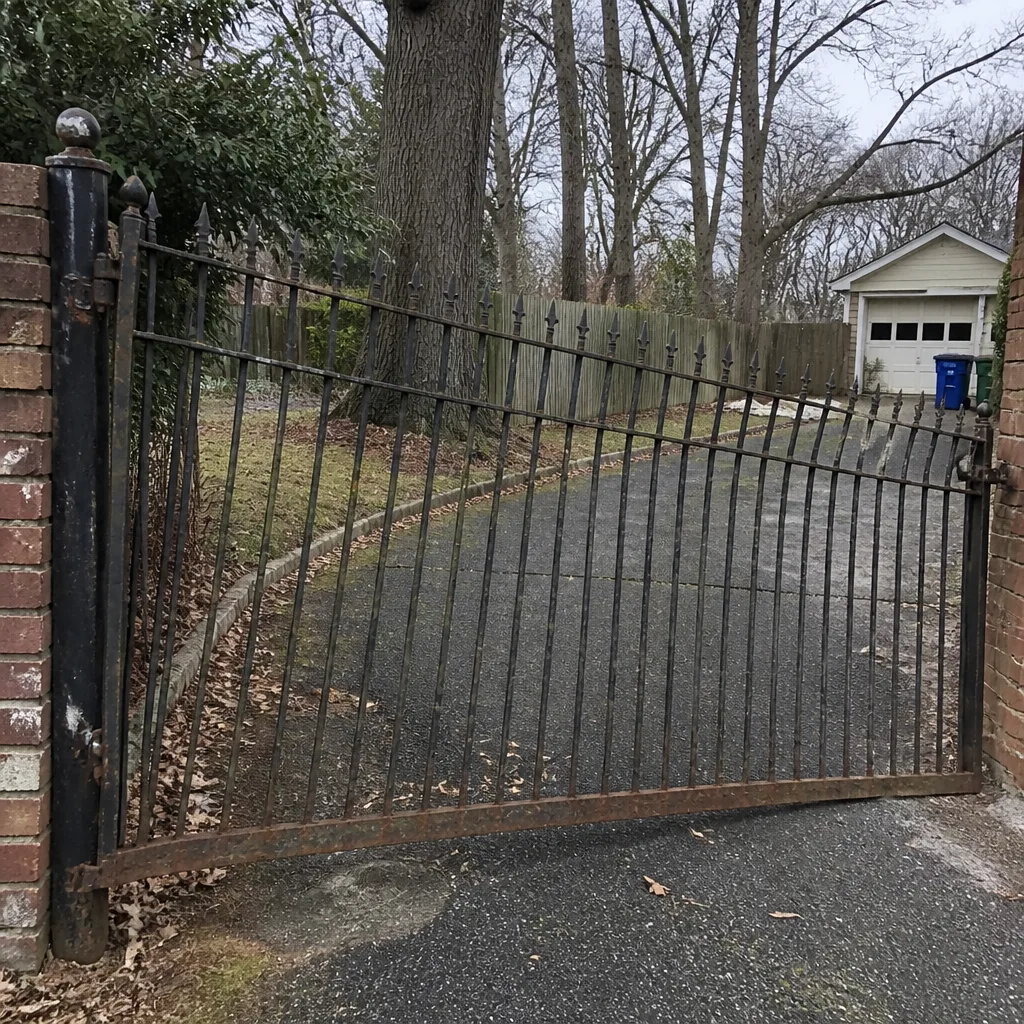 Before
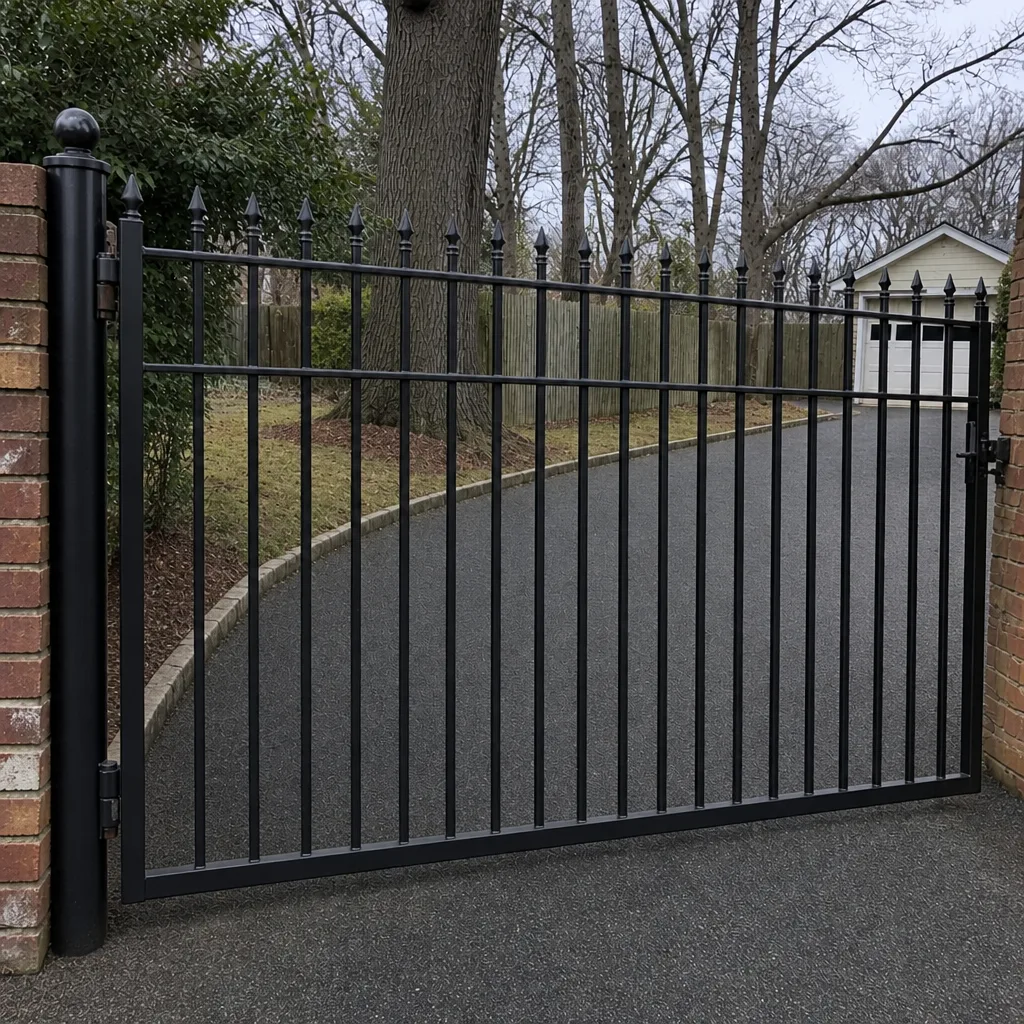 After
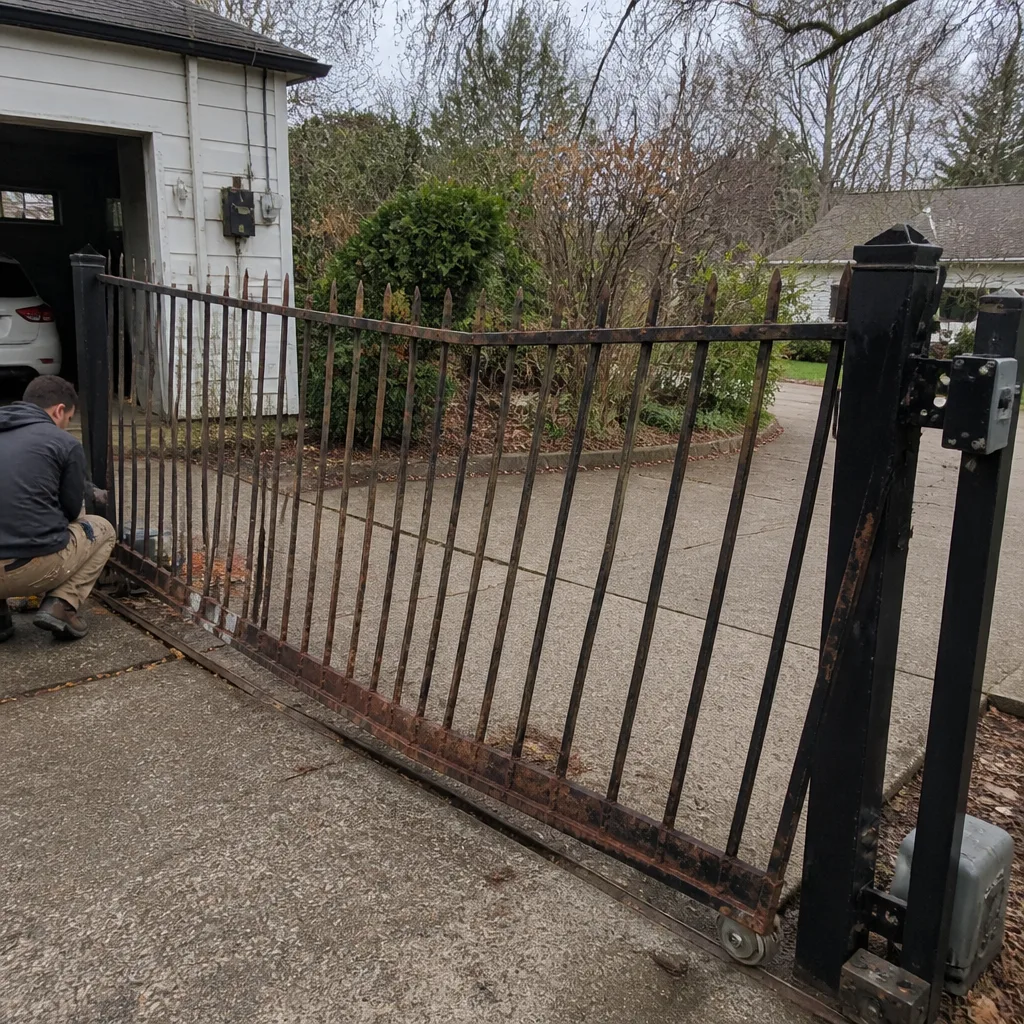 Before
 After
 Before
 After