
Last updated November 16, 2026
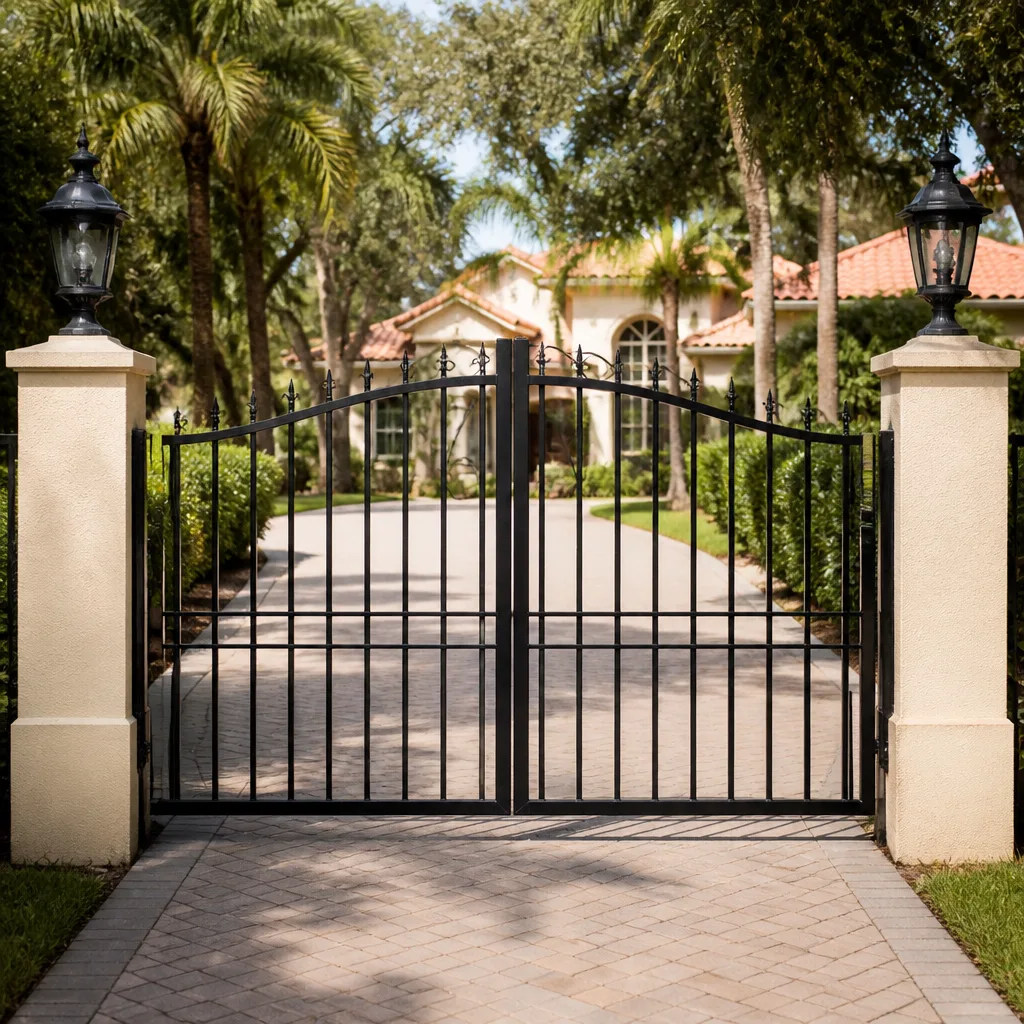 Wrought iron
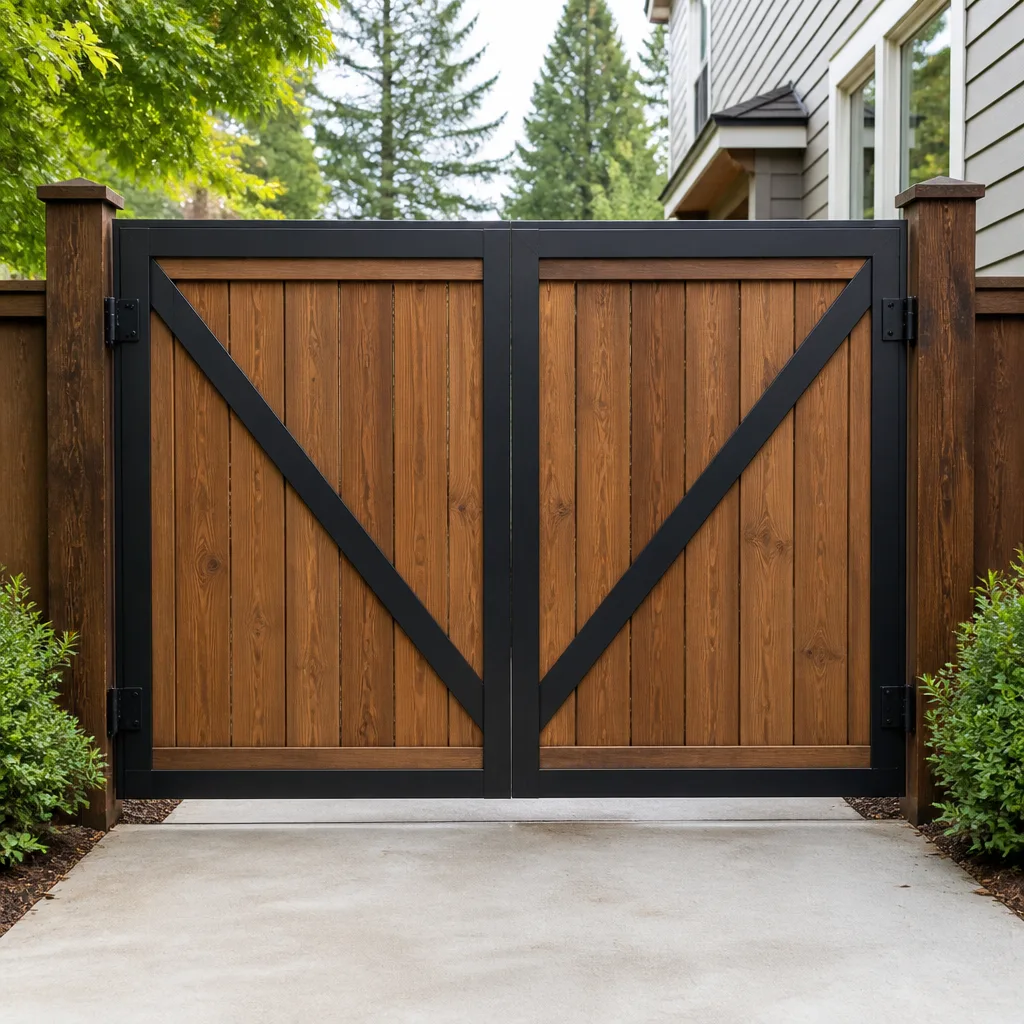 Wood & steel frame
 Farm & ranch
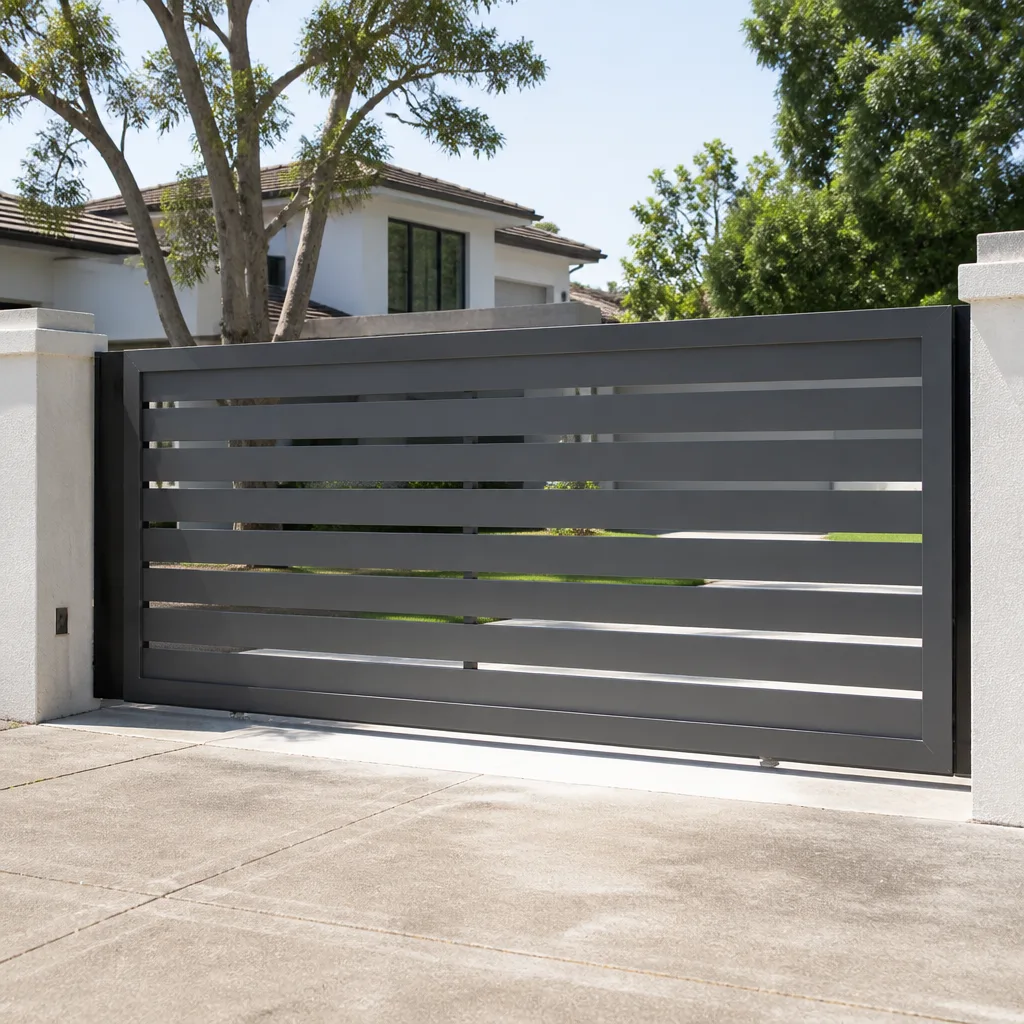 Sliding driveway gates
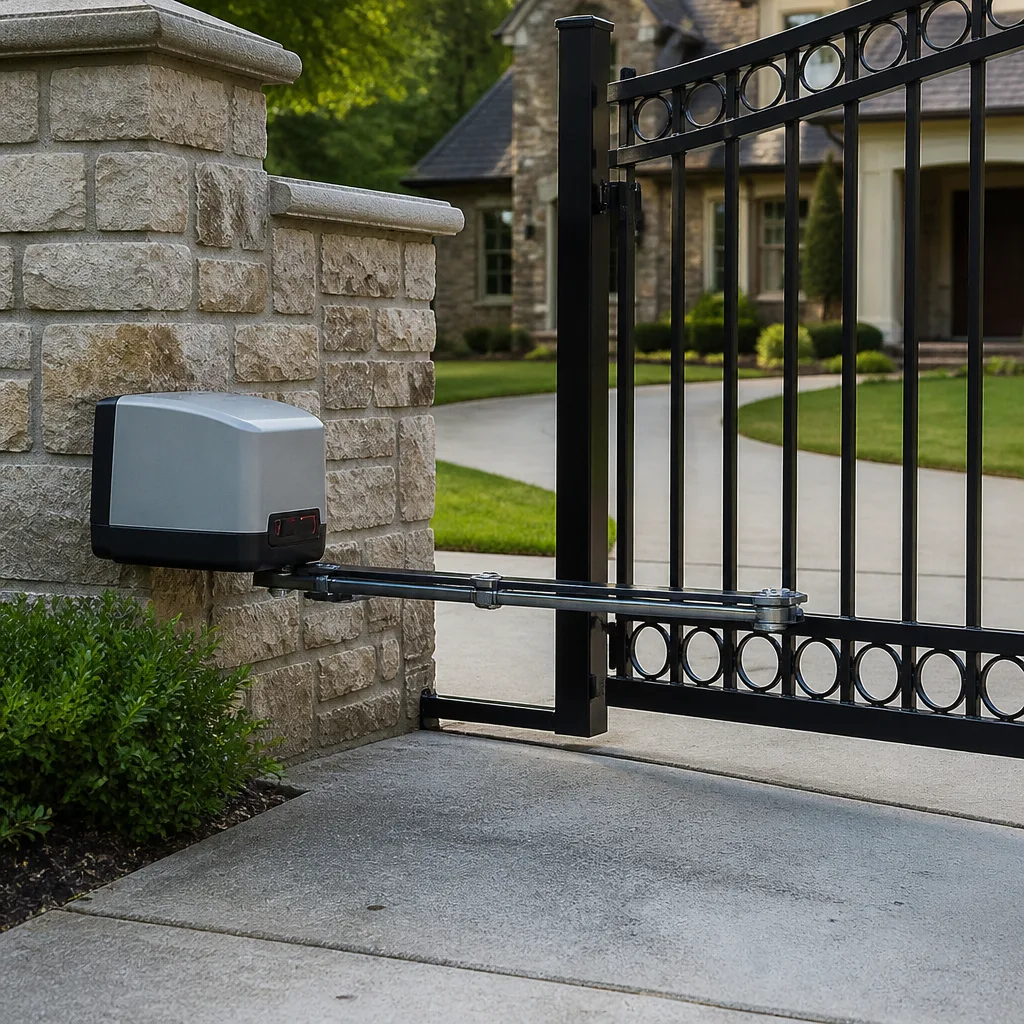 LiftMaster operators
Free on-site gate assessment - hinges, posts, and your LiftMaster or Nice gate operator checked before anything is quoted
The assessment is free and the quote is the invoice.
Get your free estimateGate Repair Emergency Preparedness Guide for Richmond Homes
Most gate failures we get called about in Richmond don’t start with the motor. They start with a power flicker during a summer thunderstorm, a cold snap that stiffens a hinge, or a fallen branch that bends a track just enough to jam the works. The gate itself is usually fine. What fails is the plan: nobody knows where the manual release is, nobody has the operator model written down, and the car is on the wrong side of a gate that won’t budge. During a Tropical Storm or a derecho, both of which Richmond has seen more than once in the last decade, a stuck gate can block emergency vehicle access to your property. This guide gives you a real protocol: manual release steps for the operators most common here, battery backup sizing, how to secure a gate safely, what to have ready when you call, and a post-storm inspection checklist.
Quick Answer
Emergency gate preparedness in Richmond means three things: knowing how to release your specific operator by hand, having battery backup sized for a real outage rather than a marketing claim, and having your operator brand, model, and symptom notes ready before you call for repair. Do those three and a storm-driven gate failure becomes an hour of inconvenience instead of a locked-in or locked-out crisis. If the gate is already down, call (866) 942-6565. We answer 24/7. Fast dispatch from 7am to 7pm, Sunday through Friday.
Styles & brands we work with
- Wrought iron
- Wood & steel frame
- Farm & ranch
- Sliding driveway gates
- LiftMaster operators
Table of Contents
- Why Richmond Gates Fail at the Worst Moments
- Manual Release Procedures for the Four Most Common Richmond Operators
- Battery Backup Sizing for Richmond’s Storm Season
- How to Secure a Gate After a Weather-Event Failure
- Emergency Contact Protocol: What to Have Ready Before You Call
- Post-Storm Inspection Checklist
- Between Storms: What Keeps a Gate Ready
- Common Mistakes to Avoid
Why Richmond Gates Fail at the Worst Moments
Richmond sits in a climate that tests gate hardware year-round. Summers bring heat and humidity that swell wood and stress seals on control boxes. Spring and fall bring the kind of wind events that drop limbs across driveways. Winter delivers freeze-thaw cycles that work hinges and rollers loose in ways a milder climate never produces. None of that is dramatic on its own. Put it together with an aging operator and a power grid that takes hits during storm season, and you get gates that quit exactly when you need them.
The pattern we see over and over in Richmond is a gate that’s been sliding along fine for years, then one storm pushes it past the margin. The hinge that was a little stiff seizes. The battery in the backup that’s been quietly dying for two seasons finally gives out. The safety loop that was already marginal floods and shorts. The gate doesn’t fail because it’s old. It fails because a small weakness met a big event.
That matters for emergency planning because it tells you where to look before the storm, not after. A gate that’s been serviced and whose battery backup actually holds a charge will ride out most of what Richmond weather throws at it. A gate that’s been ignored won’t, and the failure will land during the worst possible hour, usually when someone needs to get out for work or an ambulance needs to get in.
One more local factor: many Richmond properties have long driveways set back from the street, with gates that serve as the primary vehicle access. When that gate jams, there’s often no second way in for a car. That’s the scenario this guide is built around.
Manual Release Procedures for the Four Most Common Richmond Operators
Every automatic gate operator has a manual release. It’s the mechanism that lets you move the gate by hand when the power is out or the motor has failed. Know yours before you need it. The steps below cover the four operators we encounter most in Richmond homes, but the one safety step that matters on all of them is this: cut power to the operator at the breaker before you touch the release. Most homeowners skip it. Releasing a gate while the operator is still energized can send the gate moving under motor power the moment the release disengages, and it can damage the drive system. Power off first, every time.
LiftMaster (slide and swing)
- Cut power at the breaker that feeds the operator.
- Locate the manual release handle, usually on the operator housing or a chain hanging nearby.
- For slide operators, pull the release lever to disengage the drive; for swing operators, use the keyed release or the manual arm per the housing label.
- Move the gate slowly by hand to confirm it’s free, then secure it in the position you need.
Mighty Mule (swing)
- Cut power at the breaker.
- Remove the pin or key from the release on the operator arm.
- Disengage the arm from the gate and swing the gate by hand.
- Re-engage the arm only after power is restored and the gate has been tested.
Viking (swing and slide)
- Cut power at the breaker.
- Find the manual release lever on the operator; Viking units typically use a keyed release or a pull handle.
- Disengage the drive and move the gate by hand to check for binding.
- Note whether the gate moves freely or drags; drag is a sign of a hinge or track problem, not just a dead motor.
FAAC (swing and slide)
- Cut power at the breaker.
- Use the supplied release key on the operator’s manual release lock.
- Turn the release to disengage the drive, then move the gate by hand.
- Re-lock the release once the gate is positioned.
If you don’t recognize your operator, don’t guess. Look for the brand and model plate on the housing or inside the control box, and call us. We work on LiftMaster, FAAC, BFT, Linear, Viking, Ghost Controls, DoorKing, Elite, and Mighty Mule systems every day. We know exactly where each one fails and how to get it moving again. For anything beyond a manual release, that’s a job for electric gate repair from a specialist who reads control boards for a living.
Battery Backup Sizing for Richmond’s Storm Season
Battery backup is the difference between a gate that works through a storm outage and one that strands you. The marketing on most backup kits tells you it provides “backup power.” What it doesn’t tell you is for how long, under what load, and at what temperature. In Richmond, where a storm-driven outage can run several hours or more, sizing matters.
Here’s how to think about it, without the sales language:
- Match capacity to your actual outage history. If your block tends to lose power for two to four hours in a storm, a backup sized for that window is enough. If you’ve seen longer outages, size up.
- Account for cold. Battery capacity drops in cold weather. A backup that performs well in July may fall short in a January ice event. Richmond winters are mild compared to points north, but they’re cold enough to matter.
- Count your cycles. A gate that opens and closes twenty times a day draws down a battery faster than one used twice. Size for your real usage, not the brochure’s.
- Check the age of the battery. A backup battery that’s several seasons old may hold only a fraction of its rated capacity. Test it before storm season, not during.
The honest way to size a backup is to have a technician look at your operator, your gate weight, and your usage, then recommend a capacity that covers a realistic outage. That’s a free estimate conversation, not a guess. If you’re not sure what you have, call (866) 942-6565 and we’ll walk you through what to check on your unit before the next storm.
How to Secure a Gate After a Weather-Event Failure
When a gate fails during a storm, the immediate question is whether to leave it open or closed. Both have risks, and the right answer depends on your property and the situation. What matters most is securing it without damaging the operator or voiding its warranty.
For a gate that has failed in the closed position:
- Leave the gate closed and cut power at the breaker so it can’t try to cycle on its own.
- If the gate is on a slope or in wind, brace it with a physical stop (a wedge or a strap) rather than forcing the operator to hold it.
- Do not repeatedly cycle the operator trying to get it to move; that’s how control boards and drive gears get damaged.
For a gate that has failed in the open position:
- Cut power at the breaker.
- If the gate needs to stay open for access, secure it against wind with a physical brace or tie, not by jamming the operator.
- If you need it closed for security, move it by hand per the manual release steps above, then secure it in the closed position.
The warranty piece is important. Forcing a gate against a stuck operator, or disassembling the drive to “fix” it in the rain, is exactly the kind of thing that voids coverage. If the gate won’t move by hand after release, stop. That’s a mechanical problem that needs a technician. When in doubt, cut power, secure the gate physically, and call. Call (866) 942-6565. We answer 24/7. Fast dispatch from 7am to 7pm, Sunday through Friday.
Emergency Contact Protocol: What to Have Ready Before You Call
The single biggest thing that slows down an emergency gate repair is missing information. When you call, the more you can tell us up front, the faster we can diagnose and dispatch. Have this ready before you dial:
- Operator brand and model. Look on the housing or inside the control box. If you know it’s a Viking or a Ghost Controls, say so; if you don’t, a photo of the plate helps.
- The symptom, precisely. “Won’t open,” “opens but won’t close,” “moves a few inches and stops,” “makes a grinding noise,” “beeps and does nothing.” Each of those points to a different failure.
- Power status. Is the breaker on? Has the outlet been tested? Is the battery backup light showing? Is the control box lit?
- Gate type and position. Slide or swing, and whether it’s stuck open, stuck closed, or partway.
- Access notes. How a technician gets onto the property, whether there’s a code or key, and any pets or obstacles.
- What you’ve already tried. If you used the manual release, say so. If you cycled the breaker, say so.
That’s it. Six pieces of information that turn a twenty-minute phone triage into a two-minute one. We keep the call short because the gate is the emergency, not the paperwork. Call (866) 942-6565. We answer 24/7. Fast dispatch from 7am to 7pm, Sunday through Friday.
Post-Storm Inspection Checklist
After any high-wind or flooding event in Richmond, don’t just hit the remote and hope. Walk the gate first. Ten minutes of inspection can catch a problem before it becomes a repair, and it can keep you from running an operator against damage that’s already there.
- Look at the gate itself. Check panels, rails, and hinges for bending, looseness, or debris caught in the track.
- Check the track or swing path. Slide gates need a clear track; swing gates need a clear arc. Limbs, gravel, and standing water all cause problems.
- Inspect the hinges and rollers. Look for rust, wobble, or grinding. A hinge that’s loosened in a freeze-thaw cycle will get worse fast.
- Check the control box and conduit. Look for water intrusion, loose fittings, or damage to the box or wiring.
- Test the safety devices. Loops, photo eyes, and safety edges should stop the gate when triggered. Test them before you resume normal use.
- Test the manual release. Make sure it still works smoothly; a release that’s seized is useless in an emergency.
- Check the battery backup indicator. Confirm the backup is holding charge after the outage.
If anything looks off, or the gate behaves oddly when you test it, stop and call. Running a gate with a damaged component can turn a small fix into a big one. For the broader repair picture, our gate repair service is built around exactly this kind of post-storm diagnosis.
Between Storms: What Keeps a Gate Ready
Preparedness is mostly what you do when nothing’s wrong. A gate that gets a little attention between storms is the one that survives the next one. The list is short and doesn’t require special tools:
- Lubricate hinges and moving parts on a regular schedule suited to your gate’s material and exposure.
- Clear the track or swing path of debris after any wind event, before it gets driven over.
- Test the manual release while the weather is calm, so you’re not learning it in the rain.
- Test the safety devices on the same schedule, so a failed loop gets caught before it matters.
- Check the backup battery ahead of storm season rather than during the outage.
- Note any change in sound or speed. A gate that starts moving slower or louder is telling you something’s wearing.
We see a lot of Richmond gates where the owner didn’t know anything was wrong until the gate stopped entirely. A little between-storm attention changes that. And if a gate is older and getting temperamental, it might be time to think about a replacement rather than another repair. From the control board to the hinge, we handle the full lifecycle: emergency repair, electric system troubleshooting, and new installation.
Common Mistakes to Avoid
- Skipping the power-off step before manual release. Releasing a live operator can let the gate move under motor power and damage the drive. Cut the breaker first, every time.
- Cycling the remote over and over when the gate won’t move. Repeated cycles against a mechanical jam is how control boards and gears get ruined. Try once, then stop and diagnose.
- Guessing at battery backup capacity. Buying the biggest kit on the shelf without matching it to your operator and usage doesn’t help you through a Richmond outage. Size it to your gate.
- Forcing a stuck gate by hand. If it won’t move freely after release, something mechanical is binding. Forcing it causes more damage and can void the operator warranty.
- Ignoring a gate that’s been “working fine” for years. The failure we see most is a small wear item meeting a storm. Regular checks catch it first.
- Calling without the operator info. Not knowing your brand and model slows down dispatch. Look at the plate before you dial.
- Skipping the post-storm walk-through. Running a gate right after a wind event without checking the track and hinges is how small damage becomes a full repair.
See the difference
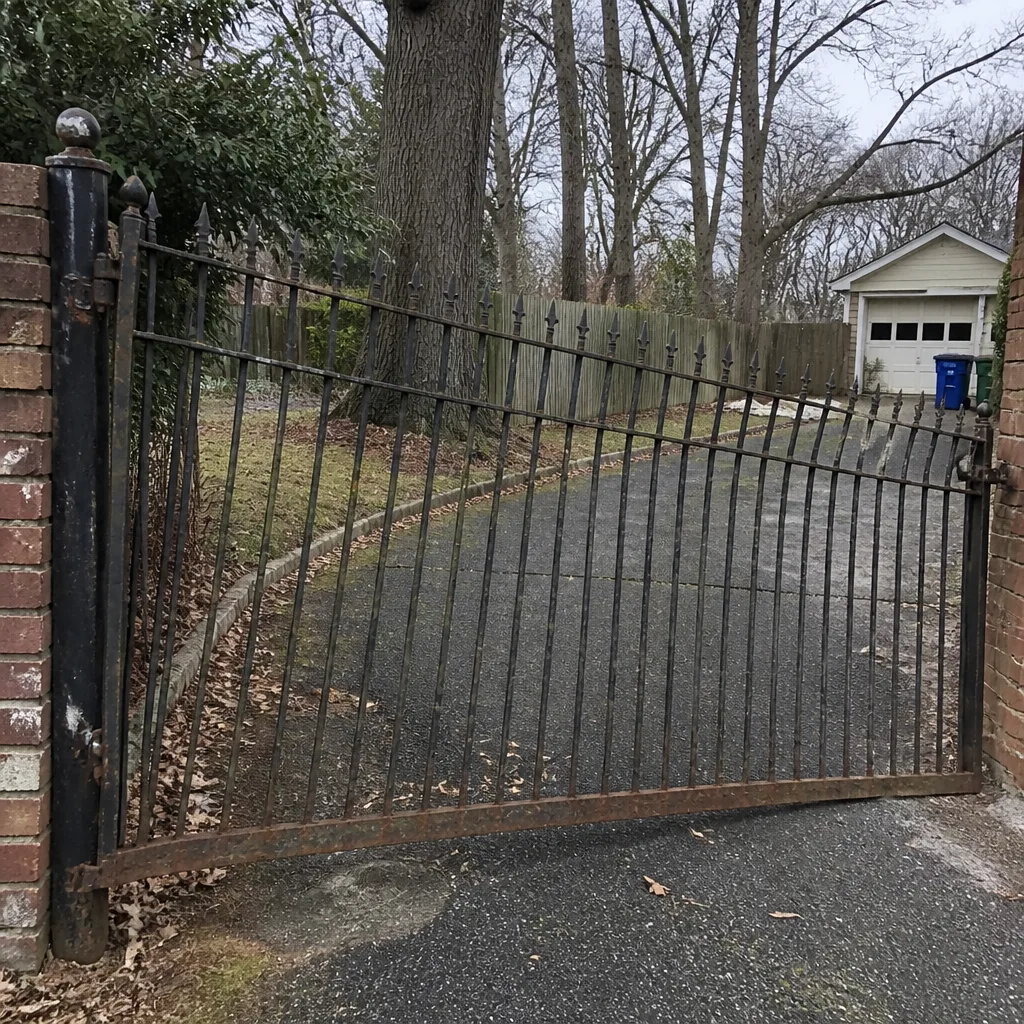 Before
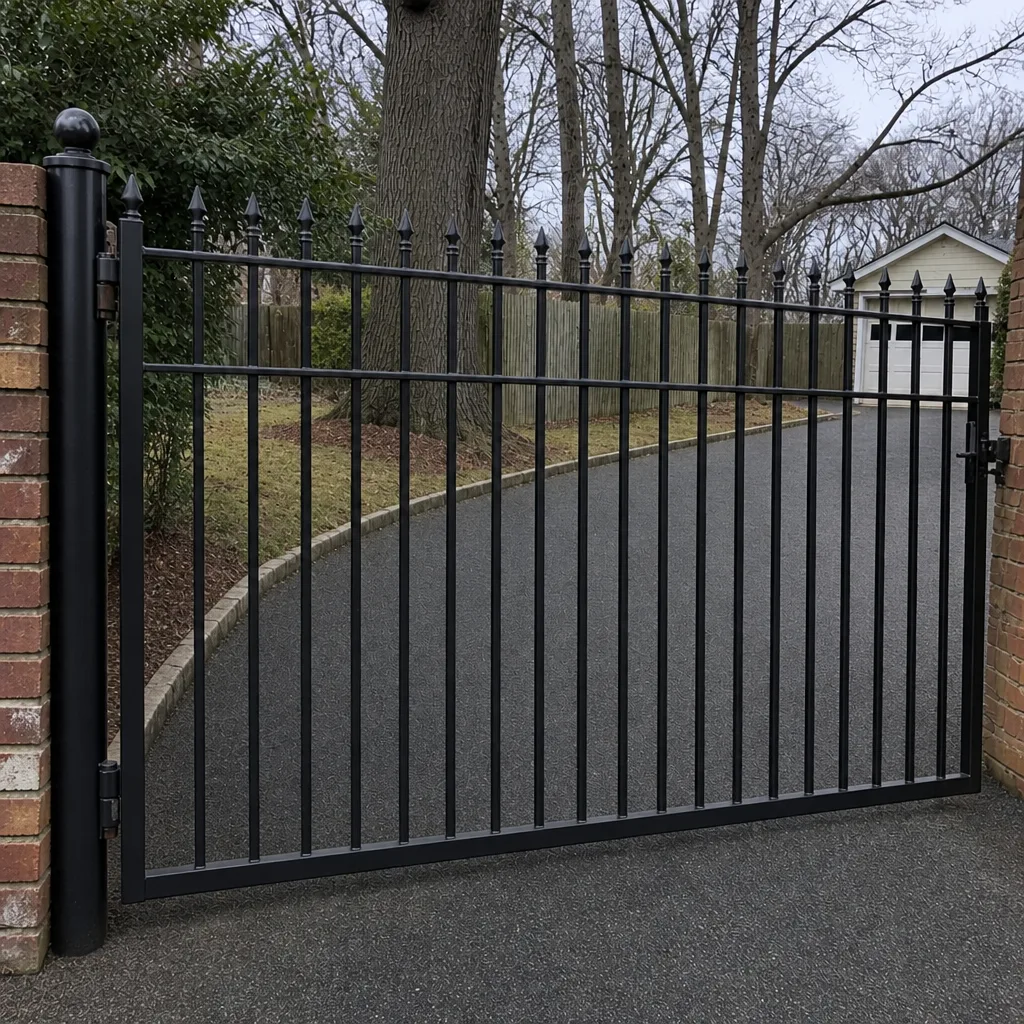 After
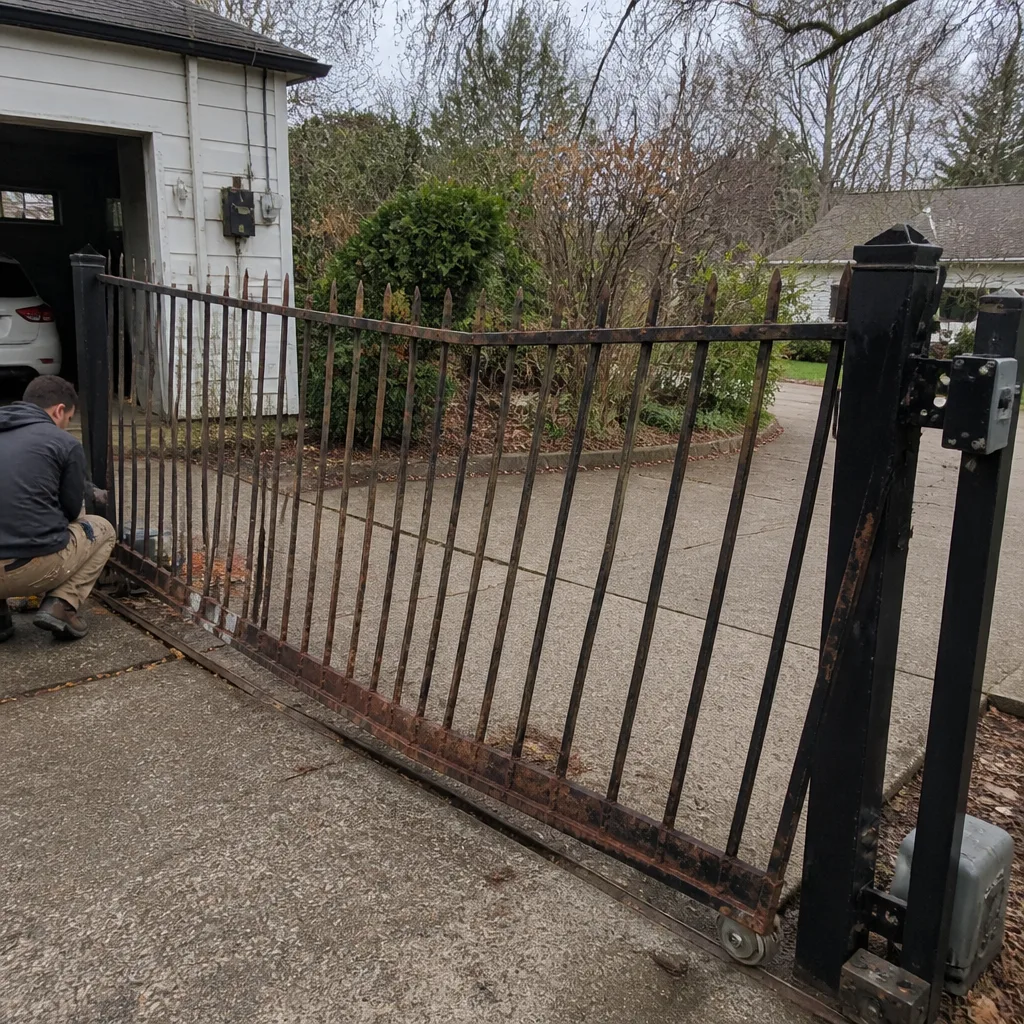 Before
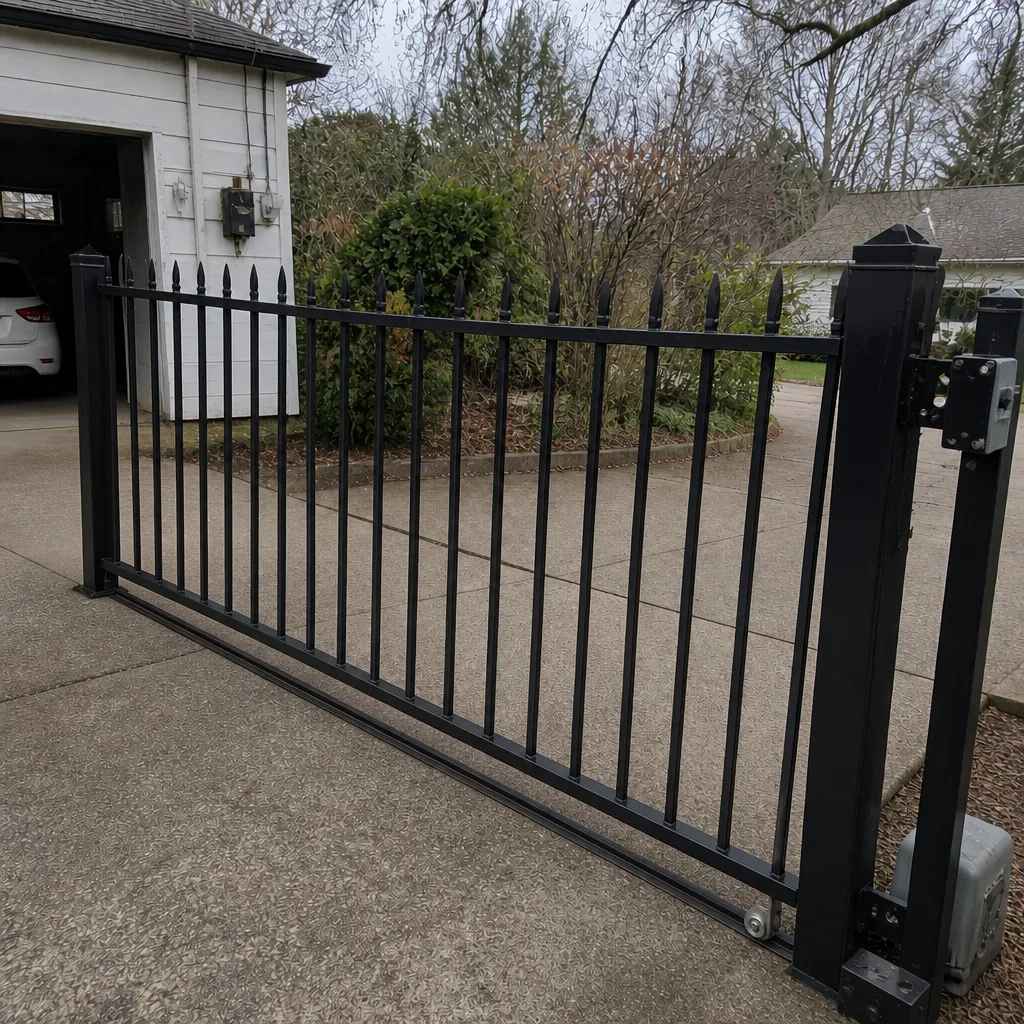 After
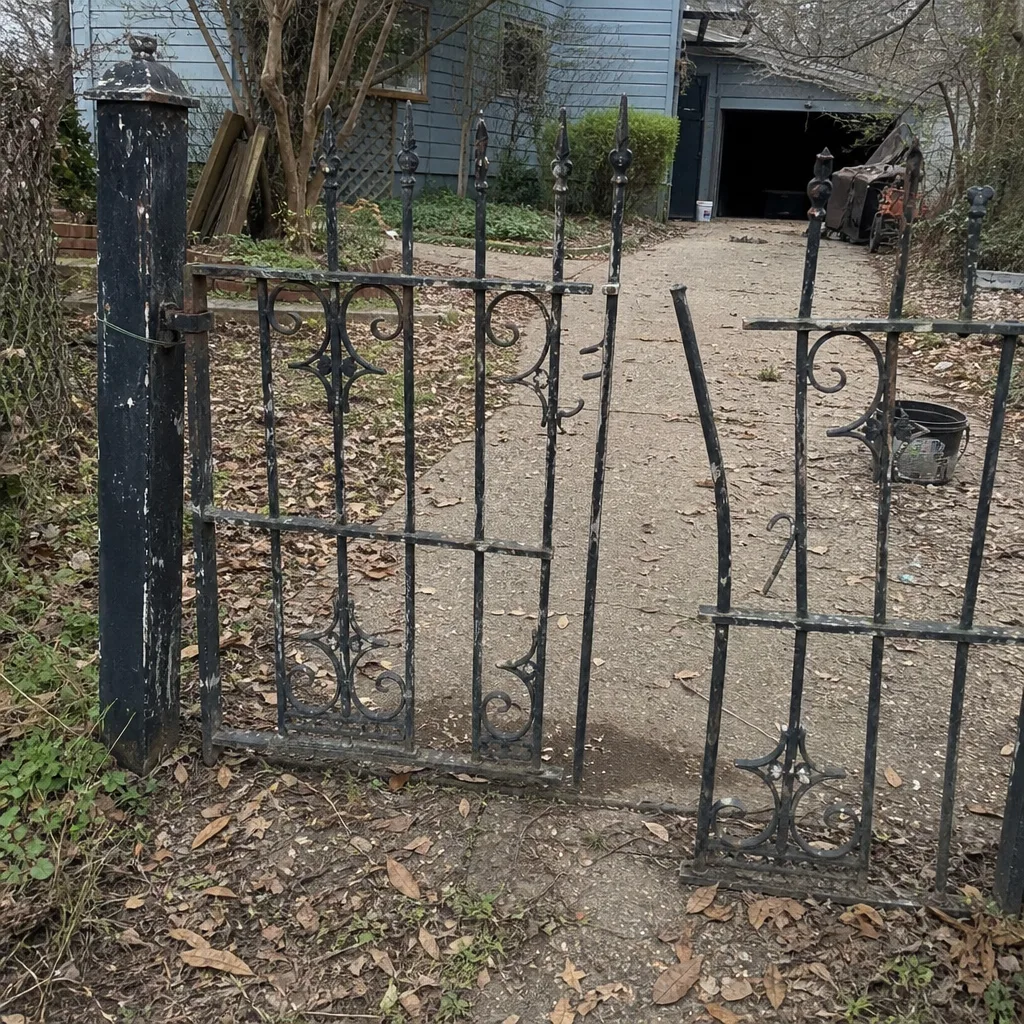 Before
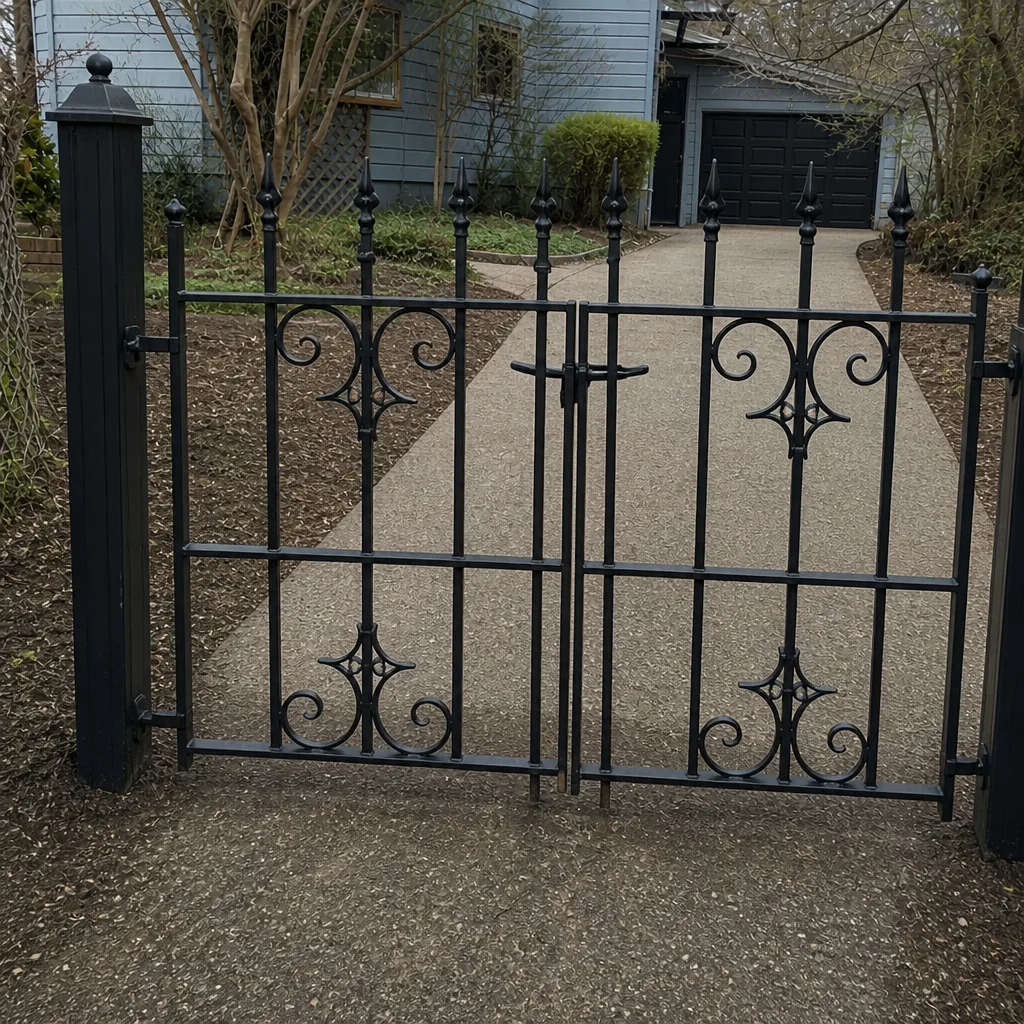 After
When to Call a Professional
Call a professional gate technician when the gate won’t move by hand after the manual release, when the operator beeps or cycles oddly, when the control box has water intrusion, or when the safety devices fail their test. Also call if you’ve tried the breaker and the remote and nothing changes, or if you hear grinding, see sparking, or smell burning at the operator. Those are signs of a fault in the motor, control board, or wiring that shouldn’t be handled at home. Working around a live operator or damaged electrical components is a job for a trained hand. Richmond Gate Repair offers free estimates in Richmond, and we handle repair, electric gate repair, and installation under one roof. Call (866) 942-6565. We answer 24/7. Fast dispatch from 7am to 7pm, Sunday through Friday.
Frequently Asked Questions
Cut power at the breaker that feeds the operator, then use the manual release on your operator housing to disengage the drive and move the gate by hand. The power-off step comes first because releasing a live operator can let the gate move under motor power and damage the drive. If you don’t know where your release is, call (866) 942-6565 for an exact quote on a service visit – estimates are free.
Cut power at the breaker, secure the gate physically with a brace or tie, and call for service rather than forcing the operator. A gate that’s stuck after a storm often has debris in the track, a bent component, or a control fault that needs diagnosis. Call (866) 942-6565. We answer 24/7. Fast dispatch from 7am to 7pm, Sunday through Friday.
It depends on your battery’s rated capacity, the age of the battery, the weight of your gate, and how often it cycles. A backup sized for a few hours of typical use won’t cover a longer outage, and cold weather reduces capacity. Have a technician check the battery and recommend a capacity that matches your actual usage. Call (866) 942-6565 for a free estimate.
You can handle the manual release and the power-off step safely, but diagnosing control boards, loop detectors, intercom integrations, and motor faults is a job for a trained technician. Working inside a live control box or around operator wiring is dangerous. We specialize in electric gate repair and read these systems daily. Call (866) 942-6565 for an exact quote – estimates are free.
We work on nine major gate and operator brands, including LiftMaster, FAAC, BFT, Linear, Viking, Ghost Controls, DoorKing, Elite, and Mighty Mule, which covers most systems Richmond homeowners already own. If you’re not sure of your brand, look at the plate on the housing and have it ready when you call. Call (866) 942-6565. We answer 24/7.
Have your operator brand and model, a precise description of the symptom, your power status, whether the gate is stuck open or closed, and notes on how a technician can access the property. That turns a long triage call into a fast one. Call (866) 942-6565 for an exact quote – estimates are free.
The Bottom Line
Emergency gate preparedness in Richmond comes down to three habits: know your manual release and cut the power before you use it, size your battery backup for a real outage rather than a marketing claim, and keep your operator info where you can find it before you need it. Add the post-storm walk-through and you’ve turned a weather-event failure from a crisis into an hour of inconvenience. If the gate is already down, don’t force it. Call a gate specialist who knows the brand, not a generalist who has to look it up. Call (866) 942-6565 for a free estimate. We answer 24/7. Fast dispatch from 7am to 7pm, Sunday through Friday. Richmond Gate Repair handles repair, electric gate repair, and installation, and our technicians have up to 12 years of experience.
Written by the team at Richmond Gate Repair.