
Last updated November 16, 2026
 Wrought iron
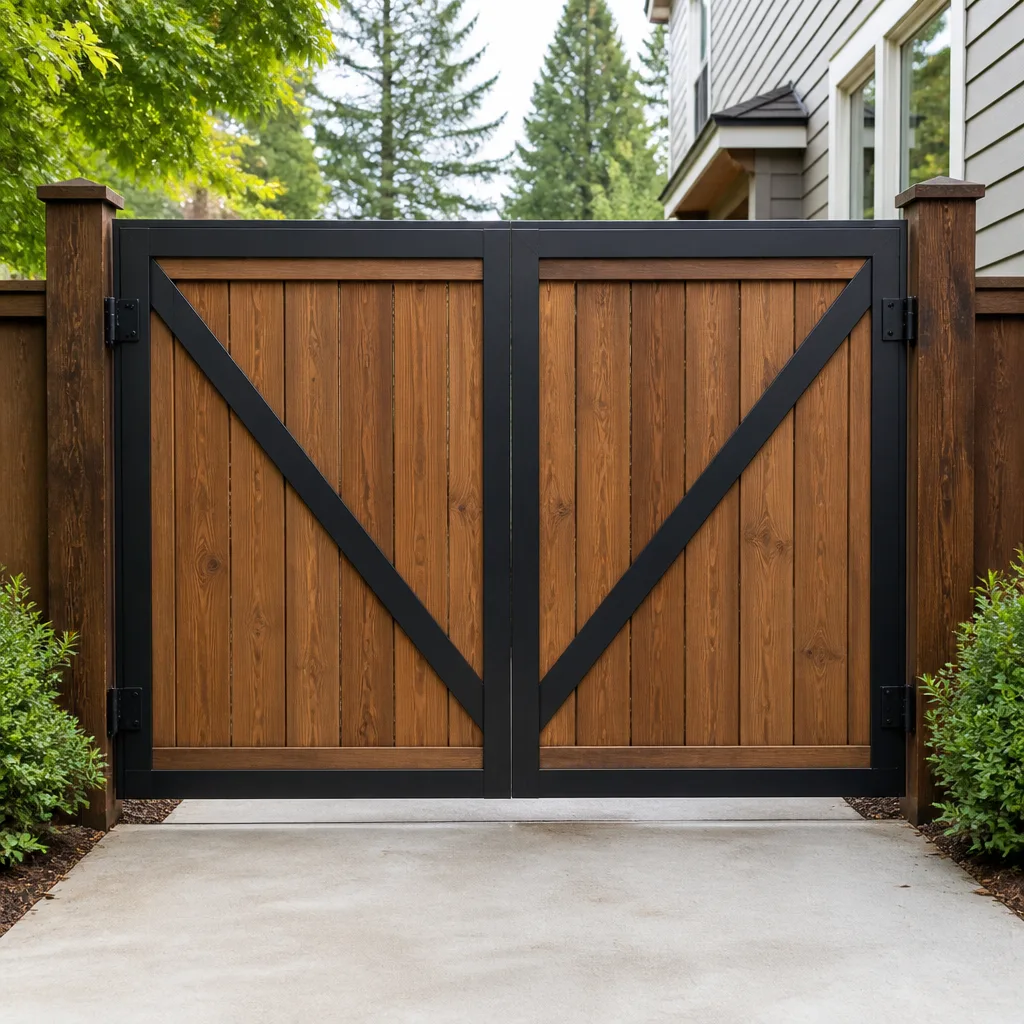 Wood & steel frame
 Farm & ranch
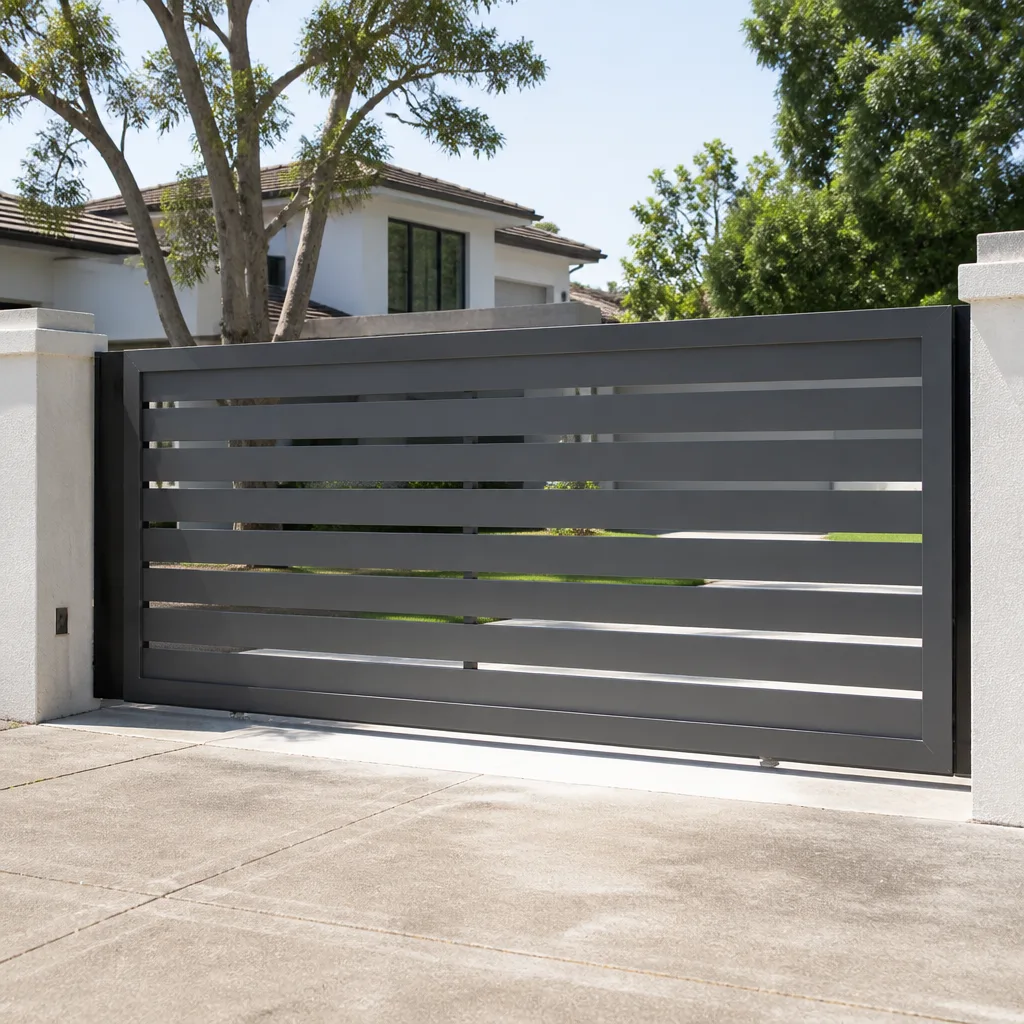 Sliding driveway gates
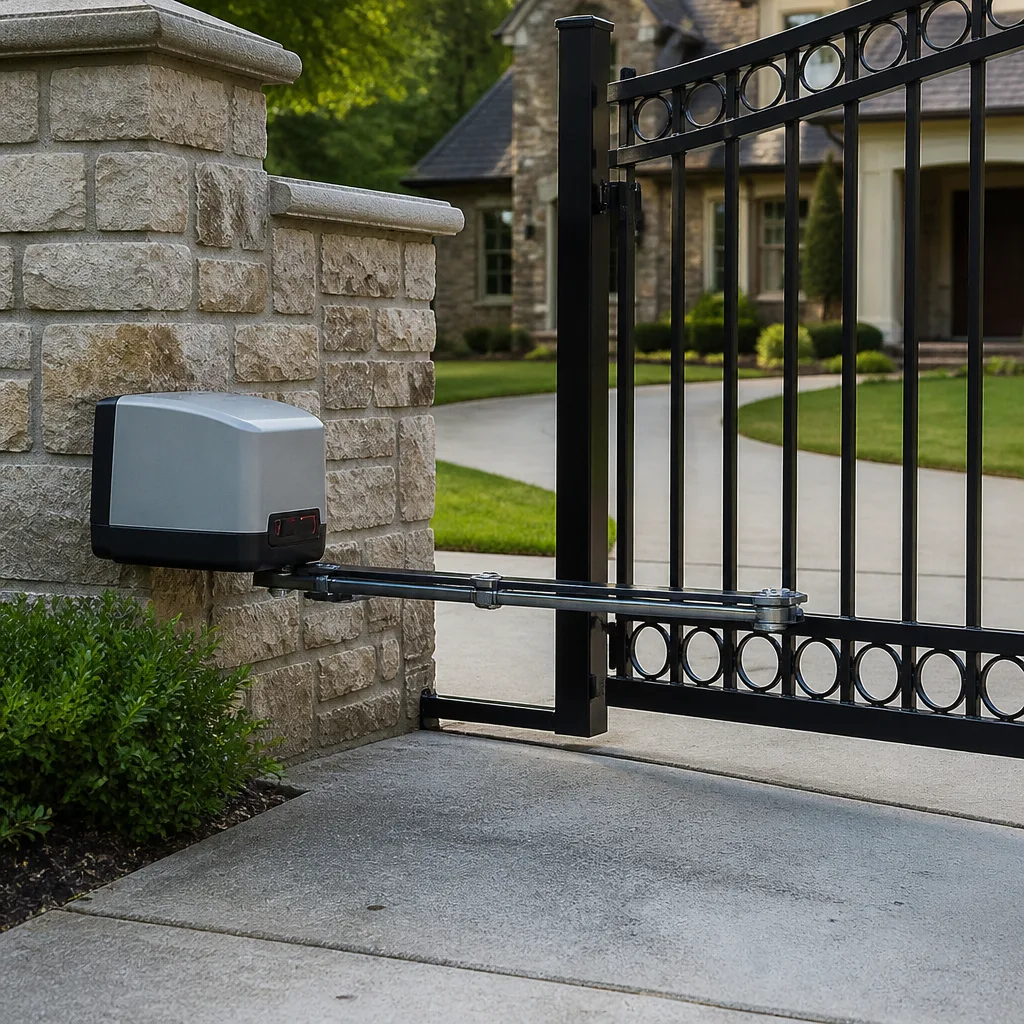 LiftMaster operators
Free on-site gate assessment - hinges, posts, and your LiftMaster or Nice gate operator checked before anything is quoted
The assessment is free and the quote is the invoice.
Get your free estimateGate Repair Maintenance Schedule: What to Do and When
The number-one cause of premature gate motor failure isn’t weather or age. It’s a gate that’s slightly out of alignment making the motor work noticeably harder on every single cycle, unnoticed, for months on end until something gives. We see it constantly: the operator gets blamed, but the real culprit is a hinge pin that wore thin, a post that shifted a quarter inch, or a track that collected grit through a Richmond summer. A calendar-driven maintenance schedule won’t catch it. A condition-driven one will. In this guide, we’ll show you how to build a maintenance routine around your gate’s type, material, and drive system, plus the seasonal triggers that actually matter in Richmond.
Quick Answer
Gate repair maintenance should be condition-driven, not calendar-driven. In Richmond, that means checking post stability and hardware after the winter freeze-thaw cycle, inspecting for rust acceleration in late-summer humidity, and running a manual load test every few months to confirm your motor isn’t compensating for hidden mechanical drag. A swing gate, a slide gate, an iron gate, and a vinyl gate each need a different task list; matching the schedule to your gate type prevents more failures than any quarterly checklist.
Styles & brands we work with
- Wrought iron
- Wood & steel frame
- Farm & ranch
- Sliding driveway gates
- LiftMaster operators
Table of Contents
- Why Calendar Schedules Fail
- The Maintenance Matrix: Gate Type, Material, Drive
- The Load Test: Your Best Early Warning
- Lubrication Specifics: Right Product, Right Component
- Richmond’s Seasonal Triggers
- What a Professional Annual Inspection Should Cover
- Common Mistakes to Avoid
- When to Call a Professional
Why Calendar Schedules Fail
A wrought-iron swing gate on a half-acre lot in Henrico ages nothing like a vinyl sliding gate at a West End townhome. Same city, same weather, completely different wear curves. A generic “check every quarter” schedule ignores that reality, which is why so many gates end up with the same problem: the operator fails long before the gate structure does, because nobody was watching the mechanical drag building up underneath it.
Condition-driven maintenance means you inspect based on what your gate is actually doing, not what month it is. A few things to establish first:
- Cycles per day. A gate that opens twice a day for a single household accumulates stress at a fraction of the rate of a property-manager gate opening dozens of times daily. High-cycle gates need more frequent load checks and hardware inspections than low-cycle ones.
- Gate type. Slide gates put their load on rollers and a track; swing gates put theirs on hinges and posts. The failure points are different, so the inspection list is different.
- Material. Iron and steel corrode, wood swells and warps, aluminum holds shape but fatigues at welds, vinyl rarely corrodes but flexes. Each material fails on its own timeline.
- Drive system. Hydraulic operators, electromechanical operators, and solar-powered operators all have distinct wear items and service intervals.
Once you know those four things about your gate, you can build a maintenance routine that actually matches it. That’s the approach we take at Richmond Gate Repair: diagnose the specific system in front of us, then recommend the checks that matter for that gate, not a generic quarterly package.
The Maintenance Matrix: Gate Type, Material, Drive
Here’s how to organize your maintenance tasks around what you actually own. Use this as a matrix; find your gate’s row on each axis and combine the relevant tasks.
Swing Gates (Load on Hinges and Posts)
- Check hinge pins and bushings for play. Worn pins let the gate sag, which tilts the whole leaf and forces the operator to fight gravity.
- Inspect post stability, especially after winter. A post that has shifted even slightly throws off the gate’s alignment with the operator arm.
- Test the closing edge for smooth travel and confirm the gate doesn’t scrape the ground or bind mid-swing.
- Check the operator arm and linkage for looseness or bent components.
Slide Gates (Load on Rollers and Track)
- Clean the track of grit, leaves, and debris; this is the single most overlooked slide-gate task in Richmond yards.
- Inspect rollers and guide wheels for flat spots or seized bearings.
- Confirm the gate travels level and doesn’t ride up on the track, which stresses the operator and the gate frame.
- Check the rack-and-pinion or chain for tension and wear; a loose chain slaps and stretches.
By Material
- Iron and steel: inspect for rust at weld joints and near the ground, where moisture lingers. Touch up protective coatings before rust spreads under the paint.
- Aluminum: check welds and pivot points for fatigue. Aluminum doesn’t rust the way steel does, but it can crack at stress points.
- Wood: look for swelling, warping, and rot at the bottom rail and hinges. A warped gate throws off operator alignment.
- Vinyl: check for flex and stress at fasteners. Vinyl rarely corrodes, but it can sag or loosen over time.
By Drive System
- Hydraulic: check fluid levels and look for leaks at fittings and seals. Hydraulic systems lose efficiency gradually, so a slow leak can go unnoticed until the gate stops.
- Electromechanical: inspect the motor housing for moisture intrusion and check that chains, belts, or screws are properly tensioned.
- Solar: inspect battery health and panel condition. Solar operators are only as reliable as their battery, and shade or debris on the panel cuts charging.
The Load Test: Your Best Early Warning
The load test is the single most useful thing you can do for an automated gate, and it takes about a minute. The idea is simple: put the operator in manual release mode and push the gate by hand. If it moves smoothly with light effort, the mechanical system is healthy. If it feels heavy, binds, or drags, the motor has been compensating for that drag, and it’s only a matter of time before something fails.
- Put the operator into manual release mode (follow your operator’s instructions; on most systems this is a key release or a lever).
- Push the gate through its full travel by hand.
- Note any binding, scraping, heaviness, or spots where the gate catches.
- Release the manual mode and restore the operator to normal operation.
Run this test every few months, and always after a season change. A gate that fails the load test isn’t necessarily broken, but it’s telling you something in the mechanical system needs attention: a dry hinge, a worn roller, a misaligned post, a track full of grit. Catching it here is far cheaper than catching it when the motor burns out. We work on LiftMaster, Elite, and Mighty Mule systems regularly, and the load test catches drag on all of them the same way.
Lubrication Specifics: Right Product, Right Component
Lubrication is where well-meaning homeowners do the most damage. The wrong product attracts grit, gums up moving parts, or washes away the grease the manufacturer put there. Here’s what to use where.
Hinge Pins and Pivot Points
Use a light machine oil or a dedicated hinge lubricant. Apply sparingly, work the gate back and forth, and wipe off the excess. Heavy grease on hinge pins collects dust and grit, which turns into an abrasive paste that wears the pin faster than running it dry.
Chain Drive
Use a chain-specific lubricant, not general-purpose oil or WD-40. Chain lubricant is formulated to penetrate the links and stay put without flinging off. General oil runs off quickly and attracts dirt.
Screw Drive
Use the grease specified for your operator, typically a light lithium or synthetic grease. Screw drives need a film that stays in the threads without hardening. Applying too much attracts debris and can clog the screw.
Track and Rollers (Slide Gates)
Clean the track first; lubrication on a dirty track just makes mud. Use a dry lubricant or a light application of the manufacturer’s recommended product on rollers. Avoid heavy grease on tracks in Richmond’s humid summers; it collects grit and speeds wear.
Products to Avoid
- WD-40 as a lubricant. It’s a solvent and water displacer, not a long-term lubricant. It strips existing grease and leaves parts dry.
- Heavy wheel-bearing grease on hinges or chains. It collects grit and turns into an abrasive paste.
- Silicone spray on chain drives. It doesn’t have the load-bearing film a chain needs and washes off quickly.
Richmond’s Seasonal Triggers
Richmond’s climate gives you three specific maintenance windows. They’re not arbitrary dates; they’re driven by what the weather does to gate hardware in central Virginia.
Spring: Frost-Heave Post Check
Winter freeze-thaw cycles in Richmond push posts up and shift them sideways. A post that heaves even a fraction of an inch throws off gate alignment and load. In spring, check every post for stability, re-check your load test, and look for gaps at the base where soil has settled or heaved. This is especially true on older properties in neighborhoods like the Fan or Church Hill, where posts have seen many winters.
Late Summer: Rust Acceleration Check
Richmond summers are humid, and humidity accelerates rust on iron and steel gates. Late summer is when you’ll notice rust blooming at weld joints, near the ground, and around fasteners. Inspect those areas and touch up coatings before rust spreads under the paint. For aluminum gates, check welds and pivot points for fatigue.
Fall: Pre-Holiday Load Check
Delivery traffic spikes around the holidays, which means more gate cycles and more operator stress. Before that season starts, run a load test, clean the track on slide gates, check the operator’s manual release, and confirm safety features (photo eyes, edge sensors, loop detectors) are working. If your gate has an intercom or access control integration, test it now, not when a delivery driver is stuck at the gate.
What a Professional Annual Inspection Should Cover
A professional annual inspection should be a genuine system check, not a lubrication pass. Here’s what a legitimate inspection includes, and what on a maintenance invoice is filler to watch for.
Legitimate Inspection Line Items
- Post and structural stability check (swing gates) or track and roller inspection (slide gates).
- Load test with the operator in manual mode.
- Operator diagnostics: motor current draw, control board check, limit switch function, manual release function.
- Safety device testing: photo eyes, safety edges, loop detectors, and any access control integration.
- Battery and charging check on solar operators.
- Hardware inspection: hinges, pins, rollers, chains, and fasteners.
Filler to Watch For
- “Full system evaluation” with no detail on what was checked.
- Line items for lubrication alone, with no inspection notes.
- Charges for “tension adjustment” without a stated reason or measured result.
- Any recommendation to replace parts without a described failure mode.
If you’re evaluating a vendor, ask them what they test and how they document it. A specialist will tell you exactly what they check on your gate type. We handle gate repair and inspections across Richmond, and we document what we find, what we tested, and what we recommend, so you can evaluate the scope before approving anything.
Common Mistakes to Avoid
- Lubricating without cleaning first. Grease on a dirty hinge or track turns grit into an abrasive paste that wears parts faster. Clean, then lubricate, then wipe off the excess.
- Using WD-40 as a long-term lubricant. It strips existing grease and leaves parts dry, which accelerates wear on hinge pins and chains.
- Ignoring the load test until the motor fails. By the time a motor burns out, the mechanical drag that caused it has usually been building for months. Run the test regularly and catch it early.
- Skipping the spring post check. Richmond’s freeze-thaw cycle shifts posts, and a shifted post throws off gate alignment. Check post stability every spring, especially on older properties.
- Assuming every gate needs the same schedule. A vinyl slide gate at a West End townhome and an iron swing gate in Henrico need different task lists. Build the schedule around your gate type.
- Ignoring safety device function. Photo eyes, edge sensors, and loop detectors are there to stop the gate on an obstruction. Test them, and don’t assume they work because the gate opens and closes.
- Putting off rust touch-up until spring. Rust spreads under paint through the humid Richmond summer. Touch up in late summer before it gets worse.
When to Call a Professional
Call a professional when your gate fails the load test twice in a row, when the operator runs but the gate doesn’t move smoothly, when safety devices stop responding, or when you see structural issues like a leaning post, a bent track, or a cracked weld. Also call if your gate is more than a few years old and has never had a full inspection, or if you’re unsure what condition your gate is actually in. Those are the signs that need a specialist’s eyes, not a homeowner’s guess. Richmond Gate Repair offers free estimates in Richmond; call (866) 942-6565. We answer 24/7. Fast dispatch from 7am to 7pm, Sunday through Friday.
See the difference
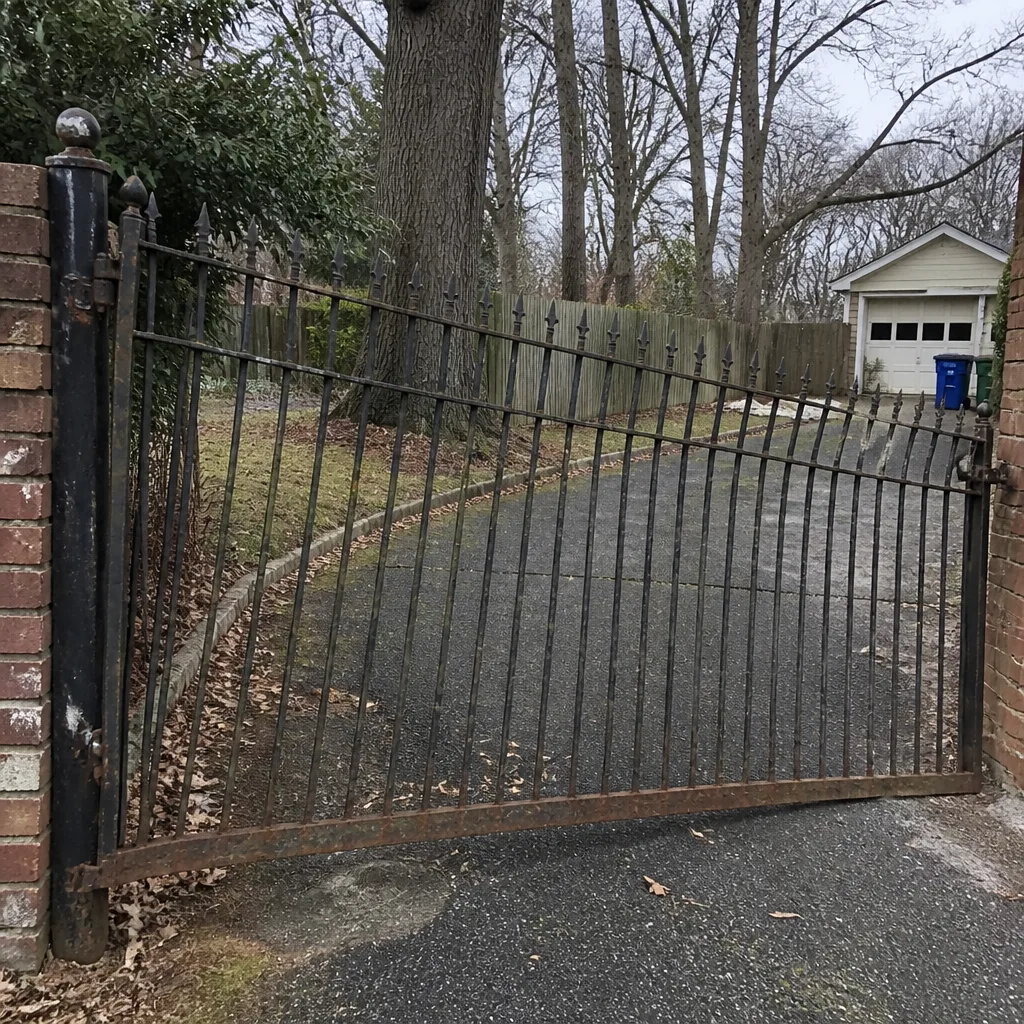 Before
 After
 Before
 After
 Before
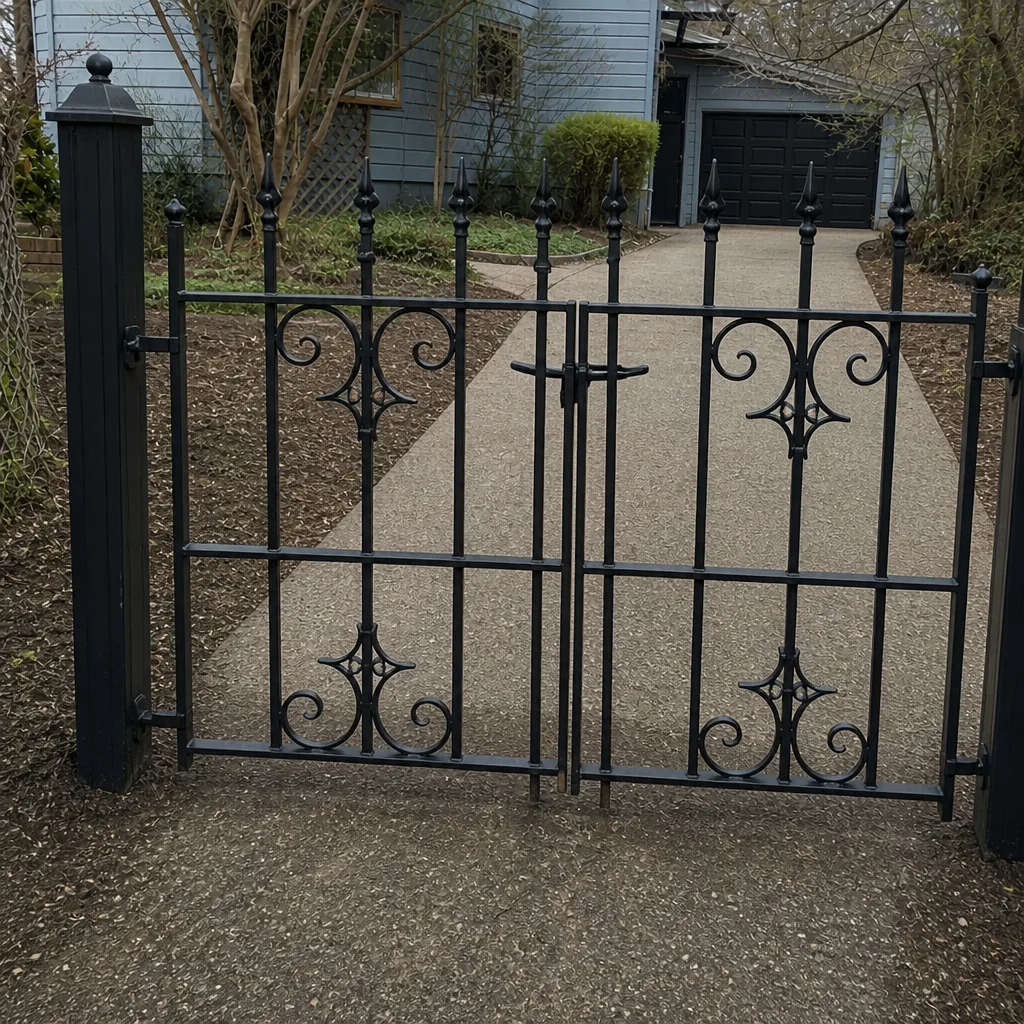 After
Frequently Asked Questions
At minimum once a year for a full inspection, plus a load test every few months. High-cycle gates and older gates with iron or wood components benefit from a spring and fall check tied to Richmond’s seasonal triggers.
The load test. It’s the fastest way to catch mechanical drag before it damages the motor, and it takes about a minute with the operator in manual mode.
You can handle basic lubrication if you know which product goes on which component: light oil on hinge pins, chain lubricant on chains, manufacturer grease on screw drives, dry lubricant on slide tracks. Avoid WD-40 as a long-term lubricant; it strips existing grease and leaves parts dry.
Often, yes. A motor that runs hot or fails early is usually compensating for mechanical drag: a worn hinge, a misaligned post, a dirty track, or a loose chain. The load test will tell you whether the motor is fighting the gate.
Yes. Humid summers accelerate rust on iron and steel gates, especially at weld joints and near the ground. Late summer is the right time to inspect for rust and touch up protective coatings.
A real invoice lists what was tested and what was found: post or track condition, load test results, operator diagnostics, safety device testing, and hardware inspection. Watch for vague line items like “full system evaluation” with no detail.
The Bottom Line
Build your gate maintenance schedule around your gate’s type, material, and drive system, not an arbitrary calendar. Run the load test often, lubricate the right components with the right products, and tie your seasonal checks to Richmond’s climate: spring post checks, late-summer rust inspections, fall load checks before heavy delivery traffic. When something fails the load test or a safety device stops working, call in a specialist. For electric gate repair or a full inspection in Richmond, call (866) 942-6565 for a free estimate. We answer 24/7. Fast dispatch from 7am to 7pm, Sunday through Friday.
Written by the team at Richmond Gate Repair.