
Last updated November 16, 2026
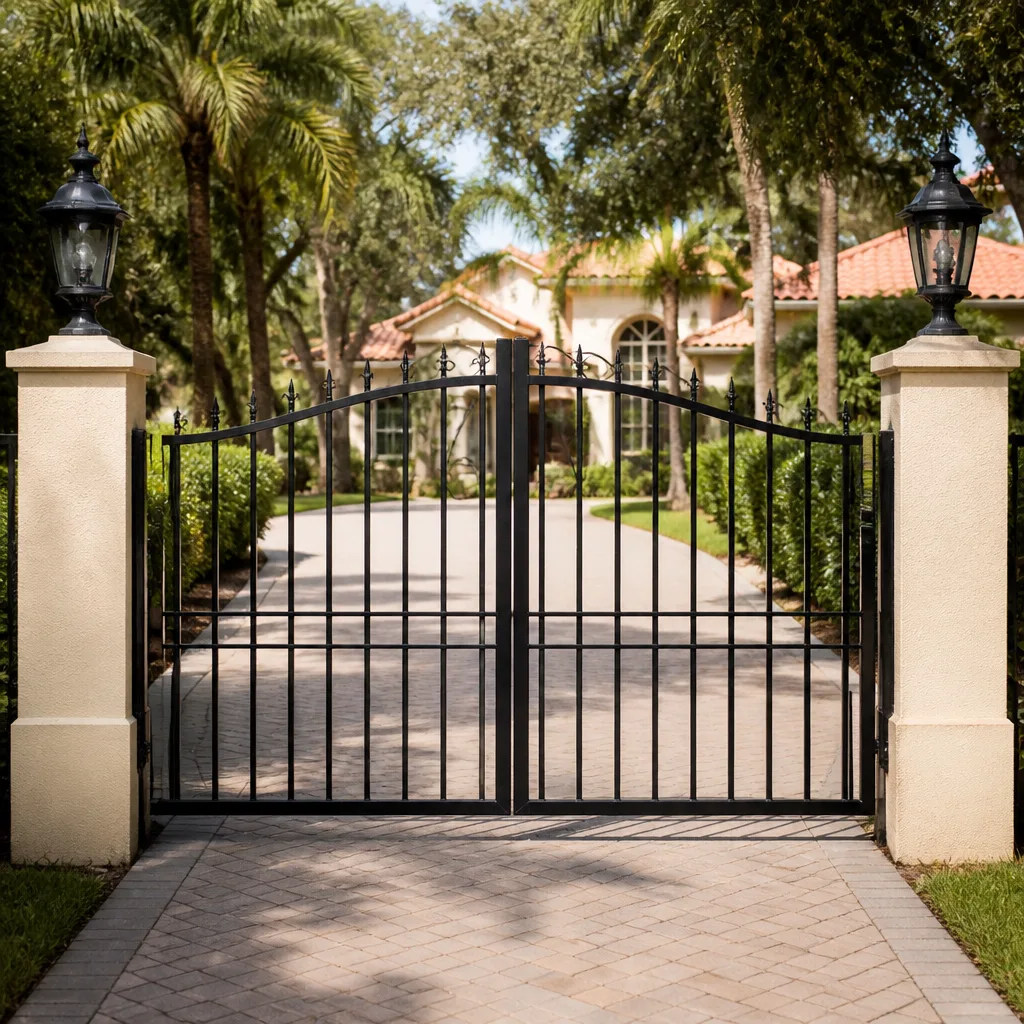 Wrought iron
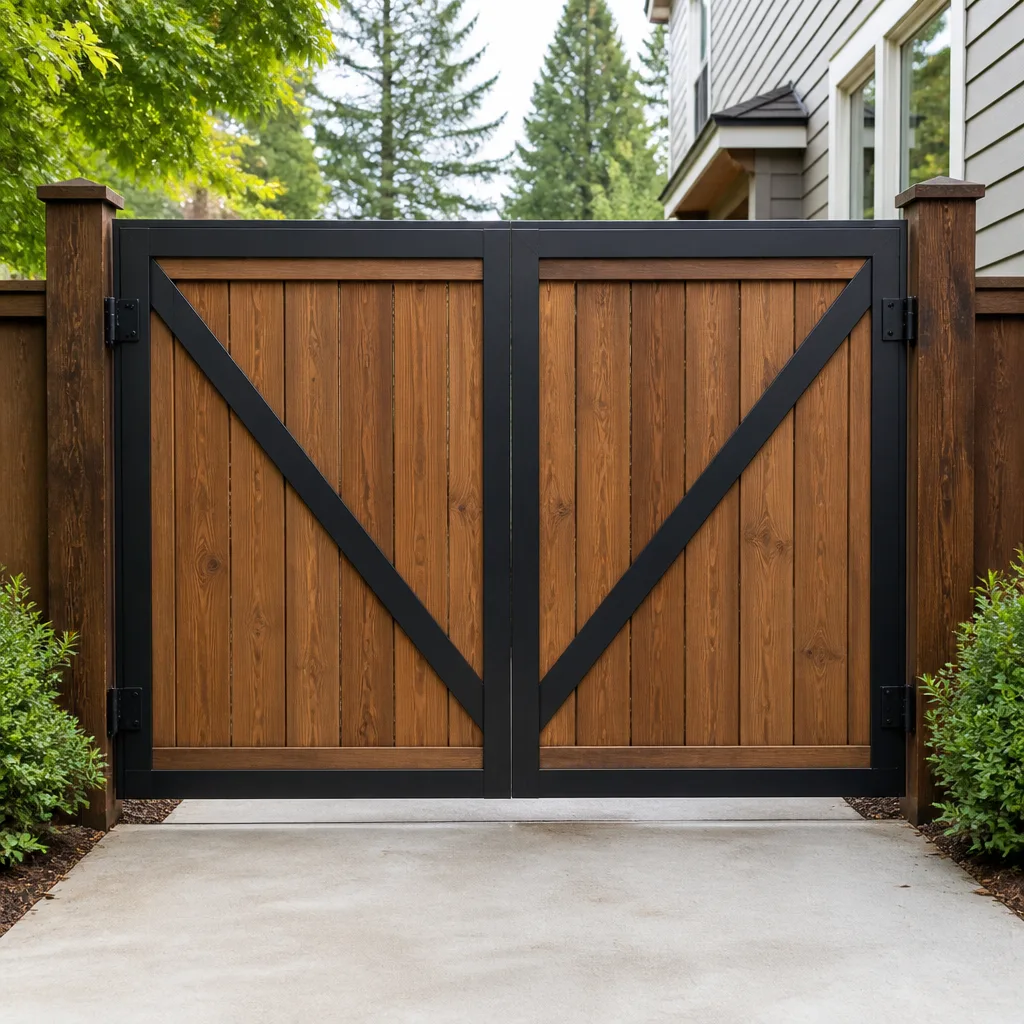 Wood & steel frame
 Farm & ranch
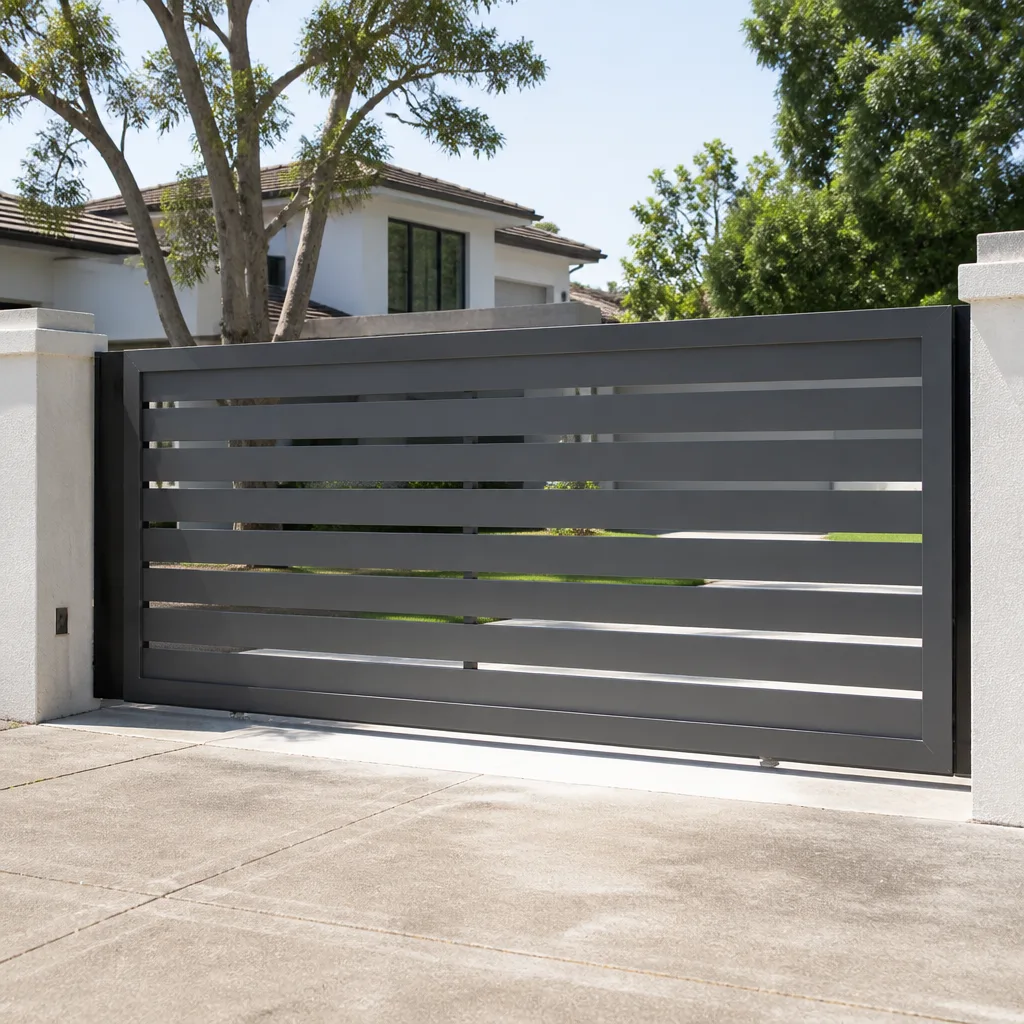 Sliding driveway gates
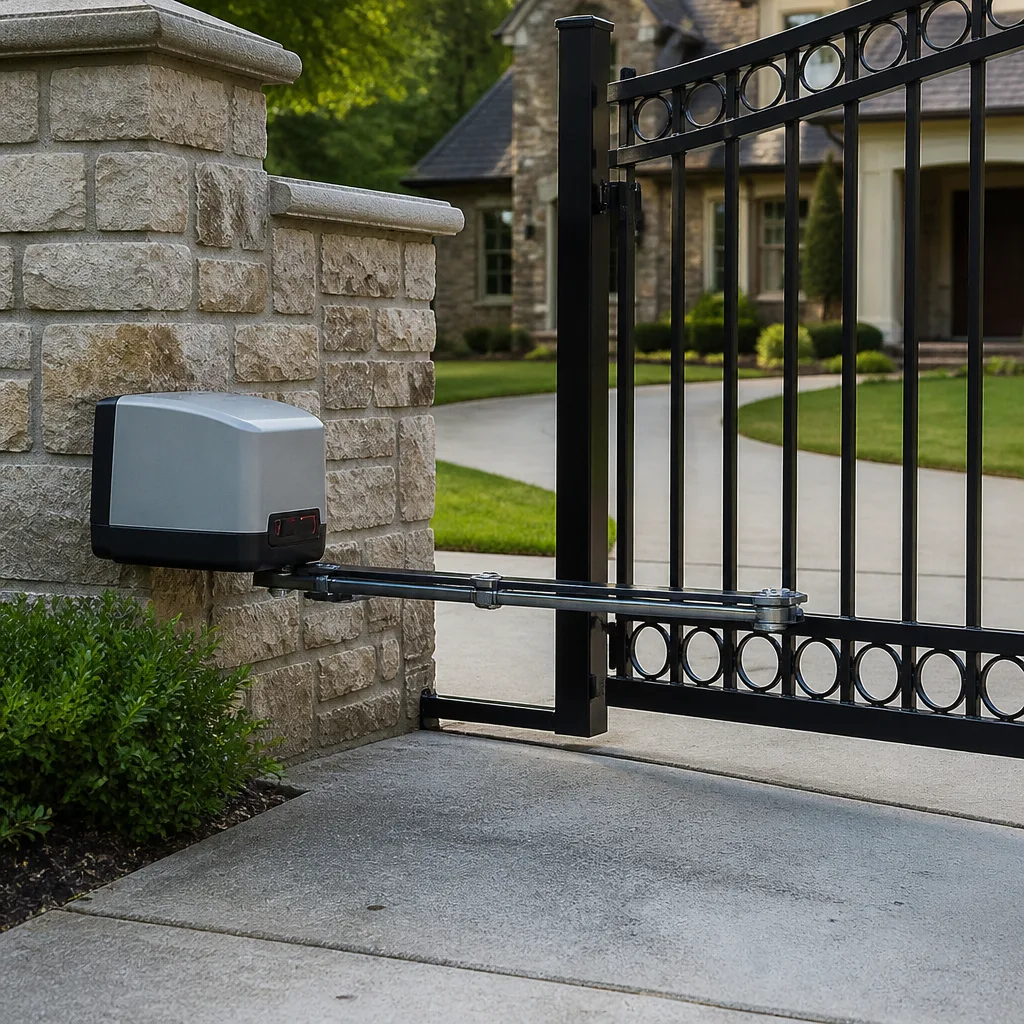 LiftMaster operators
Free on-site gate assessment - hinges, posts, and your LiftMaster or Nice gate operator checked before anything is quoted
The assessment is free and the quote is the invoice.
Get your free estimateSeasonal Gate Repair Care for Richmond: Year-Round Homeowner’s Guide
Most Richmond homeowners blame winter for gate failures. It’s a fair instinct, but it points at the wrong season. Winter is when the problem shows up, not when it starts. The control board that quits in February usually spent August cooking inside a sun-baked operator housing. Metal that binds in July heat was measured and adjusted back in April. If you service a gate once a year, you’re always fixing last season’s damage. Richmond’s four distinct seasons each stress a gate in a different way, and each one needs its own short list of checks. This guide walks through what to look at in spring, summer, fall, and winter, and gives you a log to keep at the panel so nothing gets missed.
Quick Answer
Seasonal gate care in Richmond means inspecting and adjusting at four specific times a year instead of once. Spring calls for post-frost heave checks on posts and sensor cleaning during pollen season. Summer calls for thermal-expansion checks and operator-housing cooling. Fall calls for battery load-testing and lubrication. Winter calls for freeze-thaw checks on hinge pins and knowing when not to force a gate. Each season addresses a stress the next one will expose if you skip it.
Styles & brands we work with
- Wrought iron
- Wood & steel frame
- Farm & ranch
- Sliding driveway gates
- LiftMaster operators
Table of Contents
- Why Seasonal Care Beats Annual Maintenance in Richmond
- Spring: Post-Frost Heave, Re-Plumbing, and Pollen Season
- Summer: Thermal Expansion and the 2pm Bind
- Fall: Battery Load Tests and Pre-Cold Lubrication
- Winter: Freeze-Thaw, Thermal Cutoff, and When Not to Force
- Building a Seasonal Gate Log for Your Richmond Property
- Common Mistakes to Avoid
Why Seasonal Care Beats Annual Maintenance in Richmond
Richmond sits in a climate that swings hard in both directions. A single gate system here can see sub-freezing mornings in January and long stretches of humid heat in July and August. That range matters because gate hardware responds to temperature and ground movement, not to a calendar. An annual inspection catches a worn roller, but it misses the timing. It tells you what is wrong without telling you when it started.
Seasonal care works the other way. Instead of one long checklist once, you do a short list four times. Each list targets the stress the gate is under at that moment. That’s a better fit for Richmond because the stresses don’t overlap much. Ground movement happens after the last freeze. Sensor fouling happens during pollen. Battery capacity weakens quietly before storm season. Hinge pins seize during freeze-thaw cycles. Each one has its season.
There’s a practical benefit too. A short seasonal check takes far less time than diagnosing a dead operator in the rain. When something does fail – and eventually something will, since gate systems are mechanical and mechanical systems wear – you’ll already know what was and wasn’t recently addressed. That turns a mystery into a known variable. For homeowners who want the deep background on how the full system fits together, our Richmond Gate Repair hub page lays out what we cover and how we approach diagnostics.
What follows is the seasonal calendar. It applies to manual swing gates, slide gates, and every electric operator we work on, whether that’s a FAAC, BFT, Linear, or Viking. The schedule is the same; only the parts you’re checking change.
Spring: Post-Frost Heave, Re-Plumbing, and Pollen Season
Spring is the season that undoes what winter did. Richmond’s last freeze typically produces a cycle of ground thaw, refreeze, and thaw again. That cycle lifts and settles soil unevenly, which is why the gate that closed cleanly in November suddenly drags on the driveway in March. Post-frost heave is the single most common spring problem we diagnose, and it’s also the easiest to catch early.
The first check is plumb. A post that has heaved will lean slightly; a post that hasn’t will still sit vertical. You can check plumb without any special equipment by putting a spirit level against two faces of each post and watching for a gap. On swing gates, check the hinge post and the latch post separately. On slide gates, check the guide posts along the track.
- Check each post for plumb against a spirit level in two directions. A lean of more than a small fraction of an inch over the post height means the post has moved.
- Test gate clearance by swinging or sliding the gate slowly through its full arc and watching for dragging at the bottom lower edge, at the latch, or at the guide rollers.
- Re-plumb before adjusting anything else. A gate that binds because the post has moved will never align properly until the post is reset. Adjusting hinges on a leaning post just masks the problem.
- Clean and realign photo-eyes and safety sensors. Richmond’s pollen season coats sensor lenses in a fine yellow film that blocks the beam. Wipe both sides of each sensor and confirm the alignment indicator or test button responds.
- Re-test the safety reversal once sensors are clean. A gate that won’t close in spring is usually a dirty photo-eye, not a dead motor.
Pollen season also sets your spring inspection cadence. Wipe the sensors every couple of weeks while pollen is in the air, then once more after it settles. The rest of the spring checklist only needs one visit. If you’re already seeing symptoms you can’t explain, our gate repair team can walk you through what the specific behavior means before you buy parts.
Summer: Thermal Expansion and the 2pm Bind
If your gate opens fine at 7am and binds at 2pm, that’s not a malfunction. That’s thermal expansion, and it’s the defining summer problem in Richmond. Metal expands as it heats. Aluminum expands left-to-right along its length more than iron; wood expands and shrinks on a different cycle altogether. On a gate that was adjusted in April, midday heat can push a latch just far enough out of tolerance to catch.
The good news is the behavior is predictable. Once you know that morning and afternoon tolerances differ, you stop adjusting the gate to a single point. Instead, you set it to a range that works across the whole temperature swing.
- Aluminum gates expand noticeably along their length in heat. Latches and hinges loosened in April may need to be reset slightly tighter so the gate still catches at midday.
- Iron and steel gates also expand, but the bigger summer risk is heat moving into the operator housing rather than the gate frame itself.
- Wood gates swell with summer humidity and may scrape along the ground or against a post. Scraping at 2pm and not at 7am is a wood-gate signature; check your ground clearance.
Why Your Operator Housing Runs Hot
A gate operator housing in direct Richmond summer sun can get hot enough that the control board and motor are working harder than they should. That cooking compounds silently for months. In our experience, most control board failures happen in August but only show up as symptoms the following winter, when the gate suddenly won’t open on a cold morning and you need it most.
The practical summer actions are short. Check that the operator housing ventilation isn’t obstructed by debris or vegetation growth. If you have a shade structure or a naturally shaded location, the operator benefits. Otherwise, keep the housing clear and don’t add enclosures that trap heat. Check gate alignment in both morning and afternoon temperatures and note whether the two readings differ. If they do, set the gate to the tighter of the two so it still catches at the hot end of the day.
For BFT, FAAC, and Linear operators, boards and motor specs respond differently to heat but the principle is the same: the operator runs hardest in sustained heat. If you’re seeing symptoms, our electric gate repair page goes deeper on control board and motor diagnostics.
Fall: Battery Load Tests and Pre-Cold Lubrication
Fall is your window to get ahead of winter. Every gate that runs on battery backup, and many operators use them for continued operation during power outages, carries a load the summer mask. A battery at 60% of original capacity still runs the gate fine in warm weather. It fails on the first cold night the power goes out. Fall is when you load-test it, and fall is also the last comfortable window to lubricate moving parts before temperatures drop.
- Load-test the battery backup. Disconnect the primary power at the operator (follow the manufacturer’s procedure; don’t skip this step) and open and close the gate through a full cycle. Count the cycles before the operator alarms or the gate slows. A backup battery that used to run ten cycles but now runs two is telling you it needs replacing before storm season.
- Lubricate hinges, tracks, and pivot points with the manufacturer-recommended lubricant. Slide gate tracks get a light coat; swing gate hinges get a few drops each. Use the wrong grease, or too much, and you’ll attract grit that wears the parts faster.
- Clear vegetation from the sensor line. Bushes that grew all summer can block the photo-eye beam in fall and trip the gate open mid-cycle. Trim back any growth within a foot or two of the sensor path.
- Confirm the manual release works. You’ll want to be certain your gate can be opened by hand in an emergency, since automatic operation may be unavailable in a storm or power loss.
- Check the operator’s warning light or alarm. Many operators signal battery or sensor faults through a light code, so note any code before you reset anything.
Fall is also the right time to confirm your weather sealing. DoorKing and Viking operators often have door seals that harden with age. If you notice any water intrusion at the control board after a storm, that’s a fall fix, not a spring one.
Winter: Freeze-Thaw, Thermal Cutoff, and When Not to Force
Winter in Richmond brings a repeating cycle of freezing nights and thawing days. That cycle is what causes the problems most homeowners associate with the season. Freeze-thaw works on hinge pins, which can seize as moisture freezes in the joint. It works on gate posts, which move slightly as the ground under them freezes and thaws. And it exposes any battery that wasn’t tested in fall.
Most importantly, it interacts with the operator’s thermal protection. Automated gate operators have a built-in thermal cutoff that shuts the motor down when it senses overheating. Cold does not normally trigger a thermal cutoffs, but a motor that’s been working against a seized hinge or a dragging gate has been running hotter than it should all summer. The cold morning is when the fuse blows or the board gives up. If your operator suddenly stops on a cold morning, do not repeatedly trigger it hoping it will start. Let it sit and see whether it will operate after the control board resets.
When Not to Force a Gate
If a gate won’t open on a frozen morning, the right move is to walk it. Try the manual release if the operator includes one; try to gently work the gate by hand. If it resists, stop. Forcing a swing gate by hand can warp the frame and bend hinges; forcing a slide gate can twist the guide track out of alignment, which is a much bigger repair than clearing a seized pin.
- Do not force a stuck gate open with the operator or by hand. A seized hinge or frozen post may release suddenly and swing with unexpected force.
- Do not cycle the operator repeatedly after a thermal shutdown. It needs time to cool, and repeated triggers can damage the board.
- Do not lubricate with a water-based product in freezing weather. It will trap water and make the freeze-thaw problem worse, not better.
If you’re in Richmond and your gate has been through several winters without attention, the damage may already be there. A winter visit from a gate specialist is worth more than another year of hoping it holds.
Building a Seasonal Gate Log for Your Richmond Property
A seasonal log is a simple one-page record you keep at the operator or in a weatherproof pouch on the gate post. It gives you and any future technician a service history at a glance. The point is not bureaucracy; it’s pattern recognition. When you can look back and see that the gate binds only in late summer, or that the battery failed two falls in a row, the diagnosis is faster and the repair is targeted.
Set the log up as a simple table, or on a printed page with four seasonal blocks. For each season, record the following:
- Date of inspection and the approximate outdoor temperature at the time.
- Operator or gate behavior observed that day (works fine, binds on one side, sensor trips, operator alarms, etc.).
- Any maintenance done: cleaning, lubrication, battery test result, part replaced, adjustment made.
- Manufacturer and model of the operator and gate hardware, since that helps with future parts sourcing.
- Contractor and date, if a professional visit occurred.
Keep the log simple enough that you’ll actually fill it in. One line per season is enough. For homeowners managing multiple gates on a Richmond property, a small binder with one page per gate works well. When you call a specialist, mention that you have the log; it can save diagnostic time.
Common Mistakes to Avoid
- Servicing the gate once a year instead of seasonally. A single annual visit can miss the timing of a problem that only shows up at temperature extremes. Space it across four seasons and you catch each stress as it develops.
- Forcing a gate in freezing weather. Forcing a swing gate can warp the frame; forcing a slide gate can drop the rollers off the track. Stop, walk the gate, and call a professional if the resistance won’t release.
- Skipping the fall battery load test. A battery that passes in warm weather can fail on the first cold night the power goes out. Test under load before storm season, not during it.
- Lubricating with the wrong product. Over-greasing, or using grease not designed for your operator, attracts grit and speeds wear. Follow the manufacturer’s recommendation.
- Adjusting hinges when the problem is a leaning post. That’s the most common spring mistake in Richmond. Check plumb first, then adjust.
- Cleaning sensors only in spring. Pollen and summer dust both foul photo-eyes. Wipe them several times during pollen season and again in fall after vegetation growth.
- Ignoring a control board warning light. Many operators signal a fault with a light code long before the gate stops working. Note the code and don’t reset blindly.
When to Call a Professional
Some seasonal tasks are fine to handle yourself: cleaning sensors, checking plumb, and keeping the log. Others are worth a specialist’s eye. Call a professional if your gate binds in summer and the morning-to-afternoon behavior can’t be adjusted out; if the operator’s motor, control board, or safety edges are involved; if the gate has stopped opening or closing; if the battery backup won’t hold a load; or if the photo-eye, loop detector, or intercom system has stopped responding. Electric gate faults in particular have a way of looking like simple mechanical problems when they’re actually control board or safety-edge issues, and diagnosing them takes the right tools and experience.
Richmond Gate Repair is a gate specialist, not a general contractor or handyman. We work on nine gate-operator brands, from FAAC and BFT to Linear and Viking, and our technicians have up to 12 years of experience on systems like yours. Richmond Gate Repair offers free estimates in Richmond – call (866) 942-6565.
See the difference
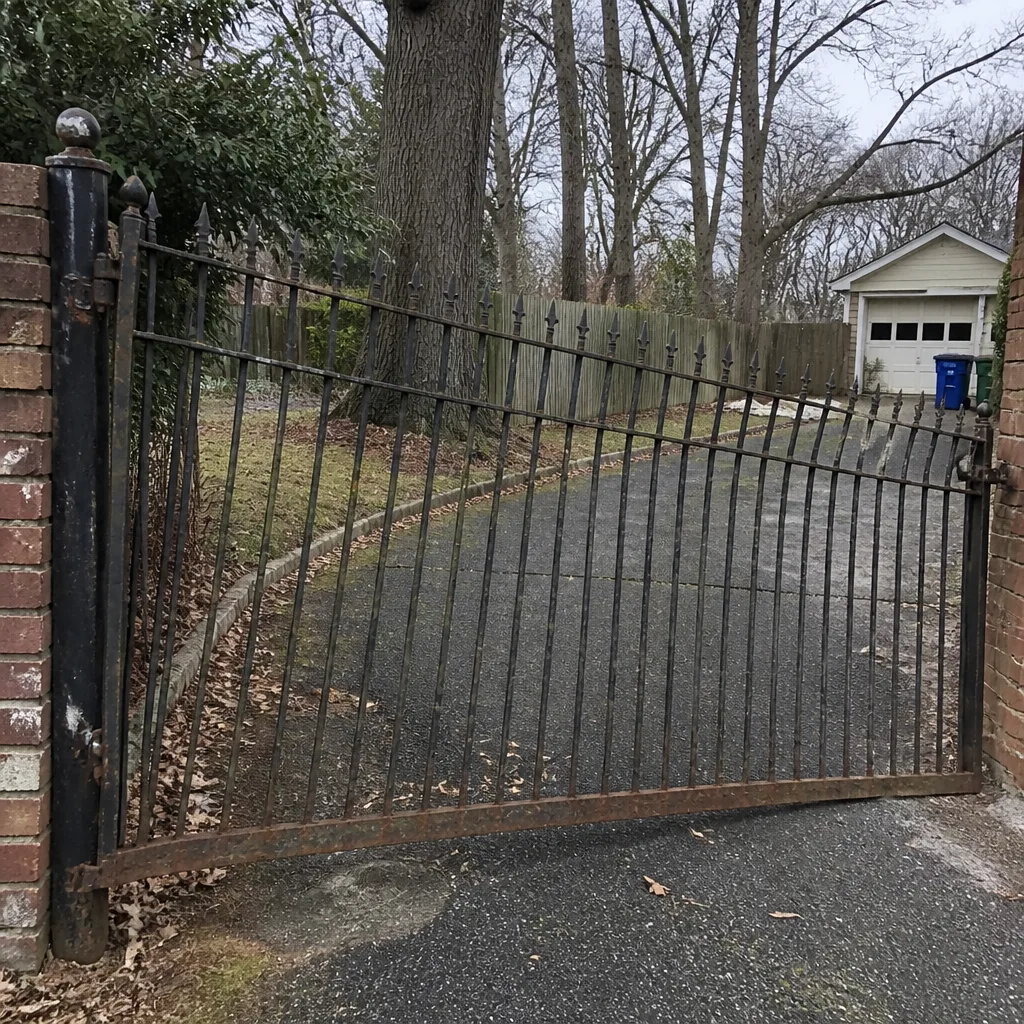 Before
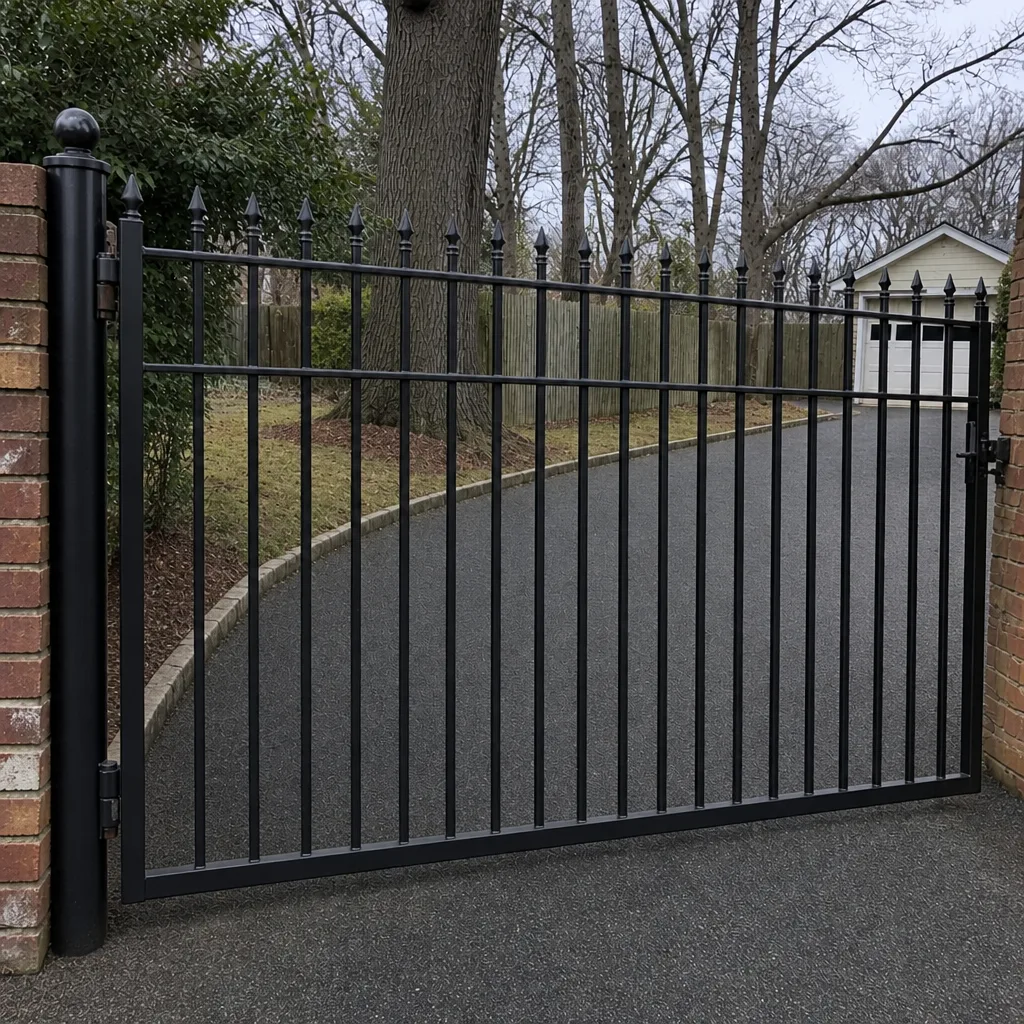 After
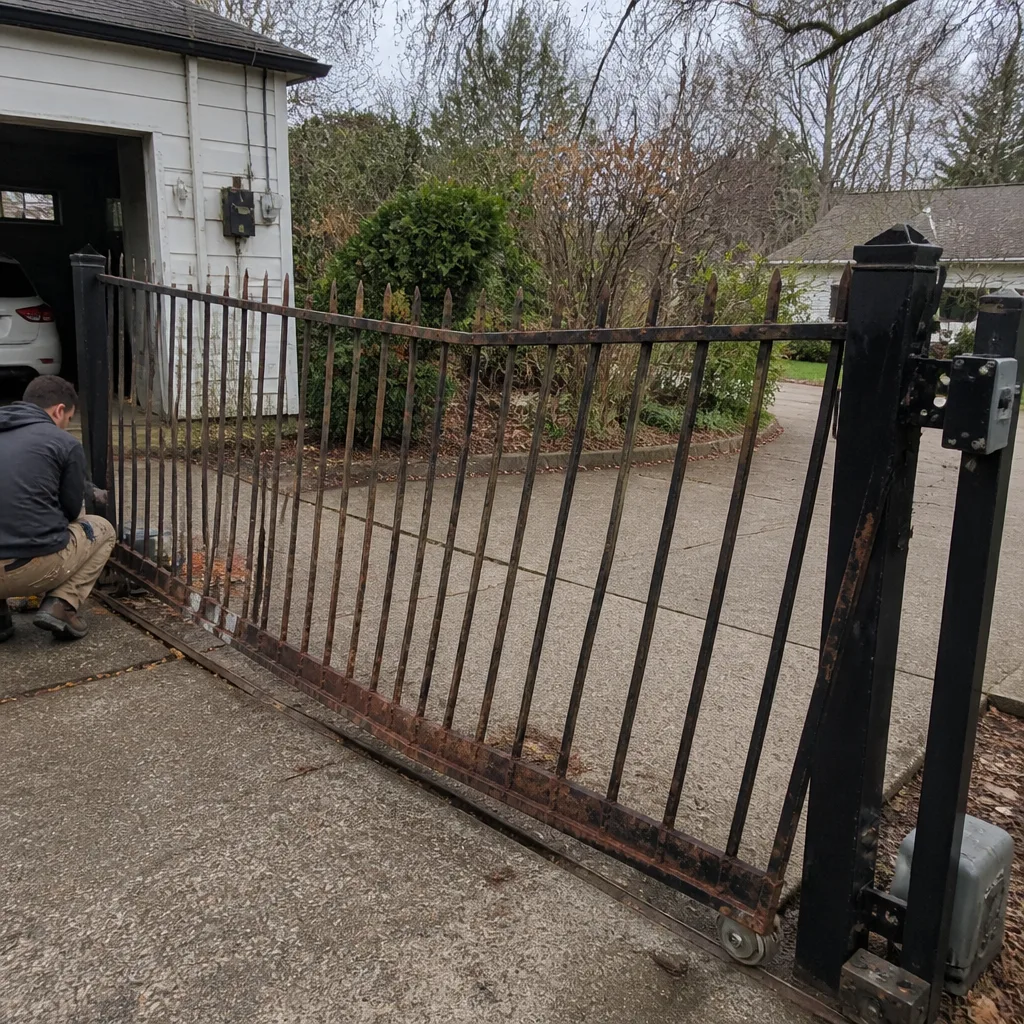 Before
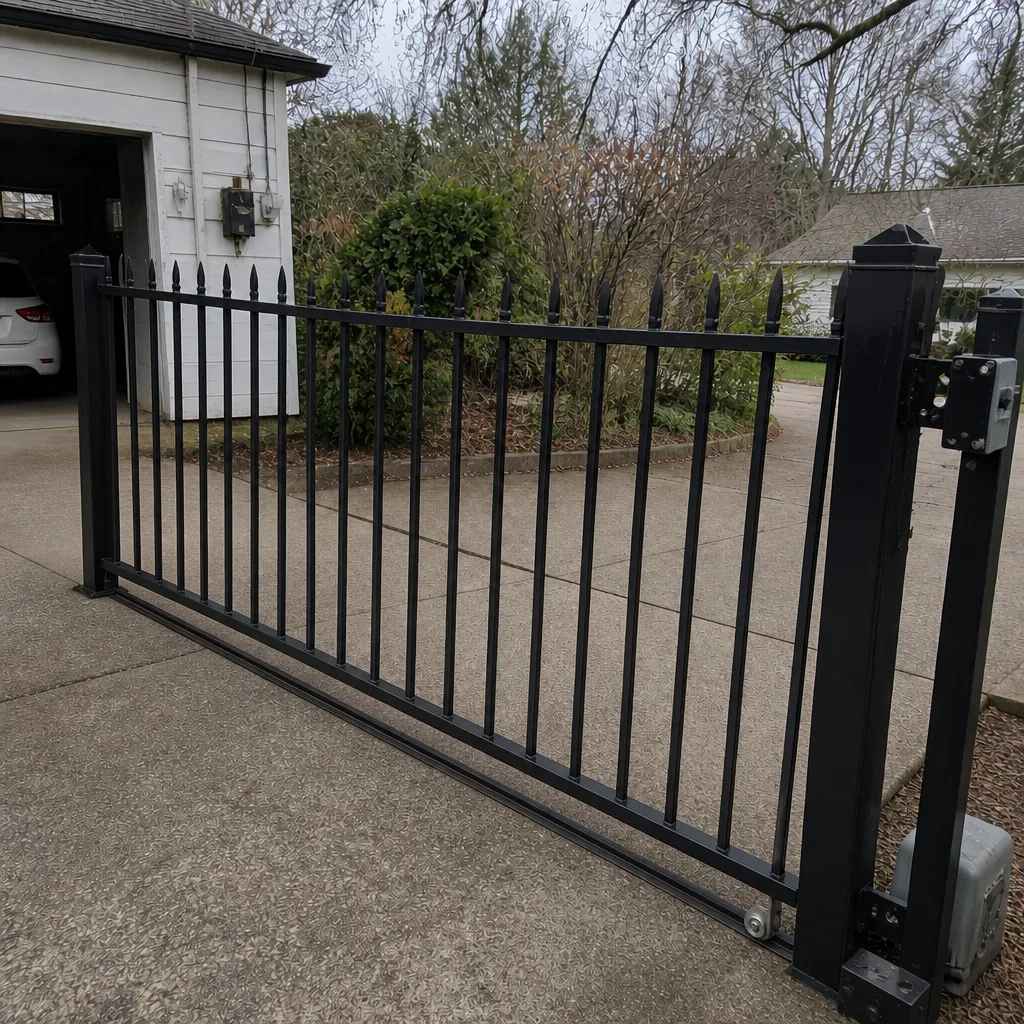 After
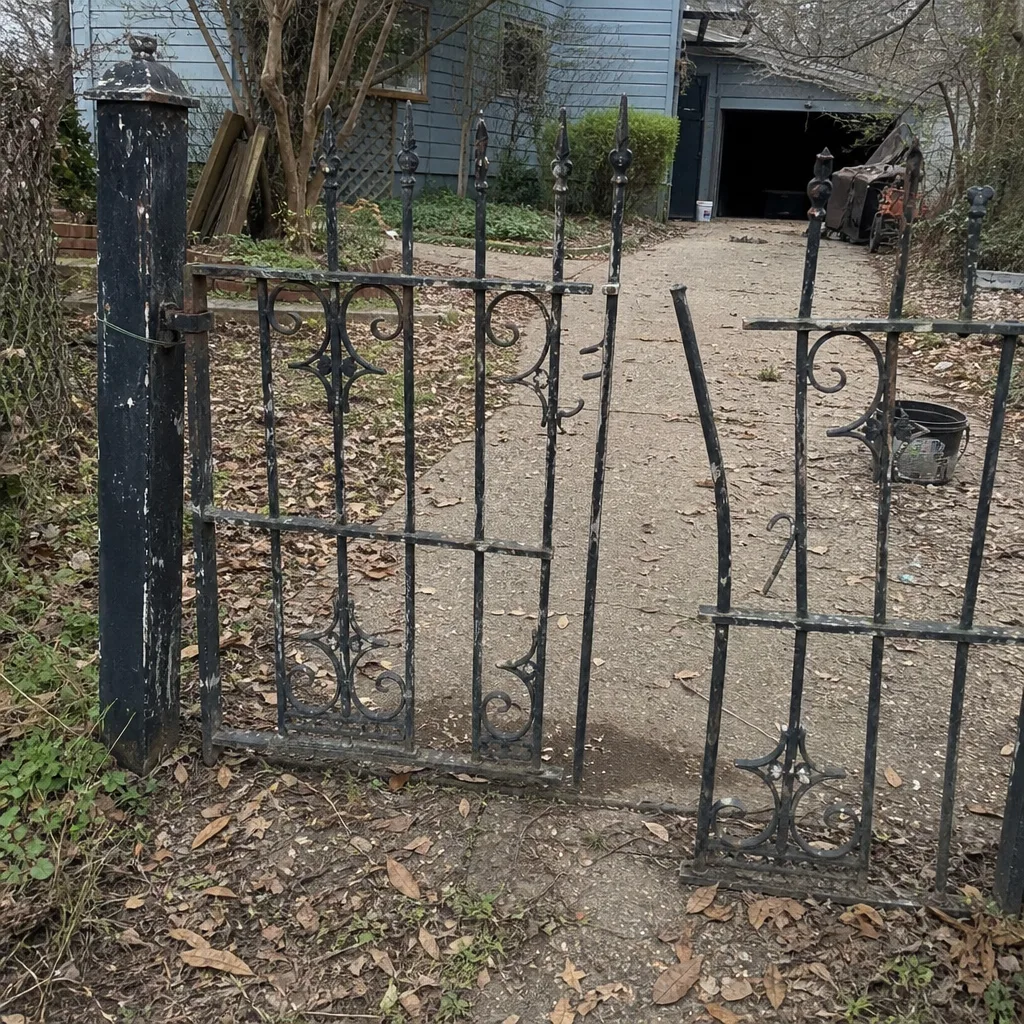 Before
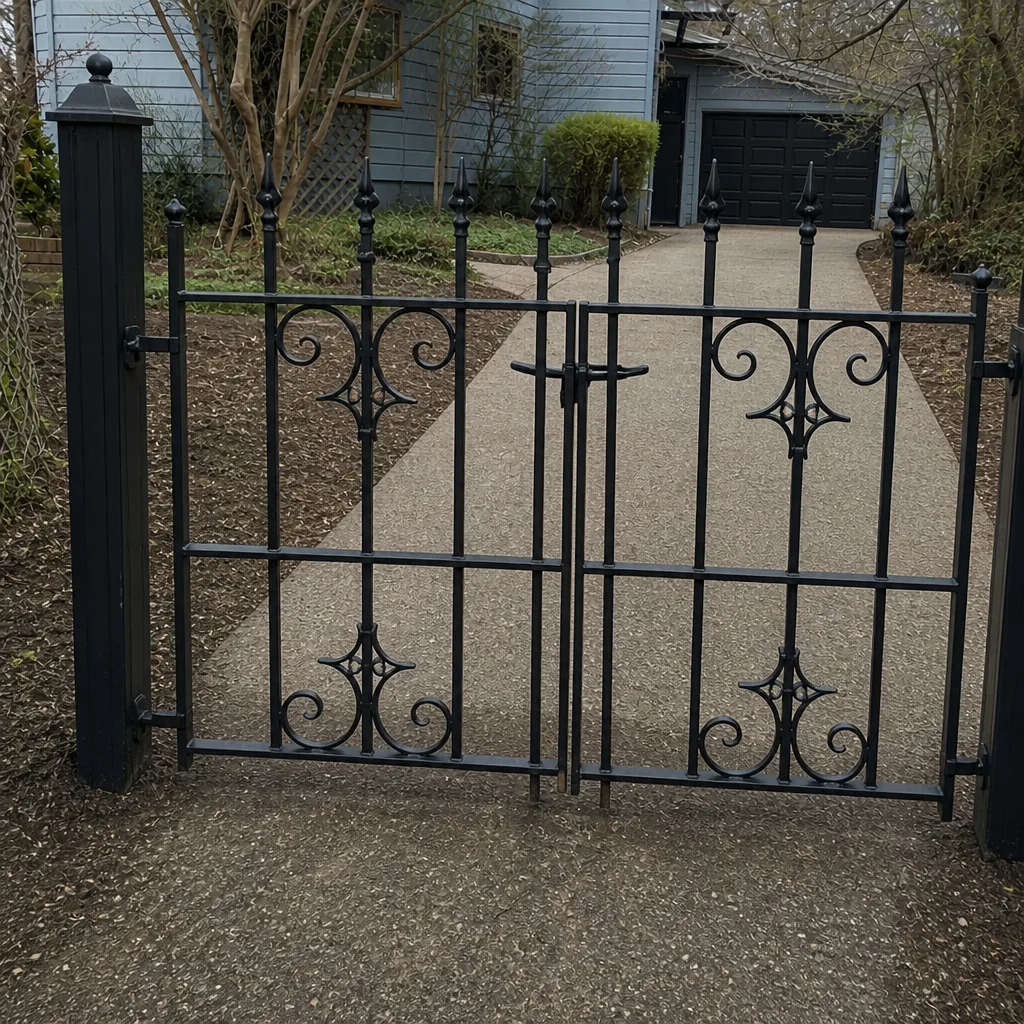 After
Frequently Asked Questions
Four times a year, ideally once per season, though the timing matters more than the count. A spring visit catches post-frost heave and pollen fouling; a summer visit catches thermal expansion and operator cooling; a fall visit catches battery issues and lubrication; a winter visit catches freeze-thaw hinge pin problems. If you call us mid-season with a specific symptom, we can often skip to the root cause faster than a generic annual inspection would. Call (866) 942-6565 for a free estimate.
That’s almost always thermal expansion on a sunny day. Metal expands with heat, and the gate’s latch or hinge clearance tightens as temperature climbs toward midday. Aluminum gates show this most clearly; wood gates also swell with humidity. The fix is to set the gate to work at the hotter end of the day’s temperature range so it still catches when it warms up. A gate technician can identify which hinge or roller is the culprit faster than trial and error. Call (866) 942-6565 for a free estimate.
No. Walk it first with the manual release if your operator has one, and stop if it resists. Forcing a swing gate can warp the frame; forcing a slide gate can twist the guide track off its rollers. If the gate won’t release by hand, call a specialist. Forcing it will only turn a hinge pin repair into a track repair. Call (866) 942-6565 – we answer 24/7 and can advise over the phone.
Yes, and you should do it every fall. Follow the manufacturer’s procedure to disconnect the primary power at the operator, then count how many full open-and-close cycles the gate completes before the operator alarms or slows. A battery that once ran many cycles but now runs only a few needs replacing before storm season. If you’re unsure about your operator’s test procedure, a gate specialist can test it correctly during a visit. Call (866) 942-6565 for a free estimate.
Yes. Richmond’s pollen season coats photo-eye lenses with a fine film that blocks the safety beam and stops the gate from closing. Wipe both sides of each sensor and confirm the indicator responds. During pollen season, check them every couple of weeks. If the gate still won’t close after cleaning, the sensor alignment may be off or the board may have a fault. Call (866) 942-6565 for a free estimate.
A proper seasonal check follows the climate, not a fixed checklist. In spring, it’s post-frost heave, post plumb, sensor cleaning, and safety reversal. In summer, it’s thermal expansion on the gate and ventilation on the operator housing. In fall, it’s battery load test, lubrication, vegetation clearance, and manual release. In winter, it’s hinge pins, post movement, and avoiding forced cycles during any thermal cutoff. If you track one task per season, you cover the system end to end across the year. Call (866) 942-6565 for a free estimate.
The Bottom Line
Richmond’s gate problems follow the calendar, not random chance. A gate that fails in winter was usually set up to fail by an unchecked summer, an untested fall battery, or a spring post that was never re-plumbed. The fix is a one-page log and a short list of checks four times a year. Spring catches ground heave and pollen fouling. Summer catches thermal expansion and a hot operator housing. Fall catches battery capacity and cold-weather lubrication. Winter catches freeze-thaw and the temptation to force a stuck gate. Keep the log at the panel, track what each season reveals, and call a gate specialist when a symptom points to the operator, board, or safety system.
Contact
If your gate is binding, its battery is weak, or its sensor won’t close and you’d rather have a specialist look at it than keep adjusting blindly, call us. We answer 24/7 at (866) 942-6565. Fast dispatch is 7am to 7pm, Sunday through Friday, and estimates are free. Whether it’s a manual swing gate or an electric system from FAAC, BFT, Linear, Viking, or any of the other brands we work on, we’ll diagnose it, quote the work before anything starts, and follow the same seasonal logic that keeps Richmond gates working through every season.
Written by the team at Richmond Gate Repair.