
Last updated November 16, 2026
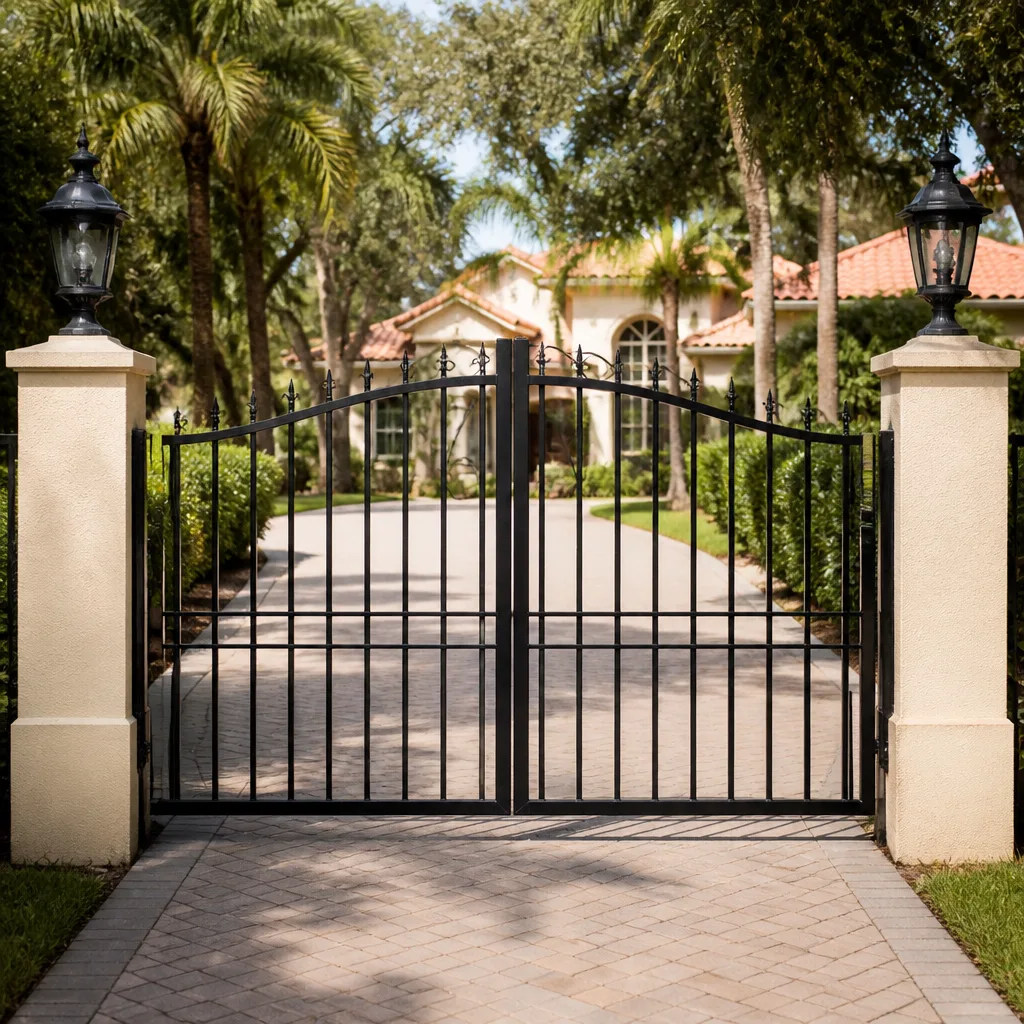 Wrought iron
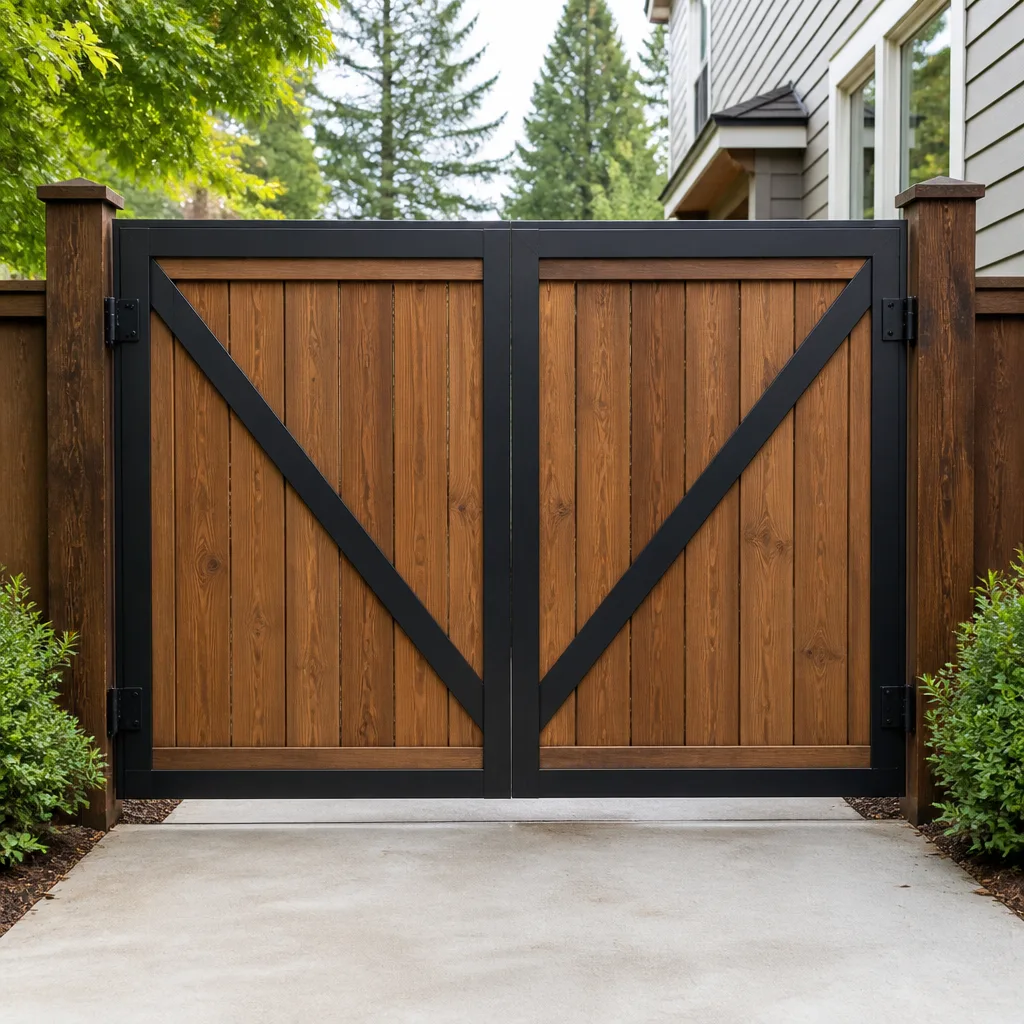 Wood & steel frame
 Farm & ranch
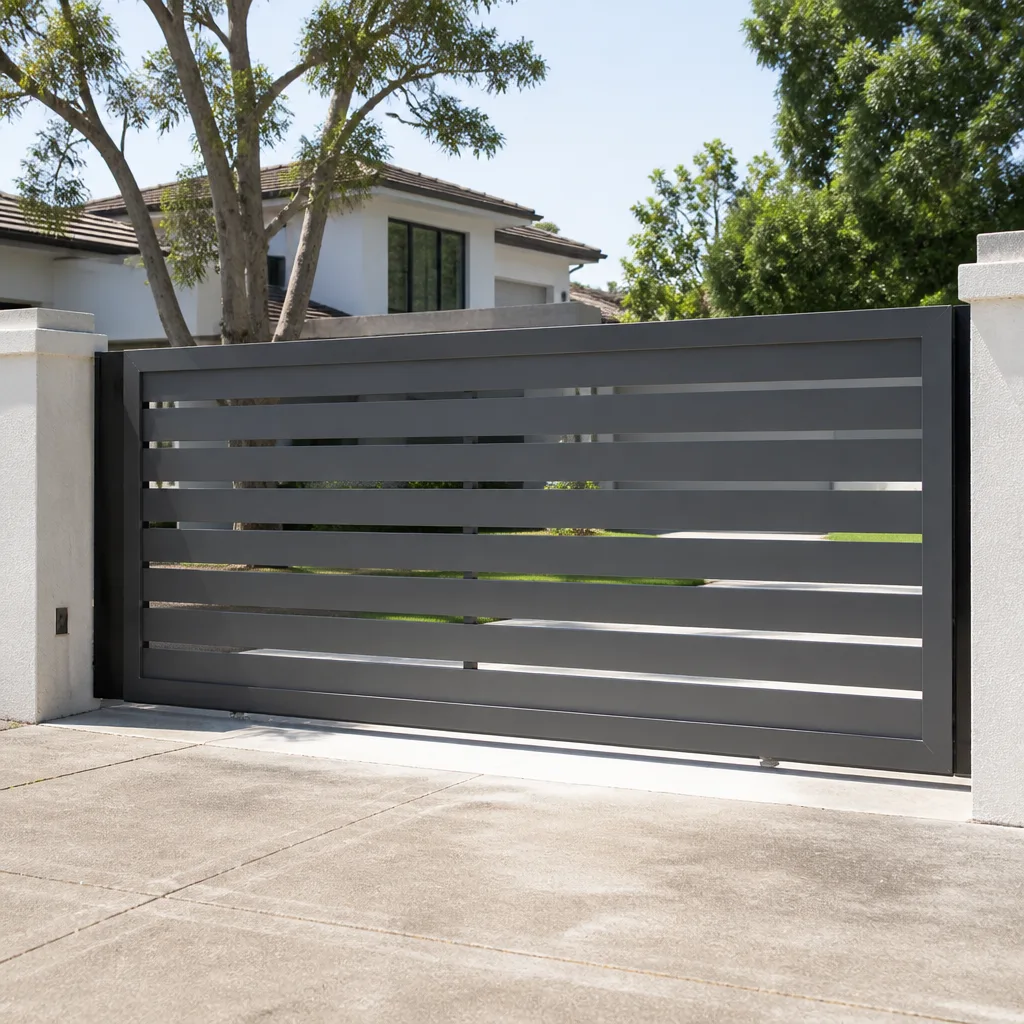 Sliding driveway gates
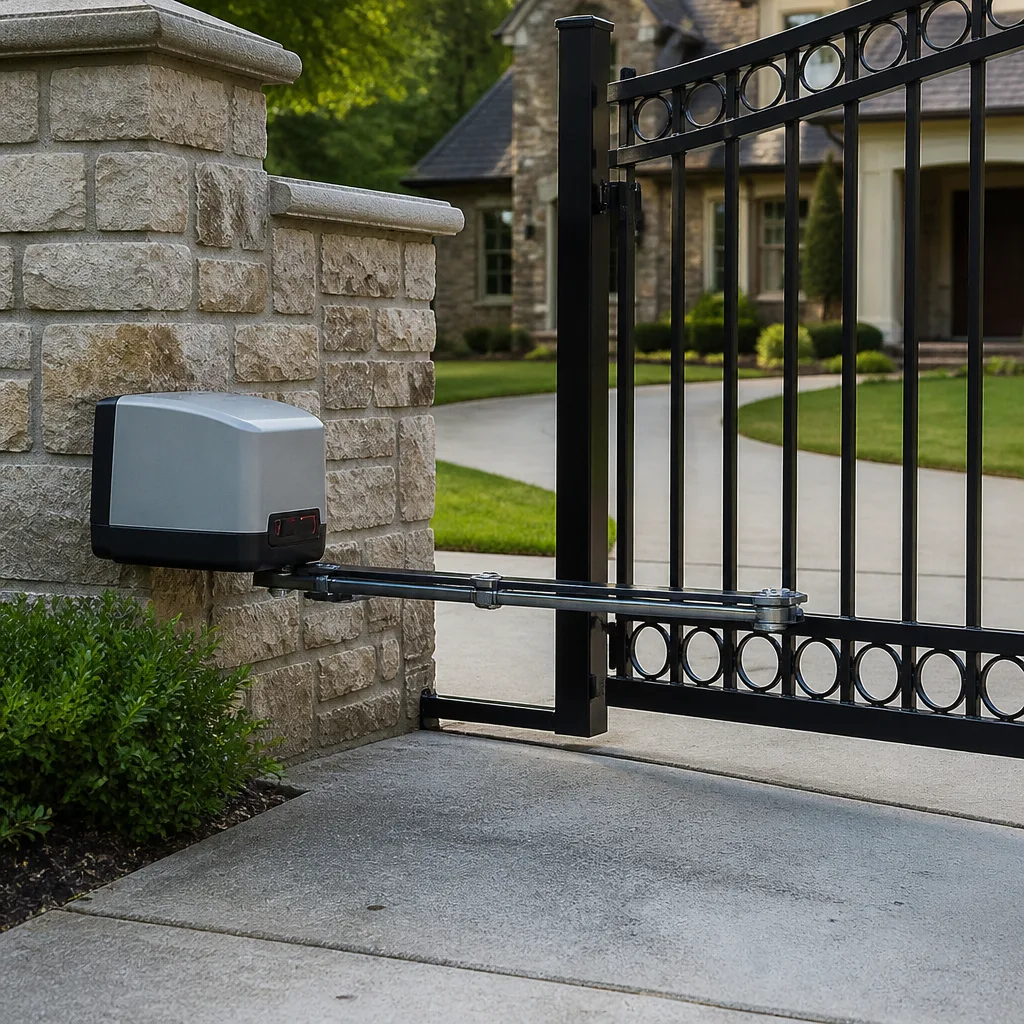 LiftMaster operators
Free on-site gate assessment - hinges, posts, and your LiftMaster or Nice gate operator checked before anything is quoted
The assessment is free and the quote is the invoice.
Get your free estimateGate Repair Troubleshooting in Richmond: Common Problems and How to Fix Them
A gate that reverses halfway through opening and a gate that won’t budge at all look like completely different failures. They can trace back to the exact same worn-out part. That’s the trap: chasing symptoms one at a time is why so many gate repairs get misdiagnosed, over-replaced, and billed twice. This guide teaches a different approach. Instead of memorizing a symptom checklist, you’ll learn to sort any problem into one of three root-cause buckets: power, mechanical alignment, or the control board. Once you know which bucket a fault lives in, the repair narrows fast. We’ll walk through the Richmond-specific causes that trip up gates here, which checks are genuinely safe to do yourself, and how to document a fault so a technician can diagnose on arrival instead of charging you for guesswork.
Quick Answer
Most gate problems in Richmond trace back to one of three root causes: an interrupted power supply, a mechanical misalignment (often from clay soil shifting post footings in winter), or a control board or logic fault. Sorting your symptom into the right bucket before you call a technician gets you a faster, cheaper repair. A beeping gate that won’t move usually points to the logic board or a safety sensor, while a gate that moves but won’t latch is almost always mechanical alignment.
Styles & brands we work with
- Wrought iron
- Wood & steel frame
- Farm & ranch
- Sliding driveway gates
- LiftMaster operators
Table of Contents
- The Three-Bucket Diagnostic Framework
- Why Gates Fail Differently in Richmond
- Beeps But Won’t Move vs. Moves But Won’t Latch
- What You Can Safely Check Yourself
- Fixes That Void Warranties or Create Hazards
- How to Document Symptoms Before You Call
- Brand-Specific Quirks Worth Knowing
- A Seasonal Troubleshooting Calendar for Richmond Gates
The Three-Bucket Diagnostic Framework
Every gate fault belongs to one of three buckets. Assign the symptom to a bucket first, and you skip the exploratory phase that eats up a repair budget. Here’s how to make that assignment quickly.
Bucket 1: Power. The gate is fully dead, the operator is silent, or the control box shows no lights at all. This points to the supply feeding the system: a tripped breaker, a failed transformer, a dead backup battery, or a damaged power run. If nothing lights up, start here.
Bucket 2: Mechanical and alignment. The gate moves but drags, grinds, reverses partway, or won’t seat into the latch. The motor has power and the logic is trying to work, but the physical gate is fighting itself. Common culprits are a sagging hinge, a shifted post, debris in the track of a slide gate, or a leaf that’s out of plumb.
Bucket 3: Logic and control board. The gate has power, the mechanics look sound, but the behavior is erratic: it opens when you want close, it moves a foot and stops, it ignores the remote, or it cycles endlessly. This is the control board, the safety loop, or the sensor logic. It’s the bucket generalists struggle with most, and it’s where electric gate repair experience pays off.
To assign a symptom fast, ask three questions in order. Does anything light up? If no, you’re in the power bucket. If yes, does the gate physically move? If it moves badly, you’re in mechanical. If it moves but behaves wrong, you’re in logic. That simple order of questions resolves most faults before a technician ever pulls into the driveway.
Why Gates Fail Differently in Richmond
The ground under a gate matters as much as the motor bolted to it. Richmond’s clay-heavy soil behaves in a way sandier markets don’t have to plan for. Clay holds water when it’s wet and shrinks when it dries, and the freeze-thaw cycle in winter pushes and pulls the ground with real force. Over a few seasons, that heave and settle is enough to lift or drop a post footing a fraction of an inch. A fraction of an inch at the footing becomes a visible sag at the latch.
That’s why so many Richmond gate repairs that look electrical turn out to be alignment. A homeowner reports the gate “stopped working,” when what actually happened is the far post rose slightly, the leaf no longer meets the latch, and the operator’s force sensor reads the resistance and reverses the gate for safety. The gate is doing exactly what it should. The fix is at the hinge and the footing, not the circuit board.
Some local patterns we see in Richmond:
- Late-winter and spring sag. After the ground thaws, post footings that heaved during freezing nights settle unevenly, and gates that ran fine all fall suddenly drag or reverse.
- Summer shrink. Dry clay pulls away from a footing, letting a post lean a little. The gate still swings, but the strike no longer lines up cleanly.
- Summer storm debris. Richmond’s storm season drops branches and leaf litter into slide-gate tracks, and a slide gate that jumps its track has a mechanical cause, not an electrical one.
- Hinge corrosion from humidity. Richmond humidity is hard on steel hinges, and a stiff hinge loads the operator and mimics a motor fault.
None of this requires a diagnosis on the driveway to understand. If a gate fails after a stretch of hard freezes or a long dry spell, weigh the mechanical and alignment bucket heavily before you assume the operator is finished. That instinct alone saves a lot of unnecessary part replacement in Richmond.
Beeps But Won’t Move vs. Moves But Won’t Latch
These two symptoms sound unrelated, and that’s exactly why people misdiagnose them. Here’s the distinction that matters.
A gate that beeps but won’t move is telling you the control board is alive and receiving a command, but the logic is refusing to let the motor run. The beep is a warning. It almost always means the safety system stepped in: an obstruction sensor sees something in the path, a safety loop is reading false, or the board’s self-check failed. The fault lives in the logic bucket. The motor may be perfectly fine.
A gate that moves but won’t latch is the opposite story. The logic wants the gate closed, the motor is putting power to the leaf, but the leaf can’t seat. That’s a mechanical fault: a hinge that’s dropped, a gate that’s out of square, a strike plate knocked out of position, or, again, a shifted post. The safety sensor might be the thing reversing it, but the reason the sensor trips is physical misalignment. Fix the alignment and the beeping stops, because the gate can finally close.
This is where symptom-chasing goes wrong. A homeowner whose gate beeps sees “wiring problem” and calls an electrician. An owner whose gate won’t latch sees “motor’s dead” and asks about a new operator. In our experience, both diagnoses cost more than the actual repair. When you sort by where the fault truly lives, the beeping gate leads you to sensors and loop detectors, and the non-latching gate leads you to hinges, posts, and strike plates. Same gate, different ends of the system. Getting the direction right is half the repair.
What You Can Safely Check Yourself
Some troubleshooting is safe for anyone. Some of it is not, and pretending otherwise is how people get hurt or void a warranty. Here’s the honest split.
Safe to check yourself:
- Look for obstruction in the path. Walk the swing or slide path and clear leaves, branches, toys, and landscape debris. A single twig in an optical safety sensor’s beam will stop a gate cold.
- Check the breaker. Confirm the circuit feeding the operator hasn’t tripped. This is a standard household breaker check, and it rules the power bucket in or out immediately.
- Lubricate hinges and moving joints. A dry, stiff hinge loads the operator and causes reversing and grinding. A light application of the lubricant the gate maker recommends, on the hinges and pivot points, keeps the mechanical leaf free.
- Clean the sensor lenses. Dust, cobwebs, and pollen on the safety sensors cause false trips. A soft cloth on the lens, without moving the sensor’s aim, is a safe fix.
- Test the remote and keypad. Replace remote batteries and confirm the keypad powers on. A dead remote is a simple thing that masquerades as a broken operator.
Not safe to do yourself:
Anything that opens the operator housing, touches the control board, or works on the wiring that feeds power to the gate belongs to a trained technician. There’s household current inside that housing. A gate’s moving leaf is also heavy, and a slide gate that comes off its track can pin or crush a person. Diagnosing a control board by poking at it with the power on is how small faults become expensive ones. If your safe checks don’t resolve the problem, that’s the signal to stop and call.
Fixes That Void Warranties or Create Hazards
The line between a smart homeowner check and a repair that makes things worse is clearer than most people think. Here’s what to leave alone, and why.
Control board swaps. Pulling and replacing a logic board without confirming the diagnosis is a common and costly mistake. Boards aren’t cheap, they’re specific to each operator’s model, and a guess often leaves the real fault untouched. Worse, an incorrect board can send a voltage back through the motor or sensors. This is exactly the diagnostic depth that separates a gate specialist from a generalist, and it’s why the logic bucket deserves a trained eye.
Rewiring the power run. The conductor that feeds an operator is buried, often direct-buried for long lengths, and must be sized and protected correctly. A homeowner-spliced power run is a shock and fire risk, and it’s a code concern that most cities regulate. Ask your city’s building department about permits before any new power run, and let a technician handle the wiring itself.
Safety loop and photo-eye tuning. These are the components that stop a gate from closing on a child or a car. Adjusting, bypassing, or “disabling” an obstruction sensor to get the gate moving again defeats the one safety feature that prevents the worst outcome. Never bypass a safety device to force a gate to work.
Track and footing work on a slide gate. A slide gate that jumps its track needs the track and the footing corrected, not hammered back into place. Heavy panels can come off the track entirely, and that’s a crush hazard. Setting a post to proper footing depth is a job for a technician who knows what the ground needs.
When a fix falls into this second list, you’re not saving money by attempting it. You’re gambling with a warranty, a heavy moving object, or household current. A trained professional resolves it once, correctly, with a written price agreed beforehand.
How to Document Symptoms Before You Call
The single best thing you can do before a technician arrives is capture the fault while it’s happening. A few minutes of documentation can cut diagnostic time in half and spare you the cost of exploratory work. When you call, have this ready:
- Record a short video of the failure. Film the full cycle from the moment you trigger the gate, so the tech sees exactly where it fails: how far it moves, whether it beeps, and whether it reverses. Show the operator housing and the mechanical leaf in the same clip if you can.
- Note the timestamp. Was it the first cycle of the morning, or after a long idle period? Did it fail in cold weather or after a dry spell? Timing points straight at a bucket.
- Photograph any error code. If the control board has a display or diagnostic LED, photograph the exact code or flash pattern. Each operator brand uses its own codes, and a photo means no guessing from memory.
- Photograph the latch point and the hinges. A picture of the leaf at the latch and of the top and bottom hinges shows sag and misalignment better than any description.
- Note what you’ve already tried. Clearing debris, checking the breaker, replacing a remote battery. This keeps the tech from repeating your steps.
This is the fastest path to a tighter estimate. With a video and an error code, a technician can often arrive already knowing which bucket you’re in and which parts to bring. That’s how you avoid paying for a diagnostic that a two-minute video already answered. Call (866) 942-6565 to book a free estimate. We answer 24/7. Fast dispatch from 7am to 7pm, Sunday through Friday.
Brand-Specific Quirks Worth Knowing
Every operator brand has its own habits. Knowing them on sight is the difference between a specialist and a generalist who has to look it up in the driveway. Here’s how a few of the systems common across Richmond tend to fail.
Mighty Mule. These DIY-friendly swing operators are widely installed by homeowners, and the most frequent faults we see are in the sensitivity and reversing settings. When a Mighty Mule starts reversing on its own, it’s usually reading resistance it shouldn’t, so the alignment and hinge check comes before any board question. Battery and solar-supply issues also show up here because of how these systems are often powered.
LiftMaster. These operators carry a reliable logic board and clear diagnostic feedback, which makes the beep-and-flash pattern genuinely readable. That’s helpful, because the code tells you which bucket you’re in fast. The board doing its job well means an error code is often the fastest route to the exact fault, so photograph it.
FAAC and BFT. These are common on heavier commercial-style leaves and property-manager sites. Their control boards and safety-loop integration are capable enough that a false loop reading or a failed intercom input is more often the cause than a dead motor. Diagnostics on these systems mean checking the loop detectors and the access-control logic, not just the operator.
The pattern holds across brands: a leaf that won’t latch is mechanical, a leaf that beeps and won’t move is logic, and silence is power. The brand changes the details, not the framework. Our technicians have up to 12 years of experience and work systems like these every day, so they know where each one tends to fail before they start. That’s the advantage of a gate repair team focused on gates alone.
A Seasonal Troubleshooting Calendar for Richmond Gates
Richmond’s seasons produce predictable gate faults. Planning for them cuts down on surprised repairs.
- Winter (freeze-thaw). This is prime time for post-footing heave. Watch for a gate that suddenly drags or reverses after a cold snap. The mechanical bucket owns most winter failures here, and prompt attention to a sagging hinge or post keeps a small shift from loading the operator.
- Spring (thaw and settle). As clay soil settles after the thaw, alignment problems surface. A gate that ran fine in fall may now reverse at the latch. Check hinges and latching before you assume a board fault.
- Summer (dry clay and storms). Shrinking clay can let posts lean, and storm season drops debris into slide-gate tracks. Clear the track regularly, and expect some alignment drift during dry stretches.
- Fall (humidity and prep). Cooler, damp weather is kind to the system, which makes fall a good time to lubricate hinges and clear the leaf before winter’s freeze-thaw starts moving the ground again.
Matching your symptom to the season is another fast triage tool. A winter failure after freezing nights is very likely alignment. A summer failure after a dry month is very likely alignment too. If a fault shows up in mild weather with no ground movement, weight the power and logic buckets more heavily. Reading the season alongside the symptom keeps the diagnosis honest.
Common Mistakes to Avoid
- Replacing the motor when the fault is alignment. A gate that won’t latch looks like a dead operator but is almost always a sagging hinge or shifted post. Replacing a working operator leaves the real cause in place, and the new motor reverses for the same reason on day one.
- Bypassing a safety sensor to force the gate. It gets the gate moving, but it disables the one feature that stops a closed gate from hitting a person or car. Never bypass an obstruction sensor; clear the actual obstruction instead.
- Assuming a beep means a dead motor. A beeping gate that won’t move is the control board and safety logic reporting a fault, not the motor failing. Photograph the code and sort it into the logic bucket first.
- Chasing symptoms across buckets. Treating a reverse-on-opening gate as a wiring issue and a won’t-latch gate as a motor issue sends money down two wrong paths. Assign the symptom to one bucket before touching anything.
- Ignoring the Richmond freeze-thaw cycle. Dismissing a winter sag as “the gate getting old” lets a footing problem get worse. Ground movement is a known local cause, and early hinge and post attention is cheaper than a repair after the gate jumps its track.
- Opening the operator housing to poke at the board. Household current and a specific model’s board make a DIY board swap a real risk, and a wrong board can damage the motor or the sensors. That repair belongs to a trained technician.
- Leaving the site without a video. Describing a fault from memory means the tech has to rediscover it on arrival. A short video with the exact error code and a timestamp saves the exploratory time you’d otherwise pay for.
See the difference
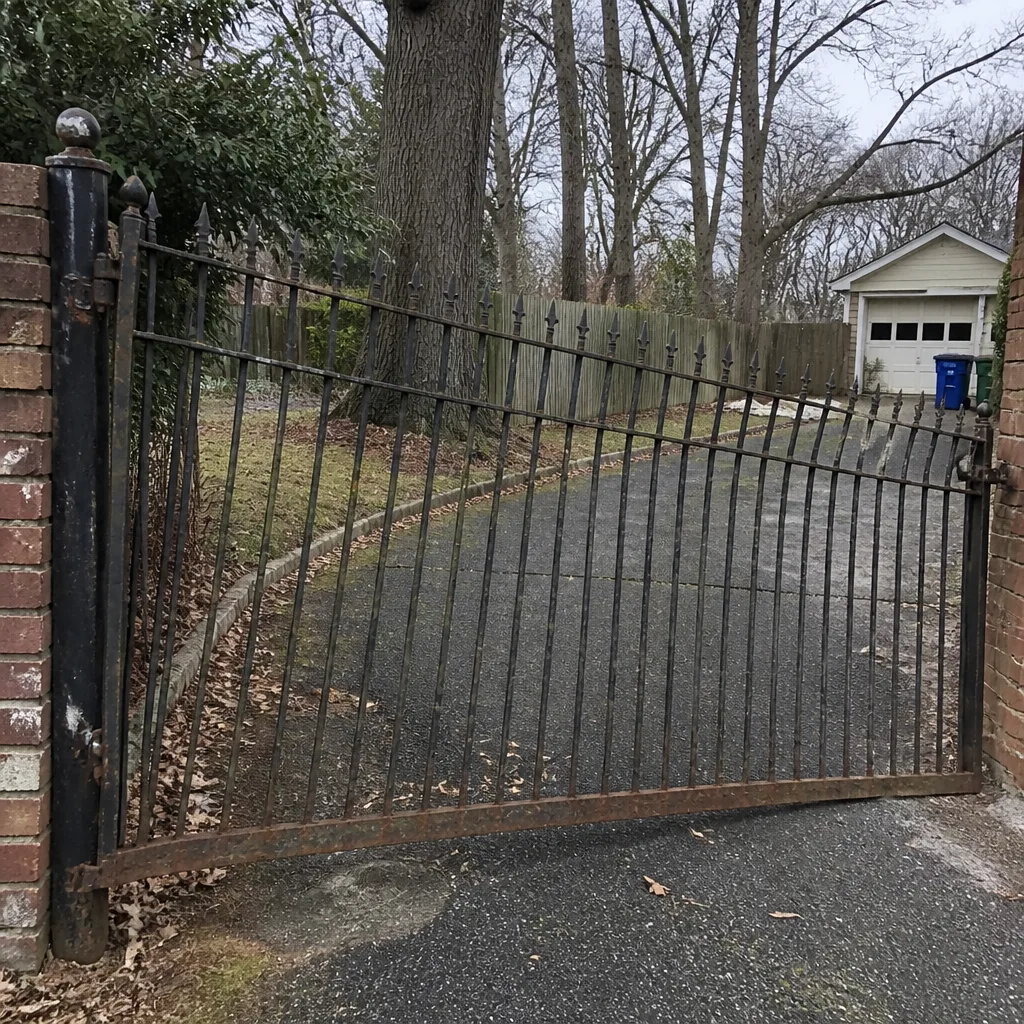 Before
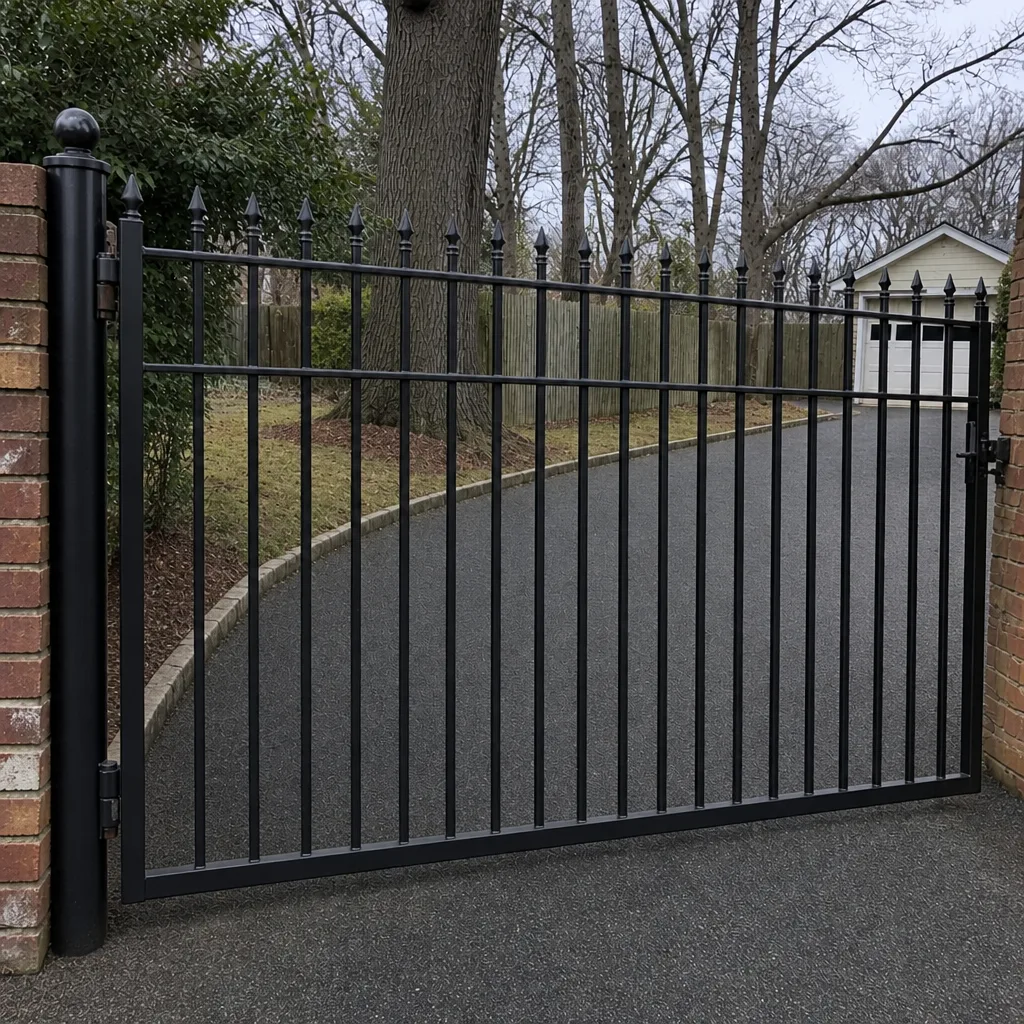 After
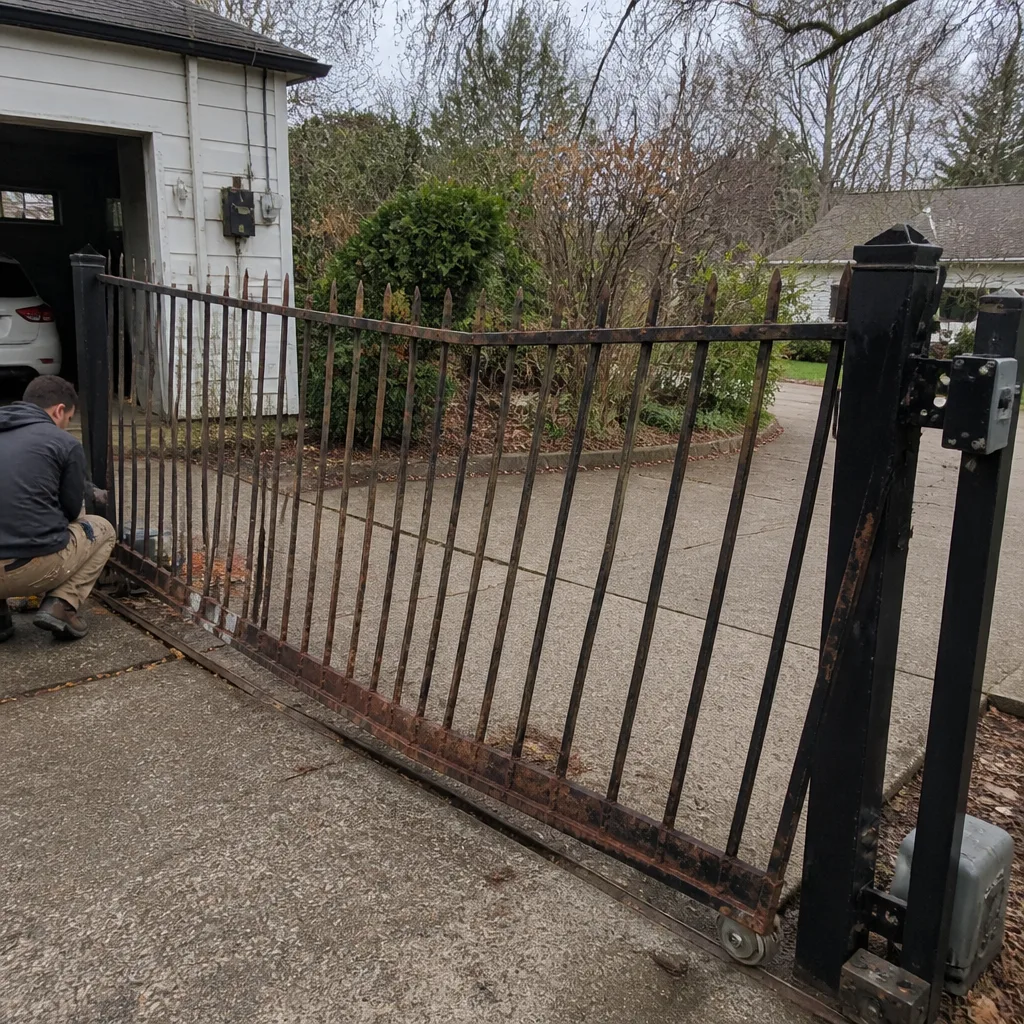 Before
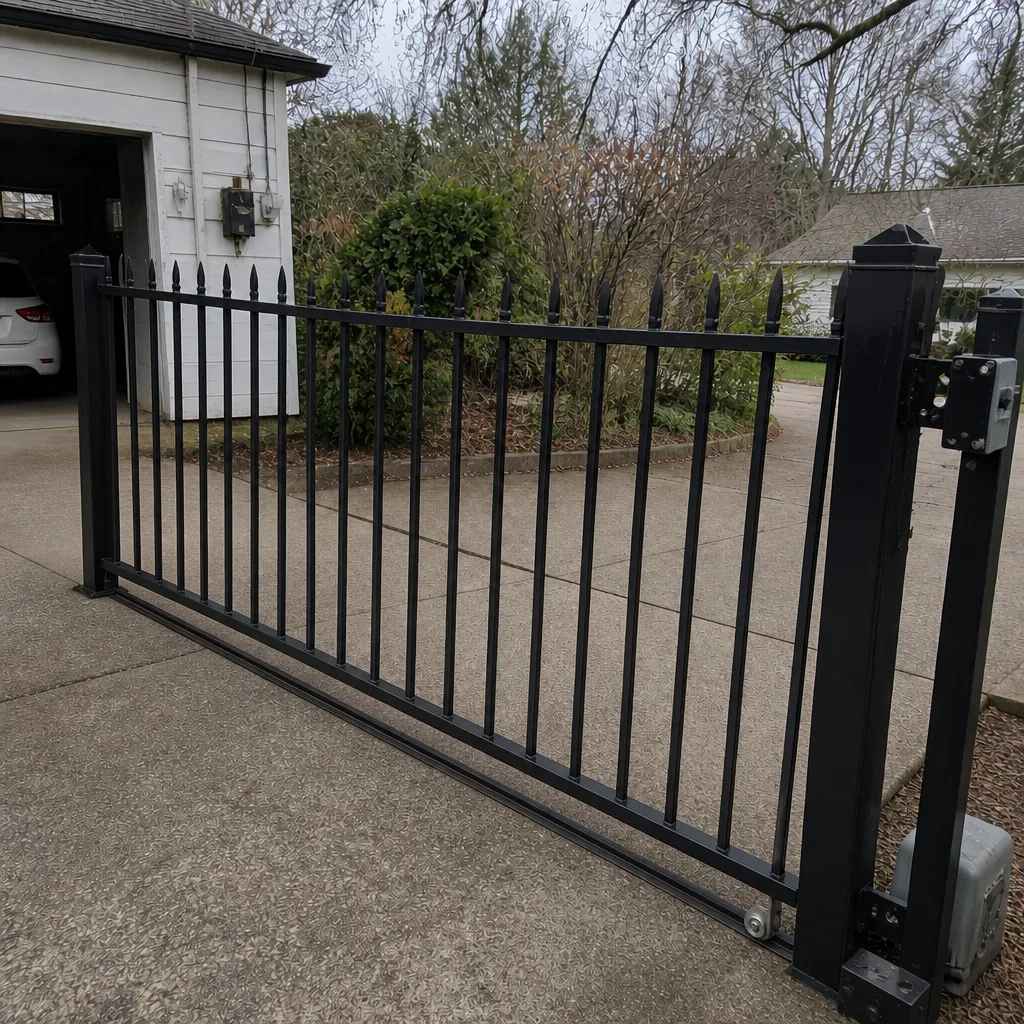 After
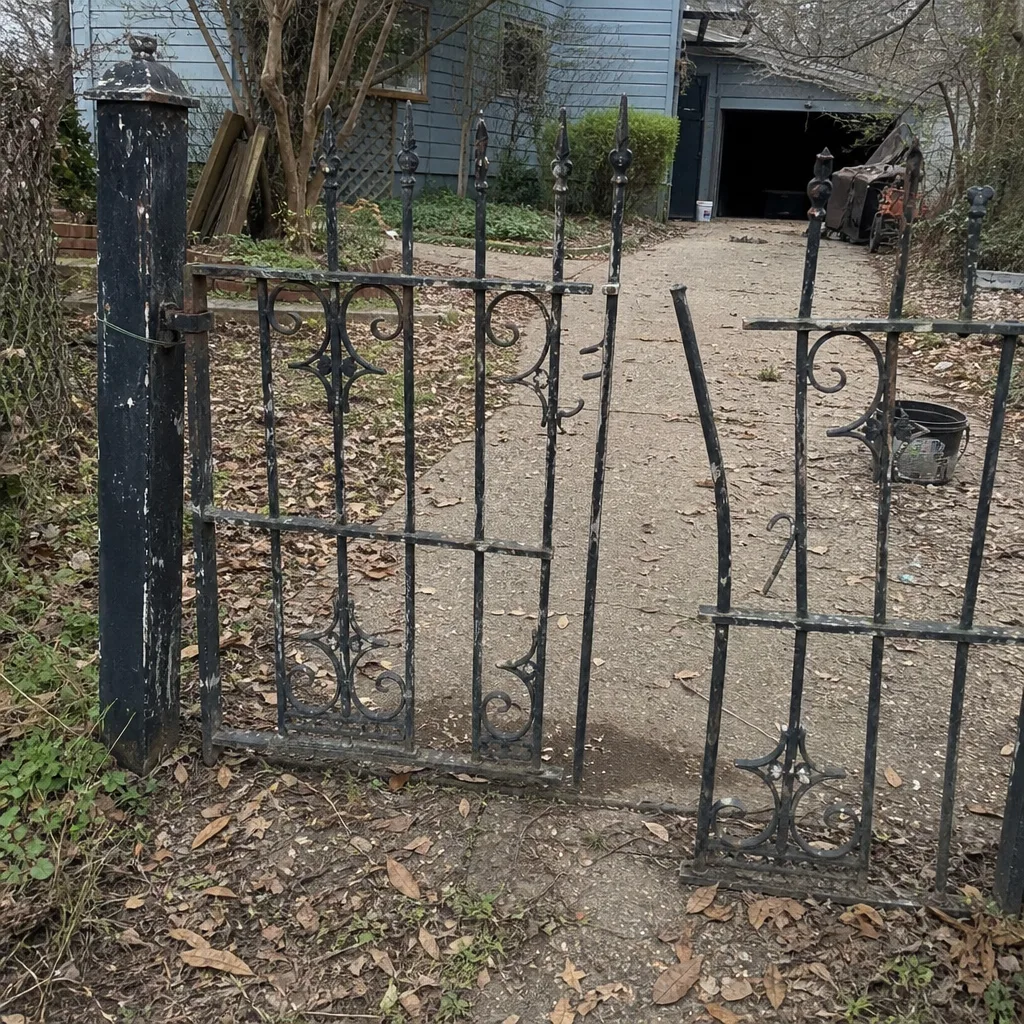 Before
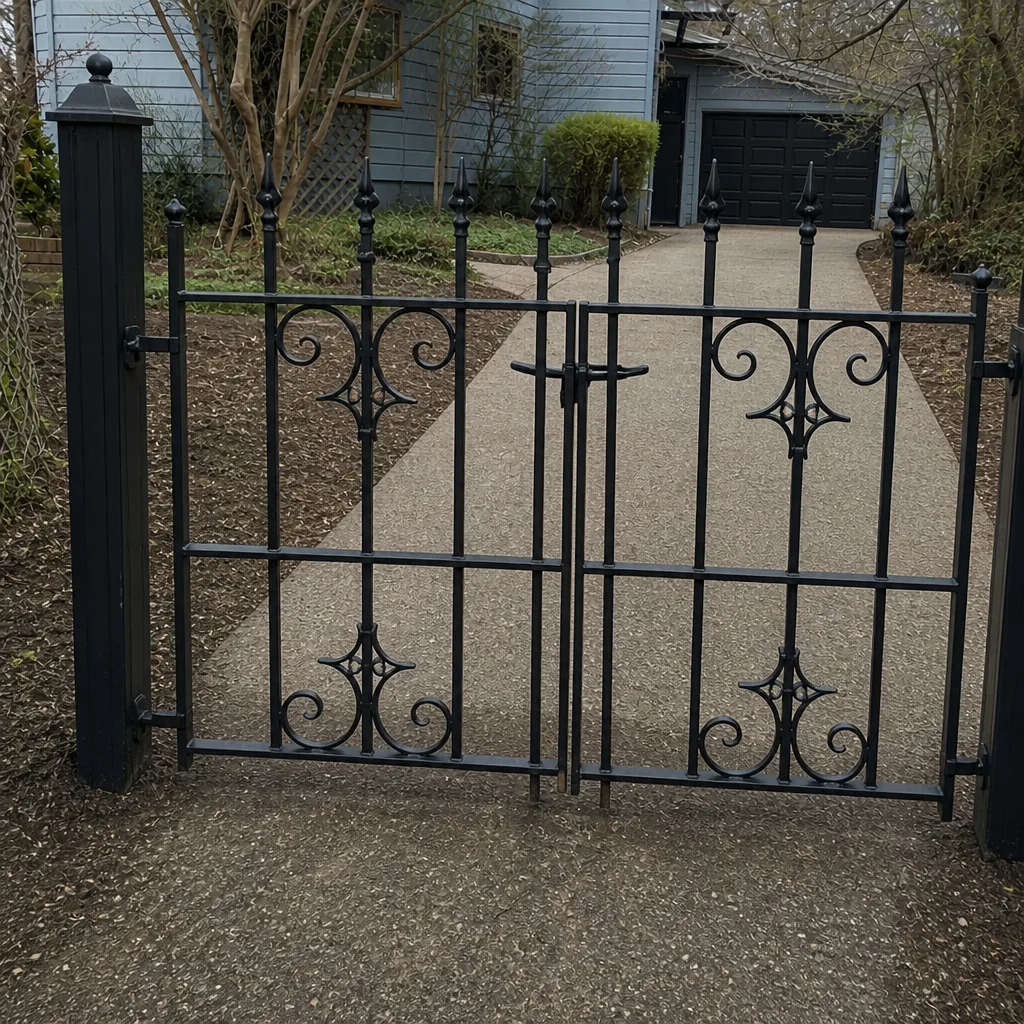 After
When to Call a Professional
Some faults you can sort and solve yourself; others need a technician the moment they appear. Call a professional if the gate is completely dead and the breaker is fine, if it beeps and won’t move regardless of what you clear from the path, if it moves but won’t latch no matter how much you lubricate the hinges, or if the control board shows an error code you can’t read. Call right away, too, for any fault after a hard freeze, any slide gate that jumps its track, any sign of damaged wiring, or any gate that reverses unpredictably while a person or vehicle is in its path. Those point to power, alignment, or safety faults that a trained professional resolves directly. Richmond Gate Repair offers free estimates in Richmond. Call (866) 942-6565. We answer 24/7. Fast dispatch from 7am to 7pm, Sunday through Friday.
Frequently Asked Questions
Gate repair in Richmond is priced per job by a written estimate, so the cost depends on which bucket the fault is in: a simple hinge or latch adjustment costs far less than a control board or power-run repair. Because there’s no standard one-price repair, the fastest way to a firm number is a free estimate. Call (866) 942-6565 for an exact quote. Estimates are free, and the price is agreed before any work starts.
Yes, we offer same-day service for gate repairs. If your gate is dead or stuck, sort it into a bucket before you call, then have a short video and any error code ready so the technician can diagnose on arrival. Call (866) 942-6565. We answer 24/7. Fast dispatch from 7am to 7pm, Sunday through Friday.
A gate that beeps but won’t move almost always has a logic or safety fault, not a dead motor. The beep is the control board reporting that the safety system has stopped the motor: an obstruction sensor sees something, a safety loop reads false, or the board’s self-check failed. Photograph the error code and clear any obstruction, then let a technician check the loop and sensors. Call (866) 942-6565 for an exact quote. Estimates are free.
A gate that moves but won’t latch usually has a mechanical alignment problem, and in Richmond that’s often a post footing that shifted with the clay soil’s freeze-thaw cycle. A sagging hinge, an out-of-square leaf, or a strike plate knocked out of position are the other common causes. The fix is at the hinge and footing, not the operator. Call (866) 942-6565 to book a free estimate.
You can safely clear obstructions, check the breaker, lubricate hinges, clean sensor lenses, and replace remote batteries. Anything that opens the operator housing, touches the control board, rewires the power run, or tunes the safety sensors should go to a trained technician, because it involves household current, a heavy moving leaf, and warranty or code concerns. Call (866) 942-6565 for an exact quote. Estimates are free.
Yes, electric gate repair is a core service. We diagnose control boards, loop detectors, intercom integrations, and motor failures, alongside the mechanical side, and we know the quirks of Mighty Mule, LiftMaster, FAAC, and BFT systems on sight. That depth is why a gate specialist resolves faults general contractors can’t touch. Call (866) 942-6565. We answer 24/7. Fast dispatch from 7am to 7pm, Sunday through Friday.
The Bottom Line
Gate troubleshooting gets easier the moment you stop chasing symptoms and start sorting faults into three root-cause buckets: power, mechanical alignment, or the control board. A beeping gate that won’t move is logic and safety; a gate that moves but won’t latch is mechanical; silence usually means power. In Richmond, the clay-soil freeze-thaw cycle makes alignment the quiet cause behind a lot of “electrical” failures, so read the season alongside the symptom. Do the safe checks yourself, document the fault with a video and error code, and hand anything involving the board, the wiring, or the safety sensors to a trained technician. Bring the video, name the bucket, and the repair narrows fast. Richmond Gate Repair offers free estimates. Call (866) 942-6565. We answer 24/7. Fast dispatch from 7am to 7pm, Sunday through Friday.
Written by the team at Richmond Gate Repair.